Stead's bush wren, a small bird once found across New Zealand, went extinct around 1972 when ship rats invaded Taukihepa Big South Cape Island, its final refuge. The rats arrived accidentally from fishing boats around 1963 and eliminated the wrens within years. Six birds moved to nearby Kaimohu Island in 1964, but the last two were seen in 1972.
The North and South Island bush wrens had already vanished by 1955 and 1968. The same rat invasion that killed Stead's bush wren also caused the extinction of the tutukiwi Stewart Island snipe and greater short-tailed bat, and nearly wiped out the South Island tīeke saddleback.
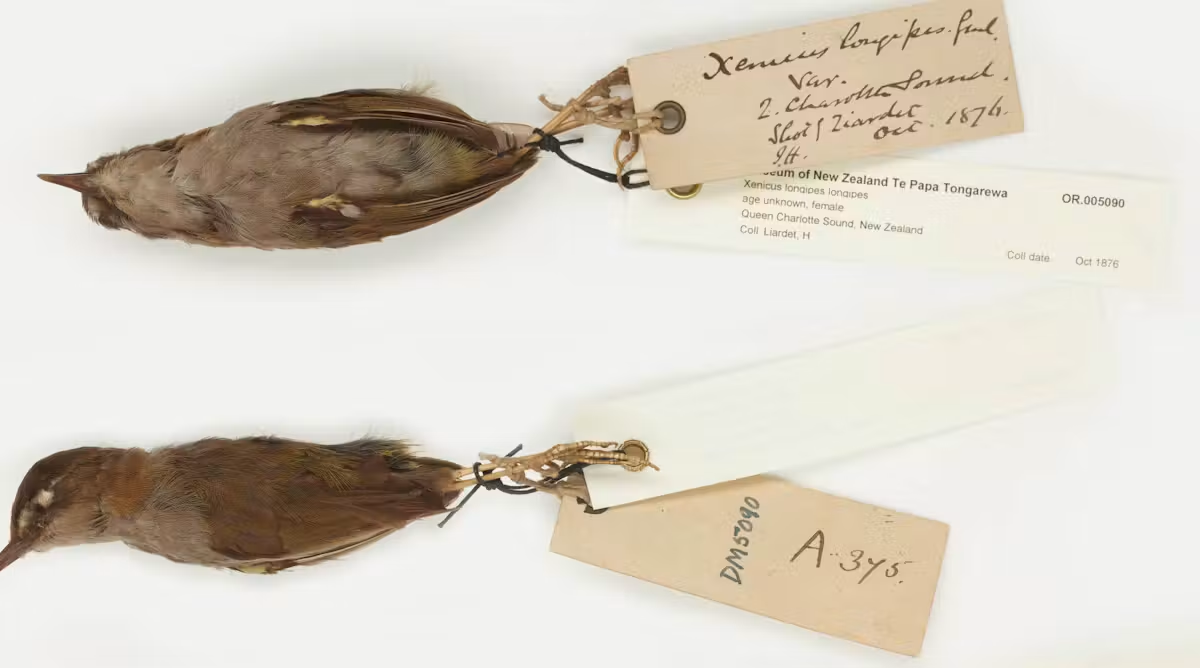
Ancient DNA analysis from museum specimens reveals the evolutionary history of these lost birds. Researchers at the University of Otago sequenced DNA and examined plumage of male and female specimens, discovering previously unknown sexual dimorphism in bush wrens. This work uncovered a new subspecies, the Tōtaranui bush wren, in central and northern South Island habitats.
Bush wrens evolved about six million years ago when the Southern Alps uplifted, creating diverse habitats. The North and South Island subspecies diverged roughly 2.6 million years ago. About 500,000 years ago, South Island bush wrens split into three lineages. Stead's bush wren emerged about 94,000 years ago.
Glacial cycles likely drove this diversification. Starting 2.58 million years ago, the world entered an Ice Age with repeated shifts between cold and warm periods. When cycles intensified around one million years ago, lasting about 100,000 years, bush wrens retreated into separate refugia across the South Island. Their split into distinct populations reflects what researchers call glacier-driven evolution.
The extinction of Stead's bush wren marked a turning point for New Zealand island rodent management. Bush wrens remain relevant to future conservation, especially for species with strict habitat requirements. The study emphasizes preserving genetic diversity in threatened species and building climate resilience in ecosystems.