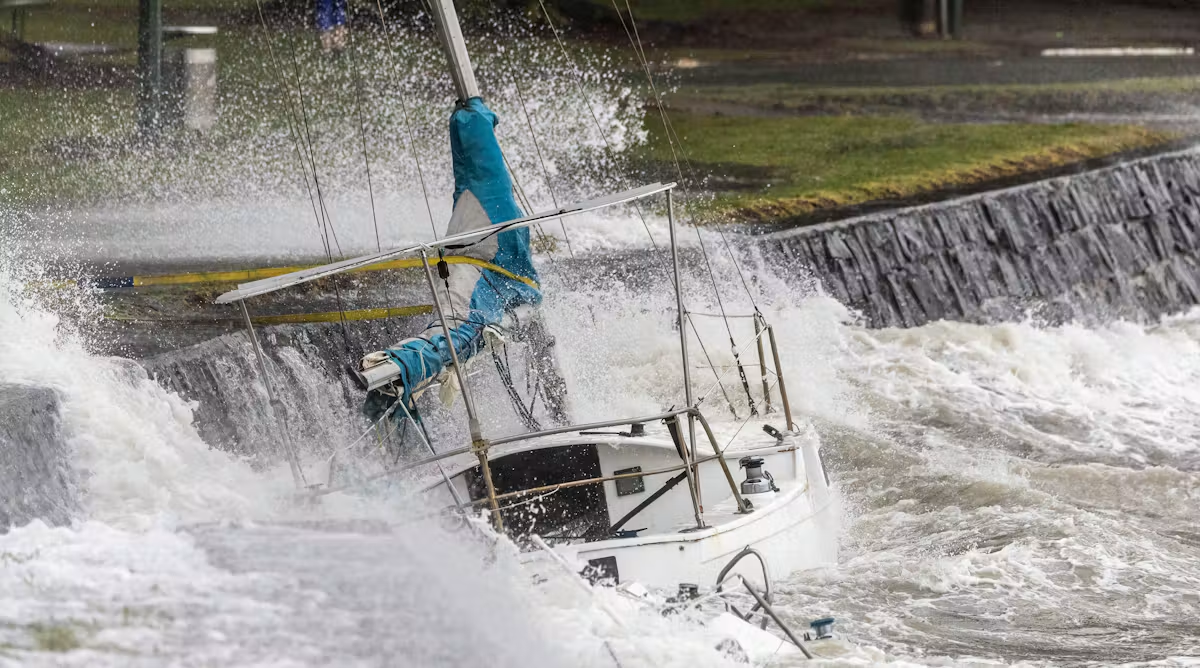
Tropical Cyclone Xavier's location east of typical cyclone formation zones reflects how a powerful El Niño is shifting storm development patterns in the Southwest Pacific, potentially altering risk across the region.
El Niño warms central and eastern equatorial Pacific waters and shifts the South Pacific Convergence Zone northeastward, toward the equator. This shift allows cyclones to develop and travel farther east, increasing exposure for islands in the central and eastern Pacific including French Polynesia. The Coral Sea, a traditional cyclone breeding ground, experiences reduced activity during El Niño.
Earth Sciences New Zealand forecasts seven to 11 named cyclones for this season, compared with a long-term average of nine. At least four could reach category 3 or higher. Normal to reduced activity is expected in the western Southwest Pacific, while risk is elevated near and east of the International Date Line.
New Zealand's cyclone risk remains near normal this season despite the strong El Niño. Getting a cyclone to reach New Zealand requires multiple atmospheric conditions to align. A cyclone must form in the right location, typically between Australia and Fiji, then encounter mid-latitude atmospheric systems like troughs or low-pressure from the Southern Ocean. The westerlies must be strong enough to steer it toward New Zealand without sweeping it eastward too rapidly.
James Renwick, a professor of physical geography at Te Herenga Waka Victoria University of Wellington, compares the process to a pinball machine where small atmospheric changes send storms in different directions. Even examining past years with similar conditions, known as analogue years, yields no identical seasons.
Earth Sciences New Zealand expects ex-tropical cyclones affecting New Zealand to be more likely in late summer and autumn than before Christmas, with northern and western areas potentially more exposed. February and March have been historically active. Cyclones can develop quickly, and even weakening storms bring damaging winds, heavy rain and dangerous seas.