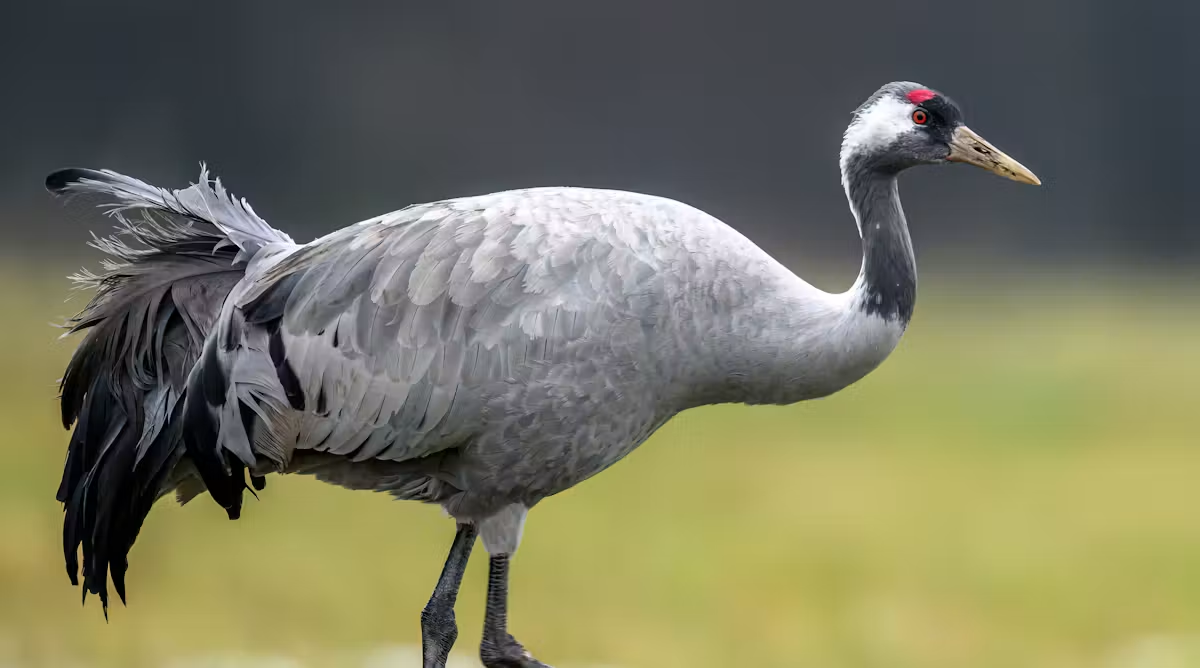
A genetic analysis of ancient crane bones suggests that Grus primigenia, long classified as an extinct species, was not a separate species at all. Researchers at the Centre for Palaeogenetics in Stockholm examined 18 crane bones from England, Wales, France, Germany, and the Balearic Islands. The DNA analysis showed all specimens belonged to the common crane, Grus grus, which still lives in Europe today.
The misclassification arose from size variation. The ancient cranes ranged from smaller to notably larger specimens. Paleontologists in the 19th century interpreted this size range as evidence of two species. However, modern common cranes exhibit sexual dimorphism, with males substantially larger than females. The researchers used molecular genetics to determine the sex of ancient specimens and found that larger birds were predominantly male. This pattern matches modern populations.
Grus primigenia was first named in the 19th century by French biologist Alphonse Milne-Edwards based on bone fragments from caves in southern France, dated to the end of the last ice age roughly 20,000 years ago or more. Remains attributed to this species were found until about 2,000 years ago.
The largest cranes on record come from Flixborough in Lincolnshire, England, an Anglo-Saxon archaeological site where evidence suggests high-status people feasted on them. These finds date to approximately 1,000 years ago. The ancient cranes exceeded the size of modern common cranes, indicating the species shrank over time. Wetland drainage, hunting, and egg harvesting likely contributed to this decline and to the species' disappearance from Britain roughly 400 years ago. Common cranes returned to the UK on their own during the 1970s.
The authors state that many extinct animals have been classified as separate species based on bone size alone. They caution that at least some declared extinctions may actually represent size variation within single species, requiring molecular analysis to confirm distinct species status.