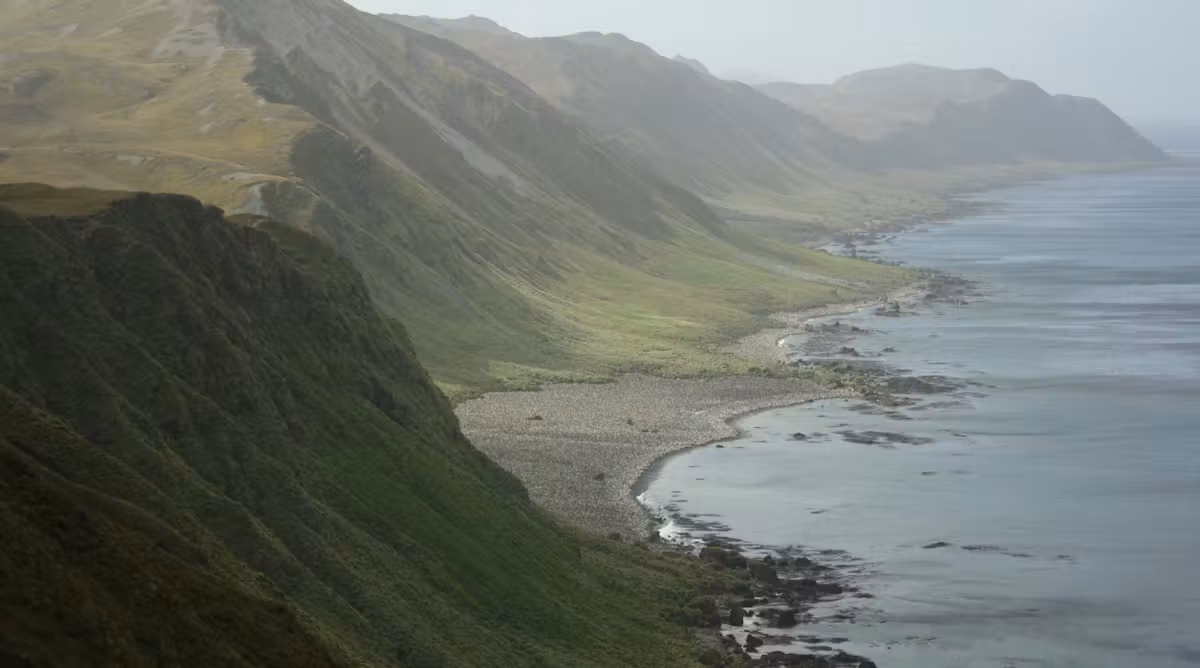
Macquarie Island was declared free of rats, mice, and rabbits in 2014 after aerial helicopter baiting and detection dog follow-up. Antipodes Island became mice-free in 2018. Researchers studied how island invertebrates recovered after rodent eradication on these two sub-Antarctic islands.
The team compared invertebrate populations over time on both islands, using historical data spanning 30 years for Macquarie and eight years for Antipodes. Invertebrates showed good signs of recovery on both islands, with more overall invertebrates and generally more species found across sites. Spiders and fly larvae, which were preyed on by mice, showed particularly strong recovery.
Recovery patterns differed between the islands. On Antipodes Island, native spiders, beetles, worms, and pseudoscorpions showed the greatest recovery. On Macquarie Island, native flies showed the biggest gains. The difference partly reflects the fact that rabbits had grazed Macquarie Island for over 150 years. More than a decade after rabbit removal, plants and landscape had still not fully recovered, leaving less habitat for invertebrates. Macquarie also had invasive rats in addition to mice.
Seabirds recover more rapidly after rodent eradication, though full recovery can take decades. Island invertebrates recover more slowly but are recovering. The researchers note that eradication must be coupled with ongoing biosecurity measures to prevent rodents from returning.