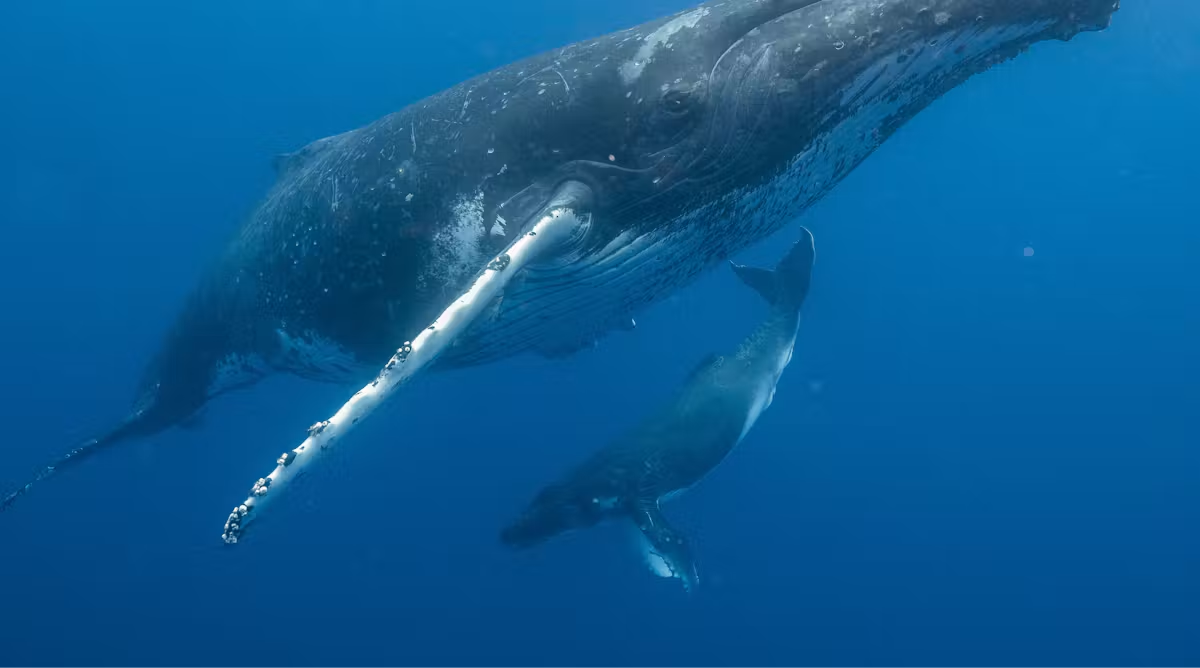
The Humpback Whale Sentinel Programme recorded a dramatic collapse in calf numbers during the 2026 winter migration of southern hemisphere humpback whales. The Cetacean Research Centre reported that daily calf sightings off Western Australia's Ningaloo coast fell from a 12-year average of ten calves to less than two.
Low calf numbers appeared across multiple regions. Ecuador reported low numbers alongside unusually warm ocean conditions. Brazil recorded low calf numbers and increased strandings of young whales. Reunion Island sighted only one calf. Queensland's Moreton Bay saw calf numbers drop 90 percent compared to 2025.
The decline signals stress in the Antarctic sea-ice ecosystem that humpback whales depend on. Humpback whales feed on krill during the Antarctic summer and rely on fat reserves during migration to breeding grounds. Larval krill hide under sea ice during winter, feeding on algae and microbes beneath the ice. As ocean temperatures rise and sea ice melts, krill populations face pressure.
Scientists with the program analyzed tissue samples from five humpback populations that feed in different Antarctic sectors. Results indicated a shift to low sea ice levels around Antarctica following record-breaking lows in 2017. Female humpback whales require sufficient energy reserves accumulated during summer feeding to sustain pregnancy. In 2025, males outnumbered females during Queensland's peak migration by more than ten to one, compared to a 17-year average of 2.7 to one. The shortage of females with adequate reserves to migrate and breed in 2025 corresponded with low calf numbers observed in 2026.
The downturn in humpback breeding coincides with reports of stranded and dead southern right whale calves in Argentina and declining calf numbers among the same species in South Africa, suggesting ecosystem-wide impacts. The Commission for the Conservation of Antarctic Marine Living Resources held meetings in Hobart to discuss extending Southern Ocean protections.