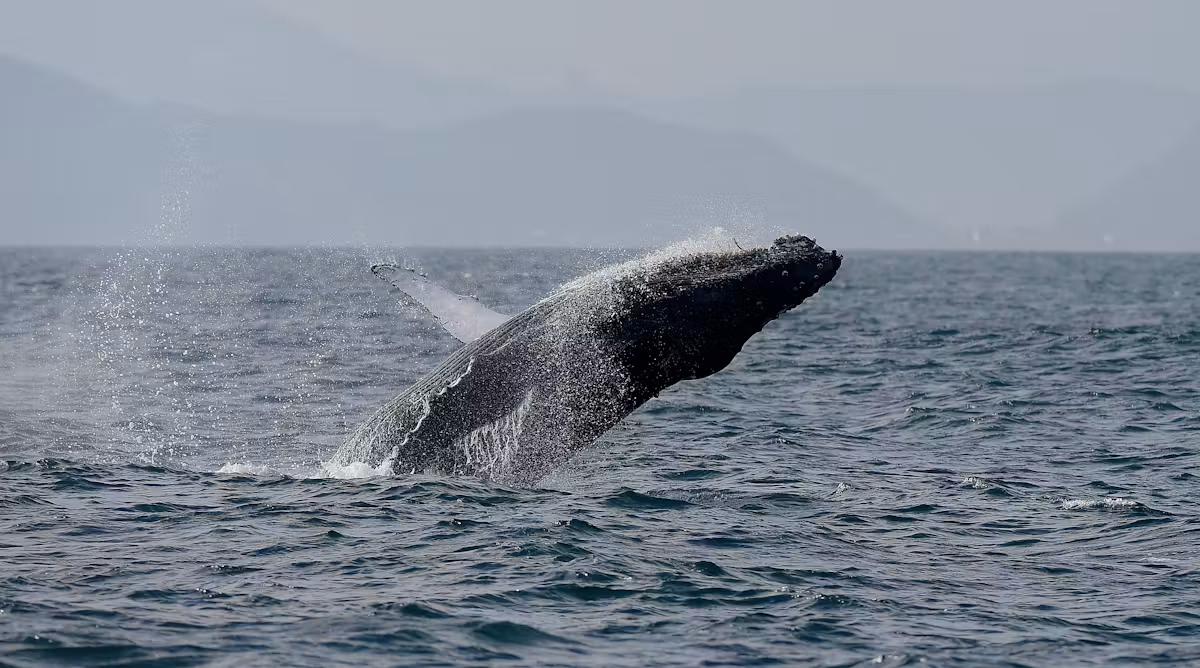
A BC Ferries vessel struck and killed a humpback whale identified as BCX1700, nicknamed Notcho, on October 18. The Sḵwx̱wú7mesh Úxwumixw (Squamish Nation) held a ceremony to honour the whale, drawing national attention.
Notcho's death triggered what researchers call ecological grief: the emotional response to environmental destruction and species loss. The whale had been known in the area for nearly 10 years and had become a recognizable individual to local observers.
North Pacific humpback whales have recovered since commercial whaling was banned in 1966. As their populations in the Salish Sea increase, so does the risk of ship strikes. The whales' surface-feeding behaviour, which allows people to observe them, also exposes them to boat collisions.
Notcho's death became national news partly because it was preventable, traumatic and witnessed closely by ferry passengers. The Marine Education and Research Society has provided practical solutions for preventing future ship strikes based on details of his death.
Researchers increasingly recognize ecological grief as a valid emotional response. Coping strategies fall into three categories: action-focused responses such as calling for ferry speed limit changes, emotion-focused responses such as expressing sorrow through words and emojis, and meaning-focused responses through mourning rituals. The Sḵwx̱wú7mesh Úxwumixw brought Notcho's remains to their territory to care for them "in accordance with our laws" and held a sacred ceremony.
Ecologist Phyllis Windle identified the need for specific mourning practices more than 30 years ago. Without cultural guidance or precedent, people in secularized societies may lack ways to make meaning from ecological losses. Facebook responses to the honouring ceremony showed people creating their own mourning practices and expressing gratitude for the ritual.