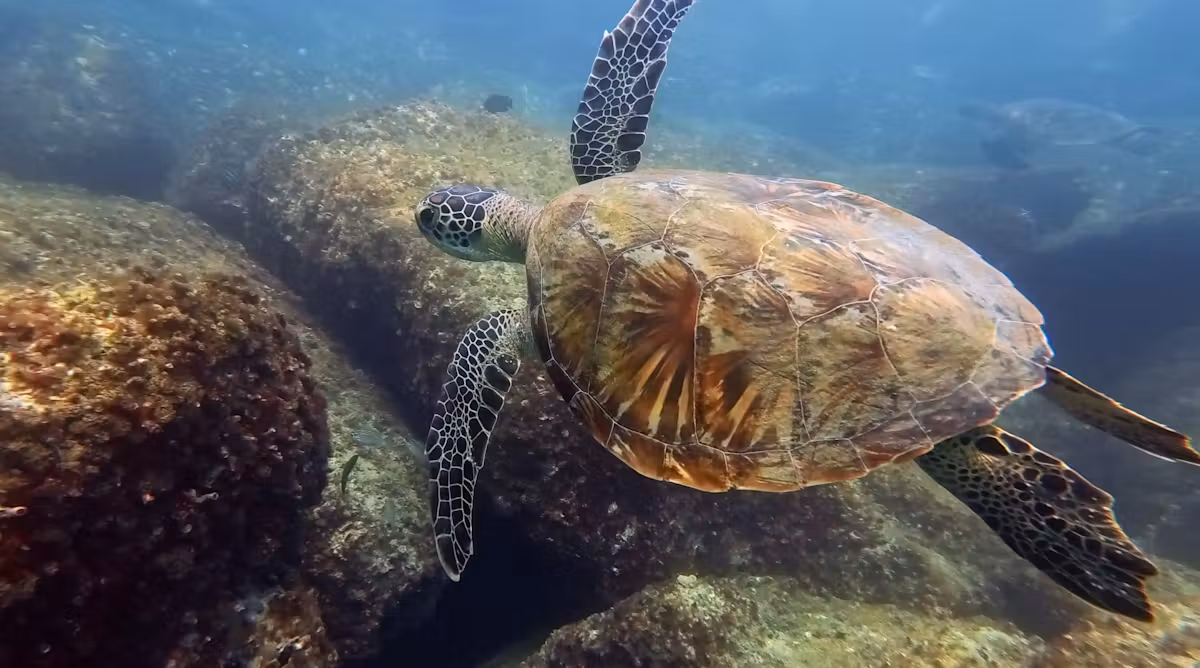
Researchers tracked nine juvenile green turtles in Khor Kalba, a coastal wetland on the UAE's east coast, using satellite tags attached in 2019. Over seven months and more than 2,800 satellite locations, the turtles stayed within 2 miles of the wetland entrance and spent over 80% of tracked time inside the marine protected area's boundary.
The study, conducted by the Environment and Protected Areas Authority, the University of Exeter, and the Sharjah Marine Science Research Centre, found that the turtles were five times more likely to use a human-made basin (a saltwater lagoon built in the early 2000s) than other parts of the wetland. Seventy-seven percent of the turtles' core-use areas concentrated within this artificial basin.
The researchers could not confirm why the turtles favored the basin. Possible explanations include algae on its floor providing food and its enclosed layout offering shelter from predators.
One turtle travelled over 500 miles to Masirah Island in Oman after spending 93 days in the wetland, demonstrating the site's role as a nursery before juveniles move to open waters.
The study revealed a protection gap. The main natural channel connecting the ocean to the mangroves and basin lies outside the marine protected area, though turtles gathered there at low tide. The researchers note that extending protection to include this channel could strengthen conservation value.
The findings suggest wildlife can use human-modified environments, but the authors stress that protecting natural habitats and connections between wetlands and the ocean remains essential.