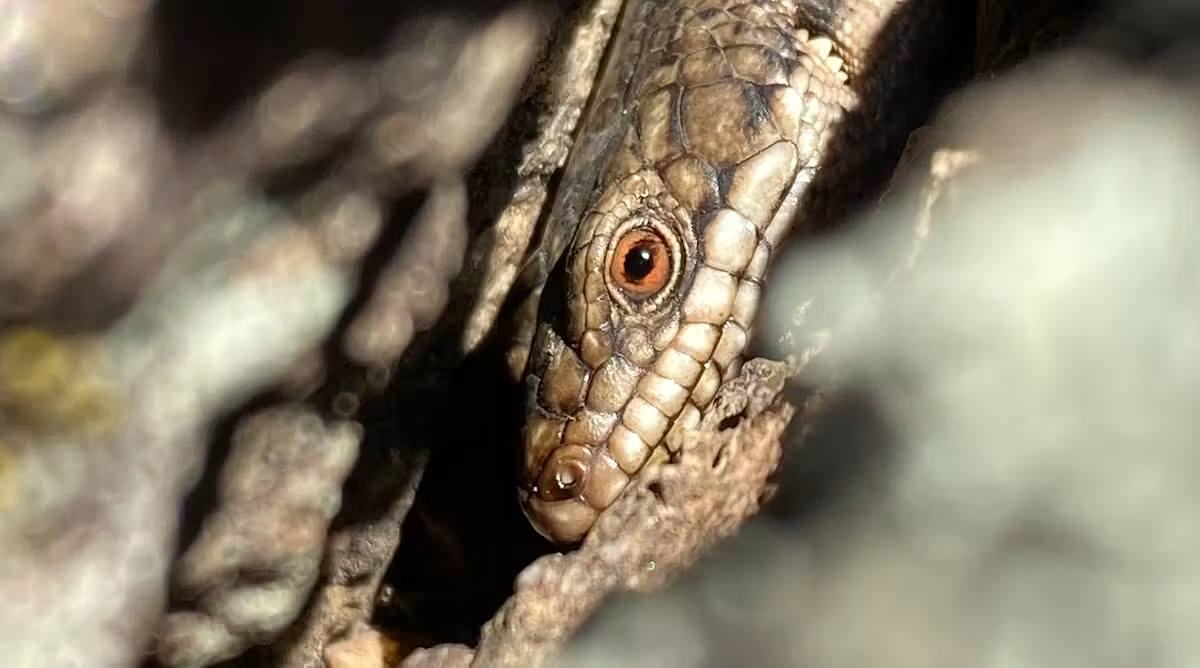
A research team reviewed International Union for Conservation of Nature data and found that over a quarter of the world's terrestrial snakes, lizards and worm-lizards use rocky habitats. More than 1,000 species, roughly 10% of all reptile species, completely depend on rocky habitats for survival.
Rock-dependent species have geographic ranges 68% smaller than species not relying on rocky habitats. They are 51% more likely to be classified as critically endangered.
Rocky habitats help reptiles control body temperature, escape predators, survive harsh winters, socialise, lay eggs and find food. But these habitats are easily damaged or destroyed and may take centuries or millennia to reform. Rocky areas face pressure from mining, quarrying, urbanisation and rock crushing. In Australia, rock crushing machinery can clear and crush surface rocks at rates of up to one hectare per hour, threatening habitat for several threatened reptile species. In the United Arab Emirates, rapid urban development threatens the last rock formation supporting the critically endangered Emirati leaf-toed gecko.
Despite their importance, rocky habitats are often overlooked in conservation plans and classifications. The research team found more than twice as many reptiles live in rocky areas than current classifications capture. This gap matters because without proper recognition, these habitats are less likely to be prioritised for conservation.
Earlier research on Australian farms found that adding surface rocks back into cleared landscapes immediately benefited local wildlife. Within a year, restored rocky areas supported more reptiles and greater species diversity than areas without added rock.