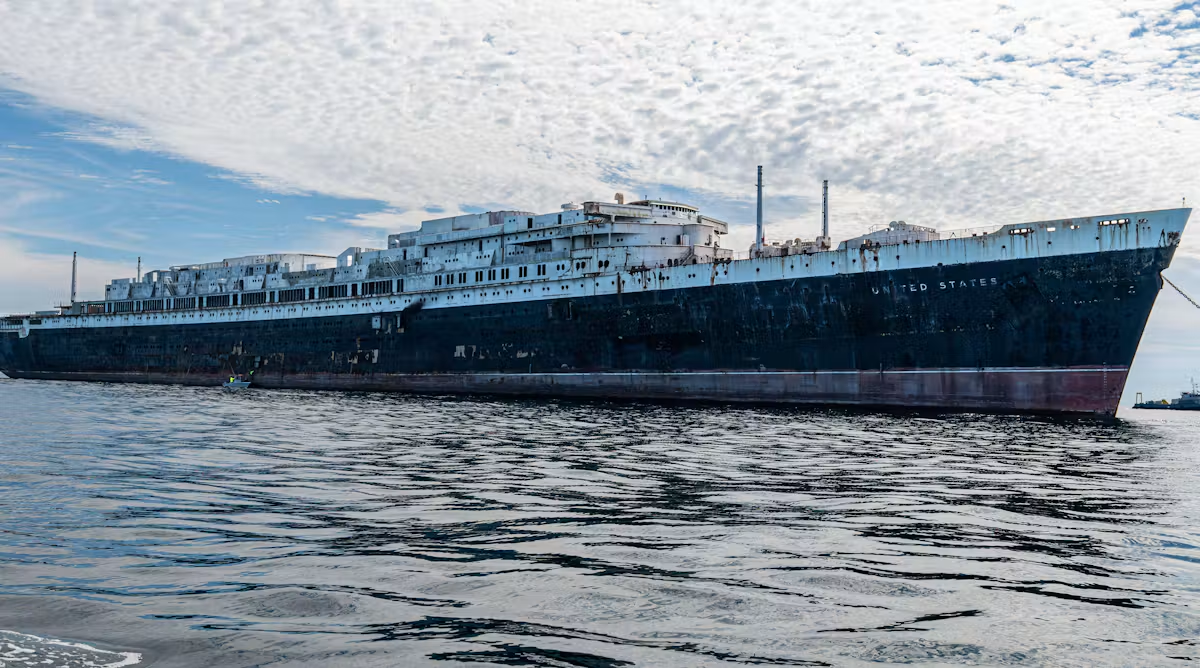
The SS United States, a 302-metre ocean liner, was deliberately sunk off the Florida coast this week to become the world's largest artificial reef. The ship will rest in approximately 55 metres of water, with its upper sections reaching within 17 metres of the surface.
Marine colonisation will begin almost immediately. Within hours, bacteria and microalgae will form a biofilm on the metal surfaces. By the end of three months, small animals and algae will establish themselves on the hull. Hard corals will begin settling by the end of the first year, and over five to ten years the structure will become increasingly encrusted with corals, sponges and other marine life.
Fish will be attracted to the wreck as shelter and food sources develop. Snappers and groupers will use internal corridors for protection, while larger predators including barracuda, king mackerel and sharks may patrol the decks. The ship's size and varied structure will create different habitat types at different depths.
A common misconception holds that artificial reefs simply concentrate existing fish populations. Research shows that large reef structures also create new habitat and food sources. As corals and sponges colonise the wreck, they generate food and shelter that did not previously exist, allowing the ecosystem to support more total marine life. Colonisation occurs naturally through drifting larvae already present in the Gulf of Mexico, not through human seeding of organisms.
Before sinking, the vessel was prepared by removing hazards including oil, asbestos and loose wires, and sealing off sections to prevent diver disorientation.