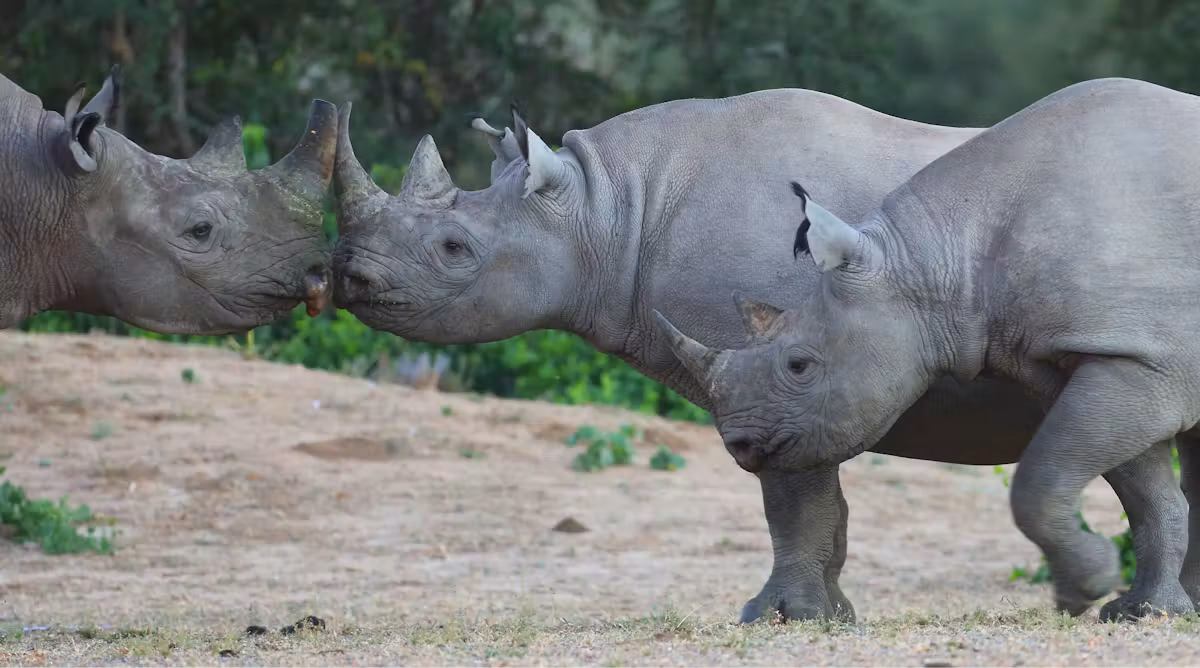
Black rhinos spend most of their time alone, but they interact peacefully with individuals they already know, according to research from the Black Rhino Range Expansion Project. This social pattern may be key to improving translocation, one of the main tools for saving the species from poaching.
The International Union for Conservation of Nature counted 6,788 black rhinos across Africa in 2024. That year, poachers killed 516 rhinos, with 81% of those deaths occurring in South Africa.
Researchers analyzed 69,920 sightings of 542 black rhinos across 14 reserves. They found that 69.2% of sightings involved single animals. Groups of two animals, mostly mothers with young, accounted for 22.7% of sightings. The remaining 8.1% showed groups of 3 to 7 animals.
When black rhinos do interact, they tend to associate with individuals they have previously encountered. Adults also avoid adult males, which are more aggressive. Interacting frequently with unfamiliar individuals decreases calf survival, likely due to stress from repeated encounters with potentially aggressive rhinos.
The Black Rhino Range Expansion Project, a partnership involving the World Wide Fund for Nature South Africa, Ezemvelo KZN Wildlife, Eastern Cape Parks and Tourism, and numerous reserves, has translocated black rhinos for over 20 years to establish new breeding populations across southern Africa.
Managers can use these findings to select animals for translocation more carefully. Moving rhinos that have existing social bonds may reduce aggression after release. Limiting the number of adult males introduced into new populations could also decrease fighting and aggression within translocated groups.