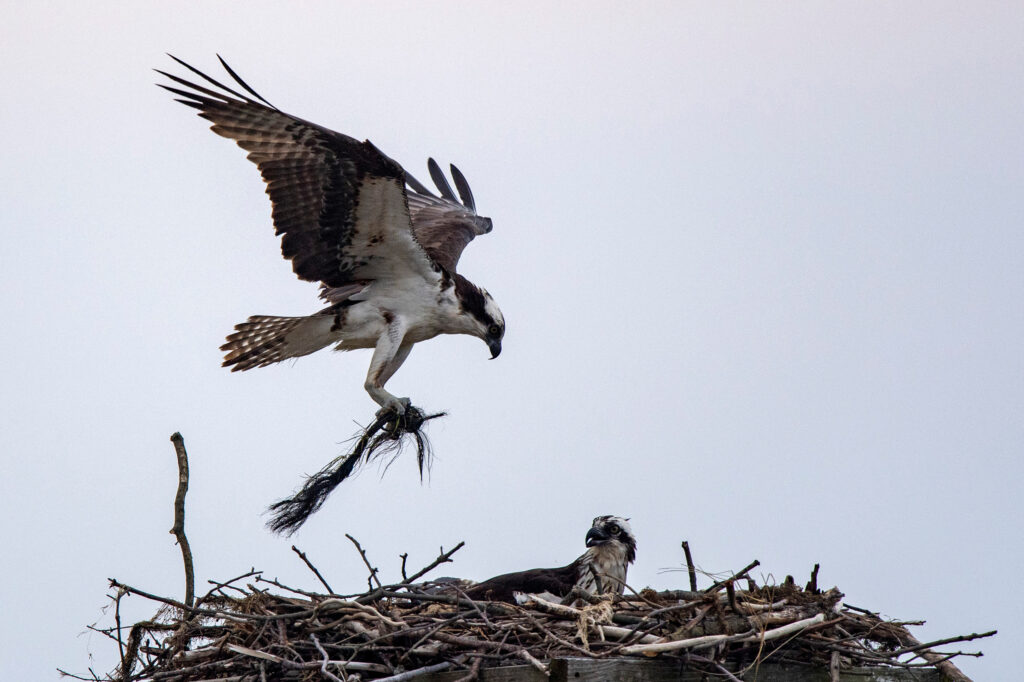
The Chesapeake Bay's osprey population is in steep decline, with researchers linking the collapse to a severe shortage of Atlantic menhaden, a key food source during breeding season.
Bryan Watts, a researcher at William & Mary's Center for Conservation Biology who has studied Chesapeake Bay ospreys for about 40 years, conducted a comprehensive breeding performance survey in 2026. The survey found the bay's osprey population declining sharply, especially in saltier regions where birds depend most heavily on menhaden.
The 2026 breeding season was "the worst productivity year ever recorded for ospreys in the Chesapeake Bay," according to the survey. Nesting ospreys require high fish abundance during April, May and June to raise chicks successfully and cannot adjust when menhaden arrive late in the season.
Current osprey productivity was about 0.26 chicks per pair, well below the minimum break-even estimate of 0.8 needed to sustain the population. On the lower Patuxent River, where ospreys depend most heavily on menhaden, pairs are raising too few young to replace adults that die. Watts estimated an 80 percent decline in menhaden deliveries and a 50 percent decline in food quality compared with the 1980s.
More than 30 percent of osprey females in some study areas were not laying eggs, compared with about 2 percent in the 1980s. Chicks were starving at older ages than historically observed.
Watts said climate change is a contributing factor, shifting the fish's distribution and arrival times. The exact cause of menhaden depletion remains unclear. State and regional fisheries councils state localized menhaden depletion has not been empirically linked to commercial harvest. In 2024, an estimated 410 million pounds of Atlantic menhaden was caught coastwide. The American Small Pelagics Network, representing fishermen and processors, noted the 2025 Atlantic menhaden assessment found the stock is not overfished.
Watts said researchers lack adequate fisheries monitoring data, with industry-held commercial data unavailable to the public.