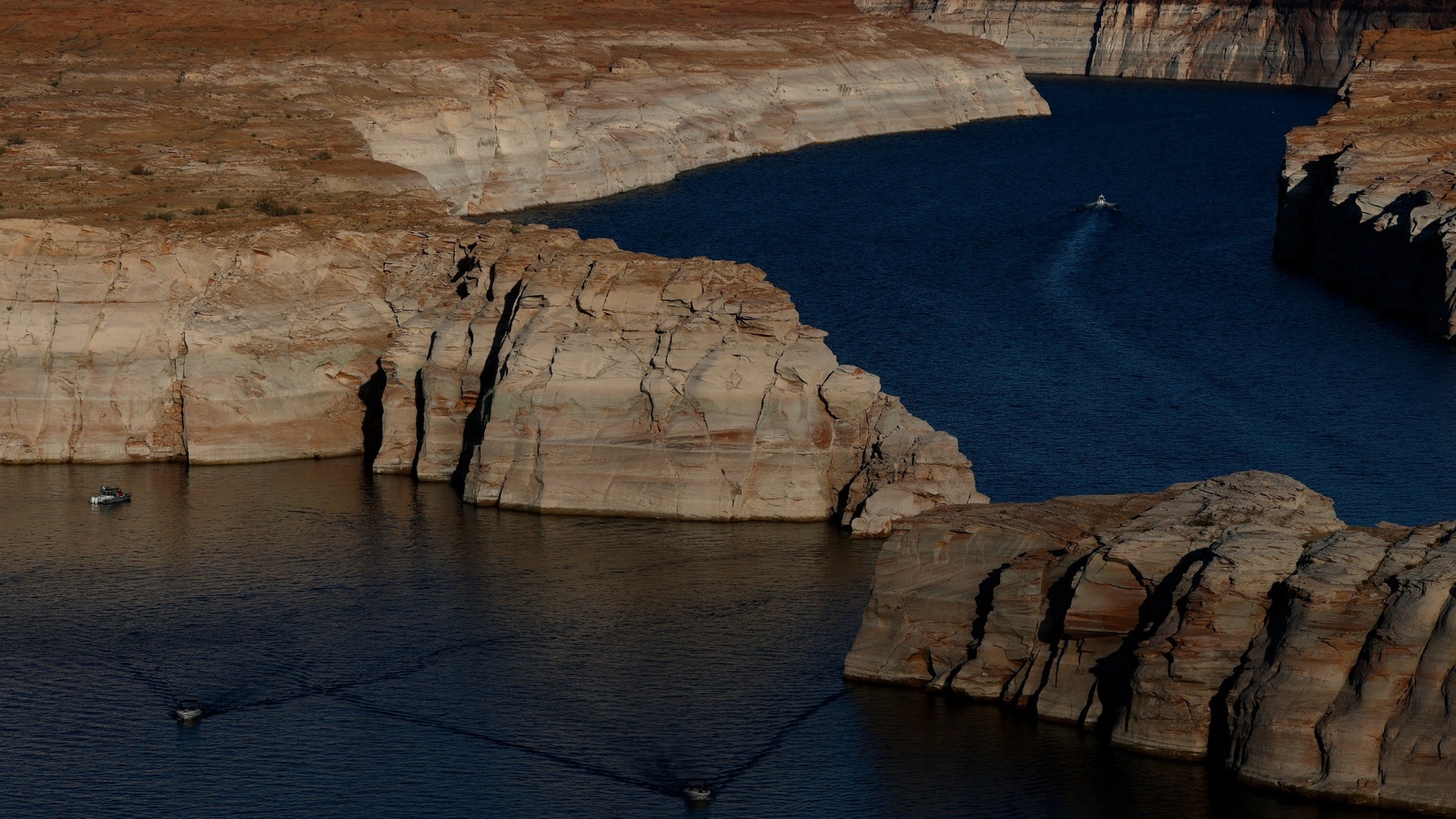
Lake Powell reached a record low last month, dropping below 150 feet above dead pool, the level at which water stops flowing through Glen Canyon Dam to Lake Mead, 300 miles downstream. The 27-year drought in the Southwest, the longest dry period in the last 1,200 years, has shrunk the Colorado River's flow. Climate change is reducing snowpack in Colorado's Rocky Mountains, which provides roughly 80 percent of the river's annual flow. Warmer temperatures melt snow earlier in the year, cutting late-summer and fall runoff. Heat also increases evaporation from the river's 40 reservoirs.
The low water levels have reduced hydropower generation from Powell and Mead, complicated management of riverine ecosystems, and cut water deliveries to Arizona, California, and Nevada. The Bureau of Reclamation has curtailed environmental flows, releases of cold water from Powell that protect fish and build sandbars for wildlife habitat in the Grand Canyon. Farmers are leaving fields unplanted. Some housing developers have paused construction due to uncertain water supplies.
Federal and state governments are considering options to manage competing demands: diverting water from upstream reservoirs to refill Powell, cutting downstream water deliveries by 40 percent, or paying farmers to keep water in the river. Some observers now consider draining Lake Powell entirely, an option previously seen as unthinkable. The Glen Canyon Dam was built in the 1960s to provide hydropower, subsidized water for agriculture, and recreational access. The dam flooded Glen Canyon, which conservationists described as even more beautiful than the Grand Canyon.