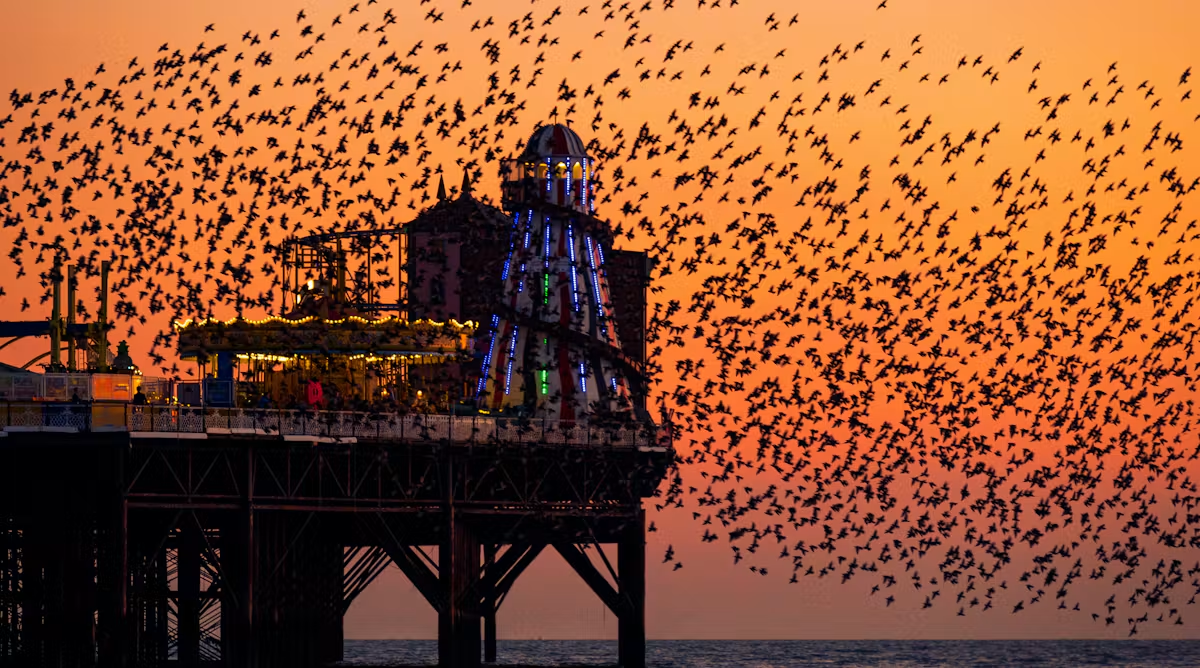
Britain's breeding starling population fell 61 percent between 1995 and 2024, according to the British Trust for Ornithology. Researchers at the University of Gloucestershire are now repeating a citizen-science survey to determine whether the autumn and winter murmuration displays starlings create are changing in size, timing, or location.
The original survey ran from 2014 to 2016, producing over 3,000 observations from 23 countries about murmuration characteristics. A 2017 analysis of that data found that murmurations grew larger and lasted longer when predators such as peregrine falcons and sparrowhawks were present, suggesting predator avoidance was a major reason for the displays. The research also detected a seasonal pattern linked to day length.
Researchers now want to know whether those patterns persist as climate and migration change. Britain's winter starling population includes large numbers of birds arriving from continental Europe. As winter conditions shift, their migration timing and routes could alter when and where murmurations occur. Changes in food availability and roosting habitat may also influence the displays.
The research team is asking the public to record murmuration observations again this autumn and winter, noting location, timing, flock size, display duration, and the presence of predators.