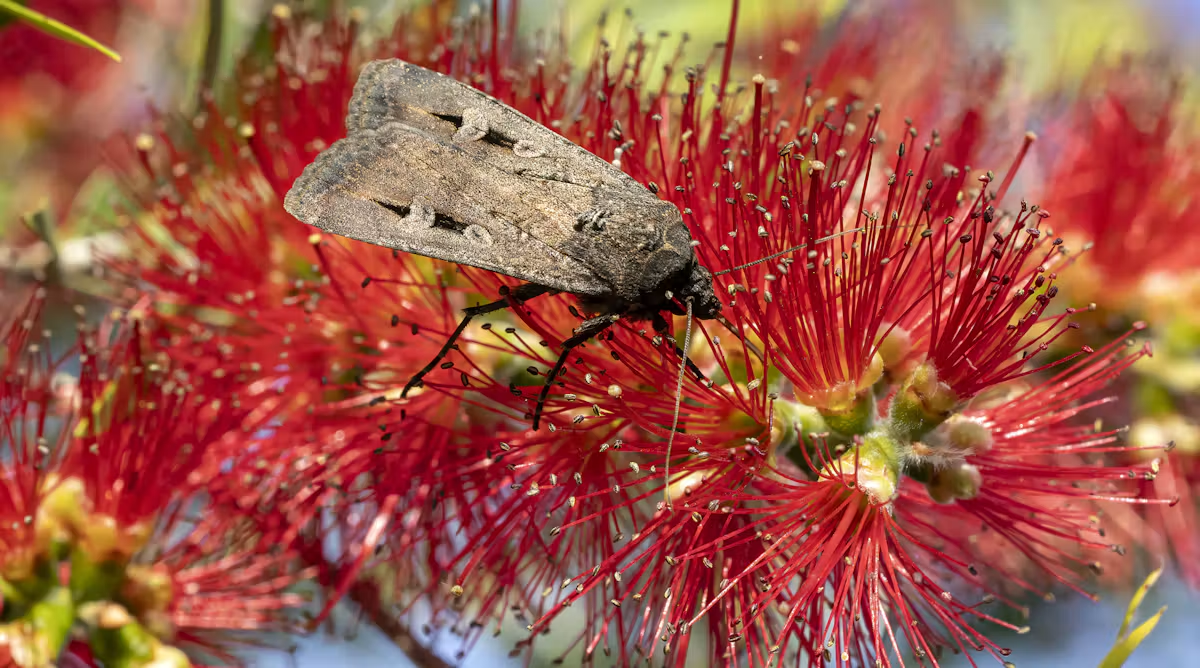
Millions of bogong moths are migrating through Australian cities this spring, clustering in homes and vehicles as they travel from breeding grounds in southern Australia to alpine caves. Scientists remain uncertain whether bogong populations are recovering after years of decline or simply visible in cities more frequently this year. Possible causes include increased food availability, favourable breeding conditions, and strong winds.
Bogong moths (Agrotis infusa) are classified as endangered on the International Union for Conservation of Nature's Red List. The moths face extinction risk because climate change is warming the Australian Alps, where they seek refuge from summer heat in cool mountain caves. Without access to this high-quality habitat, the species may struggle to complete its migration.
Scientists do not yet understand bogong moth biology and movement patterns well enough to predict their migrations like they do for birds. Researchers are now using citizen science to fill knowledge gaps. Australians have recorded hundreds of bogong moth sightings on platforms like iNaturalist and social media in recent months. Observations have revealed that bogong moths prefer Callistemons and Grevilleas as food sources, information unknown before this surge in sightings.
The moths have been spotted as far west as Perth and as far north as southern Queensland, more than 2,000 kilometres from the alps in some cases. Where they travel from and to remains unclear. Researchers are exploring whether weather radar could help track their travel patterns. The Bogong Watch tagging program also allows the public to participate in research.
The last time bogong moths blanketed Sydney and Canberra was 26 years ago.