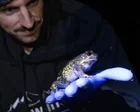
Tadpoles of the southern giant burrowing frog, collected from puddles after the 2019-20 black summer bushfires in East Gippsland, have been raised in captivity and released back to the wild. About 160 tadpoles were transported to Melbourne Zoo, where they were raised through metamorphosis and bred in captivity for the first time last year. Fifty-three of those frogs, now about five years old, were returned to their native habitat in recent weeks.
Matt Clancy, a herpetologist at Snowline Ecology, said the frogs grow to roughly the size of a cricket ball and spend much time buried underground in sandy soils and forested environments. They surface to breed in ephemeral creeks and ponds only when conditions are right. Tadpoles can take three months to two years to metamorphose, usually emerging as juvenile frogs in spring or summer, Clancy said.
The frogs were released after thunderstorms that brought 80 to 100mm of rain to the sites. Ryan Moes, a specialist amphibian keeper at Zoos Victoria, said the team conducted genetic testing on all tadpoles originally collected to avoid siblings breeding together in the captive program. Each released frog was tagged, and song meters were installed at release sites to detect the frogs' calls.
The species is considered critically endangered in Victoria. Giant burrowing frogs were split into two distinct subspecies, northern and southern, in 2021. Populations have been severely affected by habitat destruction. More frequent and severe bushfires and droughts due to climate change, as well as less rainfall, are ongoing threats, Moes said. There are only five known breeding sites of the southern giant burrowing frog in Victoria.