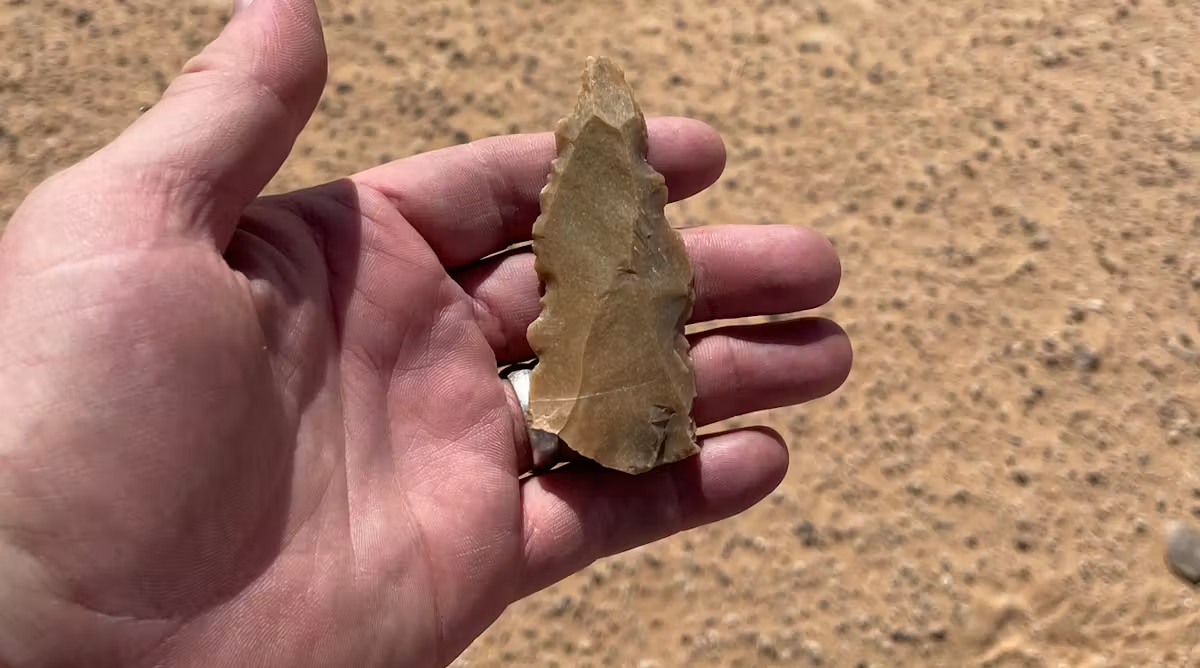
A study published in Science examined an archaeological site at the ancient Mundafan lake in southern Saudi Arabia, dating to about 125,000 years ago. Researchers collected over 5,500 stone tools and mapped them alongside animal fossils to understand how humans lived in the region during a wetter climate phase.
Luminescence dating of lake and shoreline deposits, supported by hippo tooth data, placed the archaeological site at approximately 125,000 years ago. Fossil animal remains including hippos, giant buffalo, gazelles, oryx and ostriches indicate the area had freshwater habitat and open grasslands.
Microscopic analysis of stone points revealed broken tips consistent with impact during hunting. One point preserved resin and plant fibres near its base, suggesting attachment to a shaft. Animal fats and protein survived near the tip, supporting use as a hunting weapon.
Chemical analysis detected traces linked to the arrow-poison tree on at least one impact-damaged point, alongside animal residues. Other tools carried traces consistent with extracting and processing toxic plant latex. The researchers stated these finds show "humans used poison-assisted hunting about 65,000 years earlier than recently reported South African examples."
Tools also preserved fragments of leaves, wood, bark and palm leaves. Wear patterns on tools with toothed edges suggest people sawed or shredded plants, potentially producing material for bindings and equipment. Animal remains clustered in areas with high concentrations of stone tools, linking lakeshore activities to hunting and processing of fauna.
The Mundafan lake filled during separate wet phases. As climate became drier, the lake dried and deserts returned, though researchers do not yet know where inhabitants relocated.