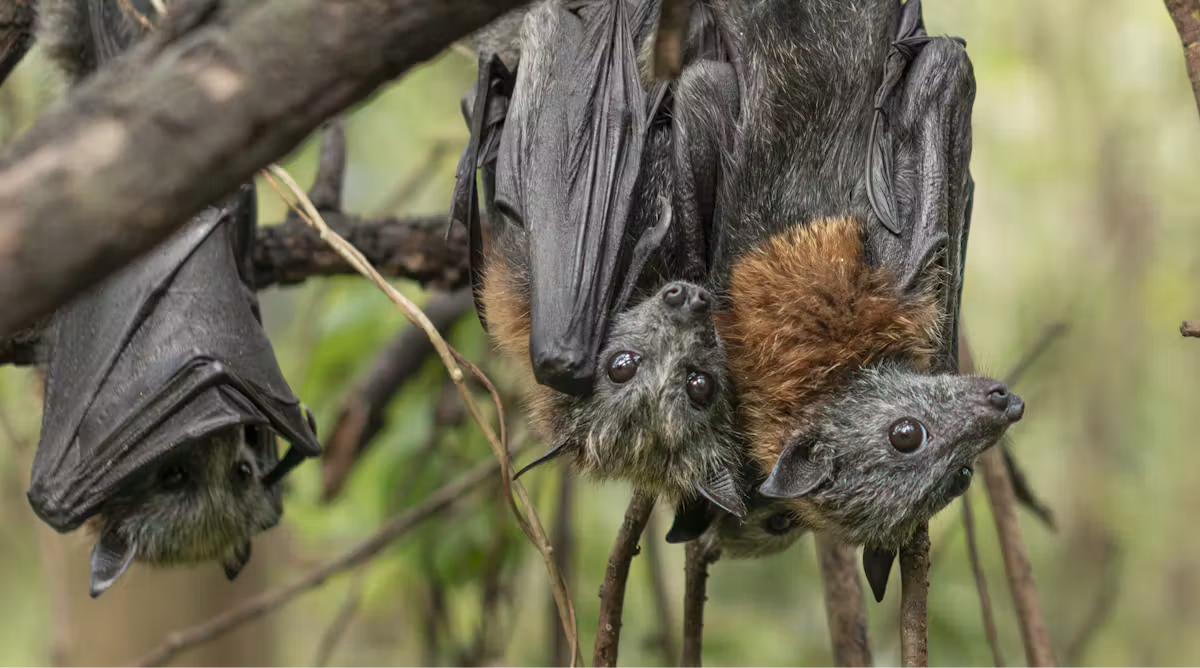
Australia's flying-foxes are starving again. Wildlife carers report large numbers of distressed animals needing care in New South Wales and eastern Victoria, with grey-headed flying-foxes worst affected. Banana and berry growers have documented crop damage and sightings of weakened bats. Researchers suspect a food shortage caused by a very warm winter that may have altered flowering patterns of nectar-bearing trees, though investigations are continuing.
This crisis follows a pattern. Tens of thousands of flying-foxes died from extreme heat during the 2019-20 Black Summer fires. Thousands more died during the 2025-26 summer from the same cause. Climate change is steadily making their lives harder.
Australia has no coordinated national response. In 2016, land managers, researchers, conservationists and industry backed a national approach to managing flying-foxes. A decade later, no change has occurred.
Grey-headed flying-foxes prefer eucalypt nectar and pollen over cultivated fruit and turn to orchards only when native foods are scarce. Between 1996 and 2020, researchers documented recurrent food shortages and increasing reliance on agricultural and urban areas as land clearing removed much of southeast Queensland's native winter-flowering habitat.
Flying-foxes are among the most mobile animals on Earth, flying over 100 kilometres a night. They are also vital pollinators and seed dispersers. Three of Australia's five flying-fox species are considered threatened nationally. The Christmas Island flying-fox is critically endangered but has no national recovery plan. The spectacled flying-fox is endangered but relies on a 2010 plan now six years past its intended timeframe. The grey-headed flying-fox is vulnerable but its 2021 recovery plan is past its mandatory five-year review period.
In late 2022, the National Flying-Fox Monitoring Program was defunded, leaving Australia without an up-to-date national picture of flying-fox populations. Of 476 known flying-fox camps in NSW, 52 percent are now being monitored, up from 35 percent in 2019.
Queensland still allows grey-headed flying-foxes to be shot to protect crops despite promises to ban the practice. Wildlife carers responding to this year's crisis lack sufficient support in training, equipment, vaccinations, veterinary access, and rehabilitation capacity.