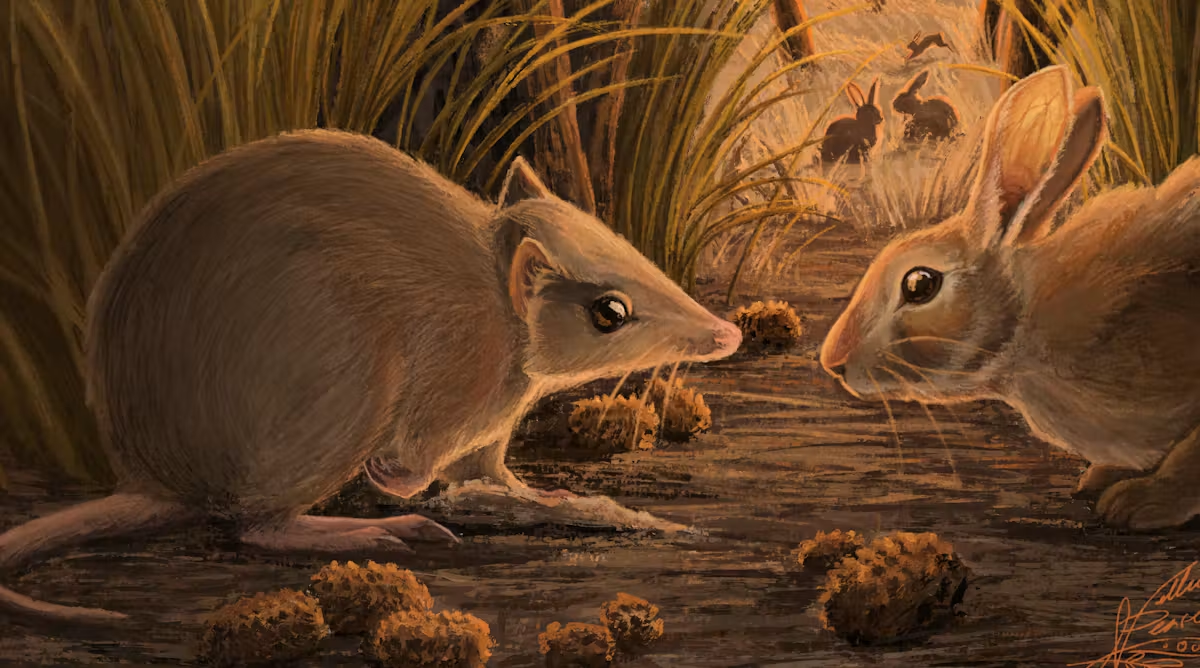
A ten-year study of museum specimens from collections worldwide has identified two previously unrecognized bandicoot species and expanded the known range of the quenda, reshaping understanding of Australia's short-nosed brown bandicoots in the genus Isoodon.
Researchers including Kenny Travouillon, Steve Cooper, and Terry Bertozzi examined hundreds of historical and modern specimens. Using DNA analysis and detailed skull measurements, they reassessed how different bandicoot populations were related.
The study recognized the little brown bandicoot (Isoodon microtis) as a distinct species from South Australia, believed extinct around a century ago. It had sat unnoticed in museum collections for generations. The New Guinea brown bandicoot (Isoodon moresbyensis), previously regarded as a subspecies of the northern brown bandicoot (Isoodon macrourus), was confirmed as a separate species.
Before this work, five living species of Isoodon were known in Australia and New Guinea. The revision identified the quenda as historically present far beyond Western Australia. Specimens show it once lived around Adelaide, Kangaroo Island, and the Nuyts Archipelago, representing a major eastward extension of its known range.
Previous classifications suggested only one species, the southern brown bandicoot, occurred in South Australia. The revised findings show the state was once home to three species: the southern brown bandicoot (Isoodon obesulus), the little brown bandicoot, and the quenda (Isoodon fusciventer).
The researchers also described two new subspecies of golden bandicoot, four of the quenda, and one of the northern brown bandicoot from Cape York in Queensland.
The discoveries have conservation implications. For the quenda, the newly recognized broader historical range suggests the species may be less threatened overall than previously believed. However, South Australian populations remain small and require ongoing protection. For the southern brown bandicoot, already listed as endangered, the revised distribution suggests a more restricted range and potentially greater conservation risk.
Travouillon, Cooper, and Bertozzi received funding from the Australian Biological Resources Study, Bioplatforms Australia, and the Winston Churchill Memorial Trust.