China imports more than three million donkey hides annually, according to the Donkey Sanctuary, a UK-based animal welfare organization. About 25 to 35 percent of those hides come from stolen animals.
The demand comes from ejiao, an ancient traditional Chinese medicine made from donkey hide gelatin. Ejiao is now consumed by tens of millions of Chinese women as a tonic for blood health, marketed to treat fatigue, dizziness, dry cough and irregular bleeding. Over recent decades, production shifted from small-scale handmade batches for imperial elites to industrial scale. The market has expanded beyond medicine into cakes, drinks, cosmetics and wellness products, with prices ranging from affordable pharmacy sales to thousands of renminbi at the premium end.
Current demand requires 4 to 5 million donkey hides per year. China's own donkey stock cannot meet this. Donkeys breed slowly, creating a supply gap that the poorly regulated trade fills largely from Africa, which holds about two-thirds of the world's donkeys.
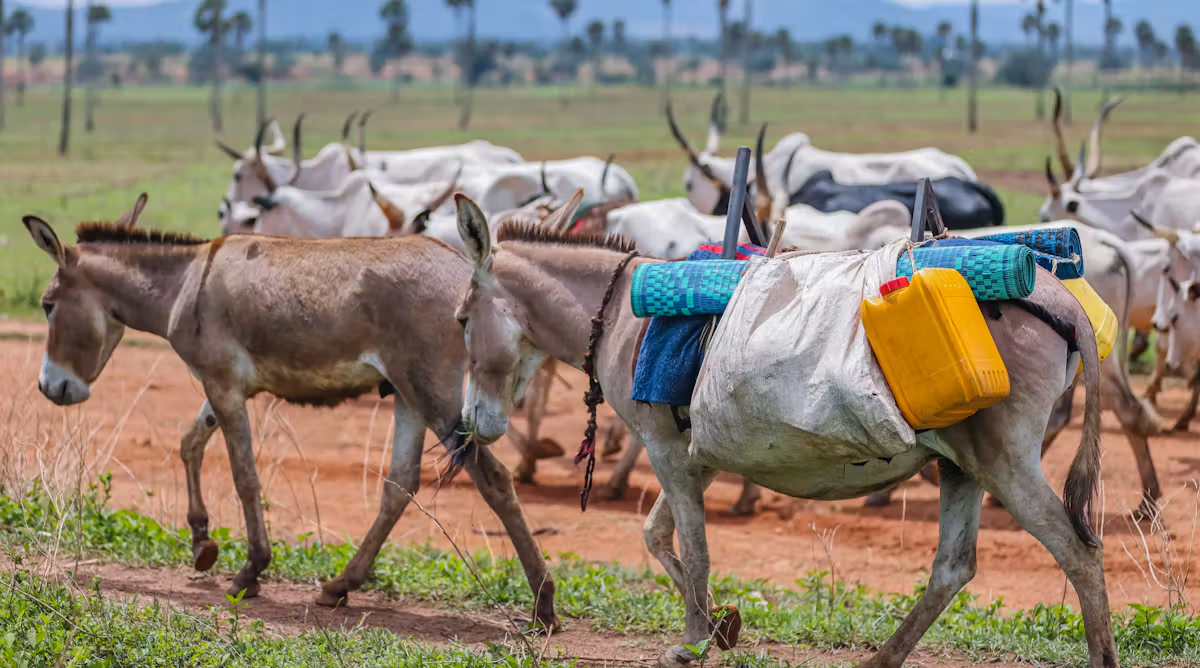
The trade has had severe consequences in African rural communities. Donkey prices have climbed beyond what poor families can afford. In South Africa, a donkey that sold for about $30 in the late 2010s cost $125 by 2022. Donkeys carry water, firewood and farm produce across arid regions. Owning one saves women about five hours of labor weekly and children about ten hours. When donkeys are stolen or priced out of reach, household income, food security and schooling suffer.
In February 2024, the African Union Summit backed the Dar es Salaam Declaration, which called for a 15-year continental moratorium on slaughtering donkeys for hides. Implementation remains incomplete, as it requires each member country to change laws and apply them consistently. Banning trade can push it underground, as occurred when South Africa imposed limits and supply moved through Lesotho, where slaughter standards are lower.