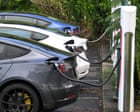
Australia's electric vehicle market reached a historic inflection point in the first half of 2026, with sales doubling year-over-year to 157,957 units, according to data released by the Electric Vehicle Council. This translates to one EV sold every 100 seconds across the country, marking the fastest adoption rate in the nation's automotive history.
The surge reflects a fundamental shift in consumer behavior. Australian buyers moved past early-adopter status into mainstream market territory, driven by expanding model availability, falling battery costs, and growing concern over fuel price volatility. The doubling came despite the absence of federal purchase incentives comparable to those in Europe or the United States, which offers either tax credits or rebates on EV purchases.
The Electric Vehicle Council's findings show that EVs now capture a meaningful share of total vehicle sales during this period. At the current trajectory, Australia appears positioned to exceed 300,000 EV sales annually by late 2026, a milestone that would reshape the country's transport emissions profile. Transport accounts for roughly 18 percent of Australia's greenhouse gas emissions, with light vehicles comprising the largest subsector.
Market analysts attribute the acceleration to several converging factors. Tesla's continued market dominance, combined with new entrants like BYD, Volkswagen, and BMW ramping production in key segments, expanded choice beyond premium models. Price compression in the mid-market segment, particularly in the 40,000 to 60,000 Australian dollar range, opened purchasing to households previously unable to access EV technology. Battery manufacturing partnerships between Chinese manufacturers and Australian suppliers also reduced supply chain constraints that had throttled inventory through 2024 and 2025.
Charging infrastructure remains a bottleneck, however. While major metropolitan corridors now feature functional public networks, regional Australia still lacks reliable fast-charging corridors. The National Roads and Motorists Association flagged significant gaps along interstate highways, particularly between Melbourne and Adelaide, and across inland Queensland. Government commitments to expand the charging network through AUD 250 million in federal funding announced in 2025 are gradually filling these gaps, but coverage remains uneven.
State-level policies diverged sharply in 2026. New South Wales and Victoria maintained purchase incentives targeting commercial fleets and lower-income buyers, while Queensland eliminated its EV rebate in mid-2026, creating a sudden sales dip in that state. These policy inconsistencies created a patchwork market where geography partly determined adoption rates.
The acceleration carries implications for Australia's automotive manufacturing base. With local vehicle production now negligible after Ford and Holden exited, Australia shifted entirely to import dependence. This leaves the country vulnerable to supply shocks and tariff exposure, particularly as trade tensions between the United States and China periodically disrupted vehicle flows through 2025.
Electricity grid stability represents another consideration. Modeling by the Australian Energy Market Operator projects that EV battery charging will add roughly 10 to 15 terawatt-hours annually to grid demand by 2030 if adoption continues at current rates. This additional load concentrates during peak evening hours when solar generation diminishes, creating pressure to accelerate battery storage deployment and grid modernization investments already outlined in the Government's Rewiring the Nation initiative.
The trajectory suggests that within four years, EVs will comprise more than 40 percent of new vehicle sales in Australia, fundamentally restructuring the transport sector's carbon profile and energy demand patterns.