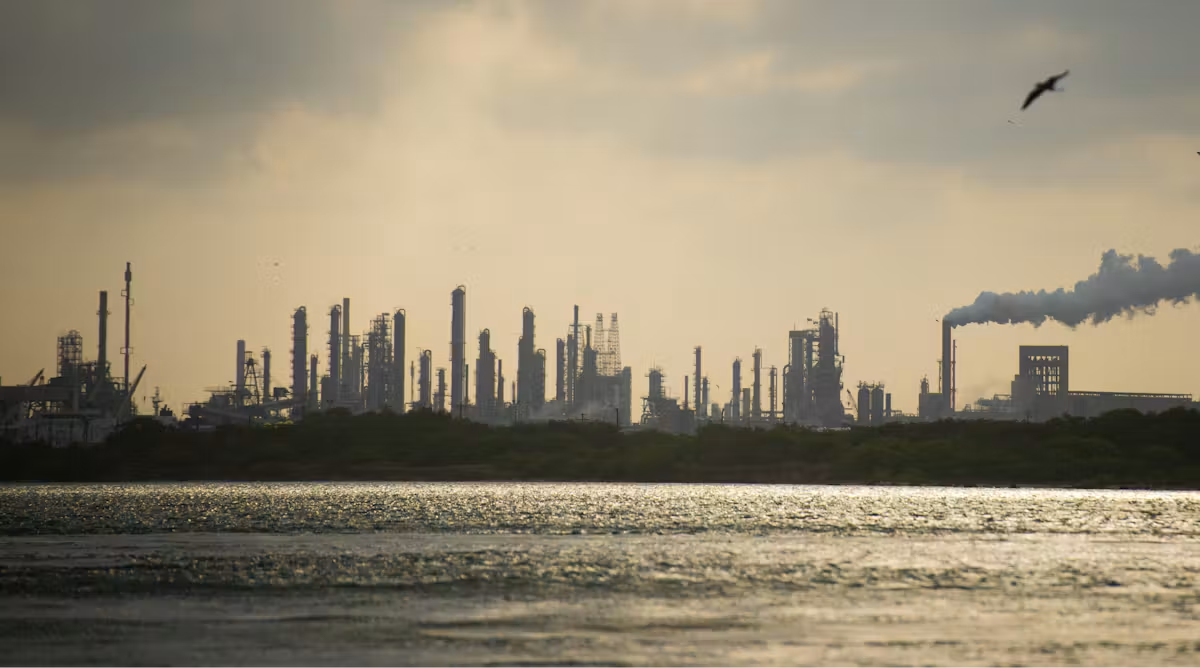
Air quality monitors in 10 Texas counties recorded fine particulate matter, known as PM2.5, above the new federal health limit in 2024. Gov. Greg Abbott requested that the U.S. Environmental Protection Agency declare the entire state in compliance with the federal PM2.5 standard, which would avoid requiring Texas to write a pollution control plan. The Texas Commission on Environmental Quality had advised cleaning up four counties, but Abbott moved to skip the need for statewide planning altogether.
PM2.5 particles measure 2.5 microns or less in diameter and can be inhaled deep into the lungs and enter the bloodstream. Exposure has been linked to heart attacks, strokes, respiratory problems and other ailments. The particles form in the atmosphere from sulfur dioxide, nitrogen oxides and hydrocarbon gases emitted by power plants, vehicles and other sources.
During Abbott's 12 years in office, progress in reducing PM2.5 and ozone smog largely stalled, though Texas air pollution had declined for decades. Houston and Dallas have missed deadline after deadline to meet federal ozone standards. State regulators blamed much of the smog on foreign sources.
Of 21,769 unauthorized pollution releases reported by refineries, chemical plants and other facilities over six years, regulators classified fewer than 1% as "excessive," the designation requiring a company to fix the problem.
Texas' coal power plants emit more sulfur dioxide than any other state's. Federal rules have required new coal plants to install scrubbers since 1979, but older plants were exempted. A 2016 Obama administration plan and a 2023 Biden administration proposal would have required several Texas plants to install or upgrade scrubbers. In 2025, the Trump administration accepted Texas' own haze plans, which required no new scrubbers.
Research at Rice University found that PM2.5 from Texas coal plants kills hundreds of people a year. The W.A. Parish power plant, located southwest of Houston, emitted three times as much sulfur dioxide as all other facilities in the Houston region combined in 2024. Modeling linked its pollution to 177 deaths a year.
Fourteen Texas counties now exceed the PM2.5 limit. Democratic state Rep. Gina Hinojosa, elected to succeed Abbott in January 2027, has a history of supporting pollution cleanup efforts. Within weeks of her inauguration, the EPA faces a court-ordered deadline to announce which counties violate the PM2.5 standard. Hinojosa can withdraw Abbott's request and ask the EPA to designate counties as failing to meet the standard where data warrants it, which would trigger a need to write cleanup plans.