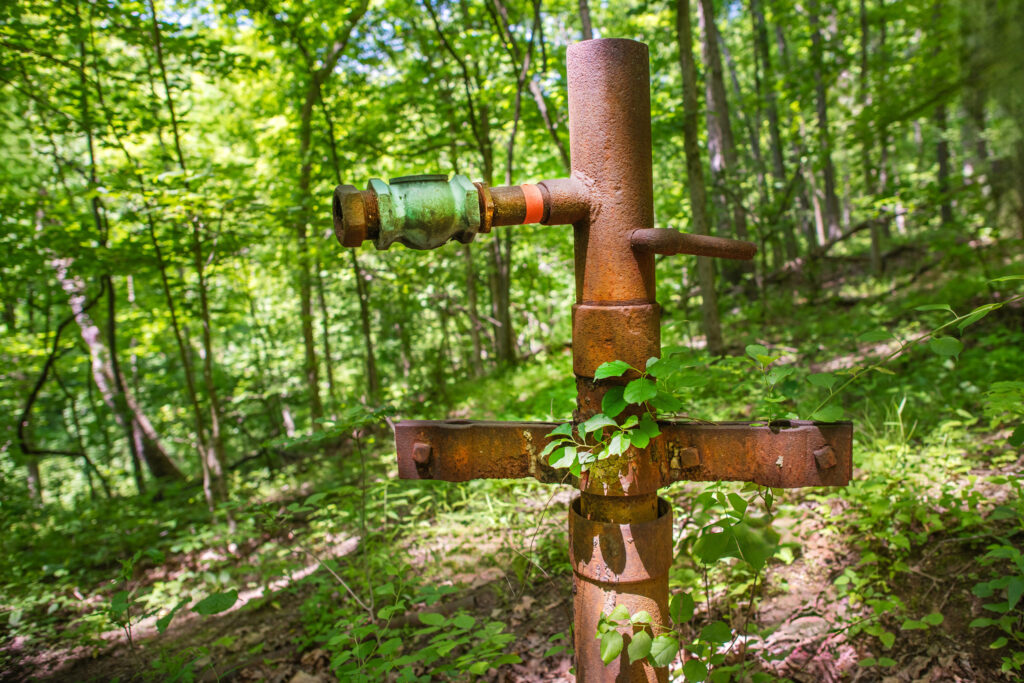
Pennsylvania contains hundreds of thousands of oil and gas wells drilled since 1859, when Edwin Drake struck oil south of Titusville. Many have been abandoned, their operators unknown or defunct. Some wells remain visible as rusting wellheads and pipes. Others leave little surface trace.
These wells scatter across the state's landscape. They sit hidden in forests, shopping centers, and the Pittsburgh Botanic Garden. Some lie beneath the Pittsburgh International Airport's terminal and runways. Wells may exist in backyards or beneath homes.
Abandoned wells can pose environmental hazards. Some may leak methane, carbon monoxide, or carcinogens like benzene. Oil and gas wells can create air and water pollution.
Pennsylvania's Department of Environmental Protection provides an oil and gas well mapping tool, but it can be slow and difficult to use, especially for non-experts. Inside Climate News and the Pittsburgh Post-Gazette developed a streamlined mapping tool to help residents identify well locations near homes, schools, workplaces, and parks.
The outlets simplified the state's well classification into four categories. Active/Other wells mostly still produce oil or gas, though the state's active category includes wells with no status description, meaning some disused wells may be incorrectly listed as active. A small number of wells have regulatory inactive status, which allows operators to shut down production for up to five years without sealing a well. Plugged wells are recorded as sealed, mostly by contractors hired by former operators or by the state. Plugging can fail as materials deteriorate over time, so some plugged wells may still leak gases.