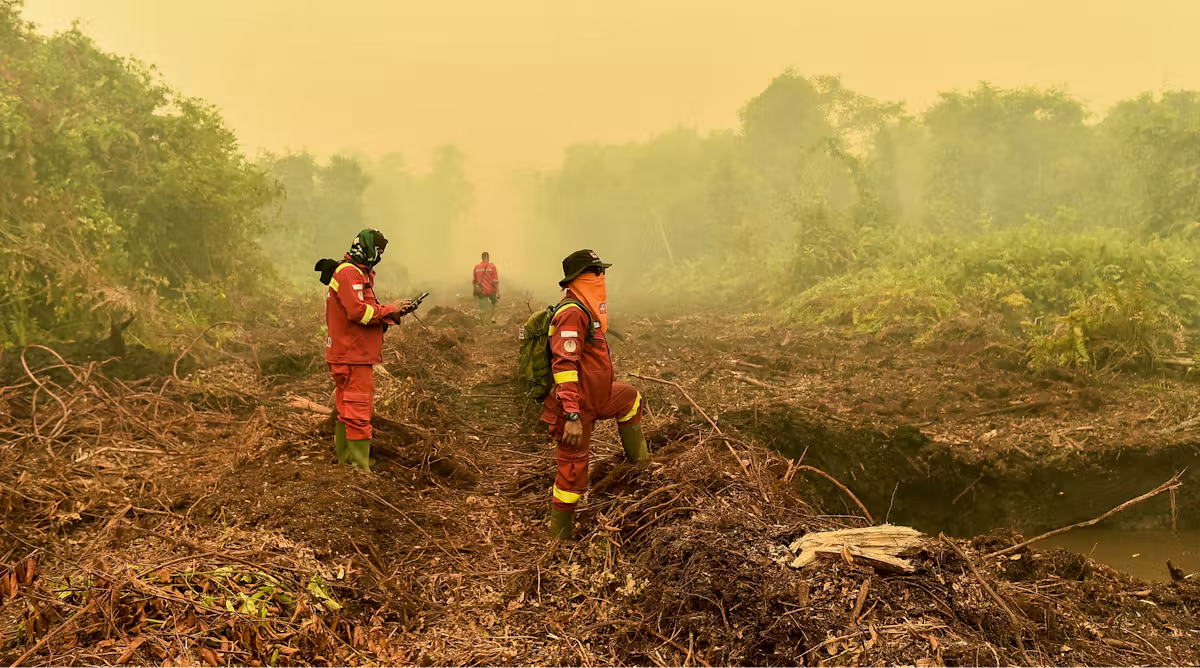
As of late September 2026, fires across Indonesia burnt 1.9 million hectares, releasing around 100 million tonnes of carbon, or approximately 370 million tonnes of CO₂. The Copernicus Atmosphere Monitoring Service predicted emissions could reach 200 million tonnes by October.
Peatlands covered only 20% of the burnt area but produced 80% of total carbon emissions. Peat stores millennia of carbon accumulated over tens of thousands of years. When burnt, it releases that carbon in weeks or days.
Recovery timelines vary by ecosystem. Grasslands can recover in a few rainy seasons. Shrubland, cropland, and plantations need a few years. Tropical rainforests take 20 to 50 years for secondary forests and potentially hundreds of years for primary forests. Peatland requires the longest recovery.
Rewetted and revegetated peatland accumulates only 0.8 tonnes of carbon per hectare annually, equivalent to 2 millimetres of peat per year. The authors estimate peatland burnt in 2026 may take 400 years to recover under ideal conditions: prompt rewetting, vegetation restoration, and no further fires. Under a realistic restoration scenario with ongoing disturbances, restoring 90% of lost carbon would take around 350 years.
The Indonesian government established the Peatland Restoration Agency in 2015 after severe fires. By its disbandment in 2025, the agency claimed to have restored 1.6 million hectares. Wildfires have since broken out in provinces previously designated as restoration priorities, including South Sumatra, West Kalimantan, and Central Kalimantan.
Restoration faces obstacles beyond technology. Slash-and-burn clearing remains the cheapest agricultural method for some communities. In Riau province, land cleared by burning sells for 1.3 times the price of land cleared by slashing. Oil palm cultivation competes with peatland restoration. Plants suitable for wetlands, such as sago and jelutong, lack strong market support.