Wire-fed laser additive manufacturing could extend the life of Britain's aging steel bridges and buildings, potentially avoiding millions of tonnes of carbon emissions.
The UK has approximately 300 million tonnes of iron and steel embedded in buildings and infrastructure. If life extension allowed just 1% of this stock to remain in service instead of being replaced, 3 million tonnes of steel production could be avoided. Using greener steel production methods, this would correspond to approximately 2.1 million tonnes of carbon dioxide-equivalent and 8.2 terawatt-hours of steelmaking energy.
The Royal Academy of Engineering stated: "The need to act is urgent. Many of our ageing assets are approaching a critical state where they risk compromising the reliability of the services they provide."
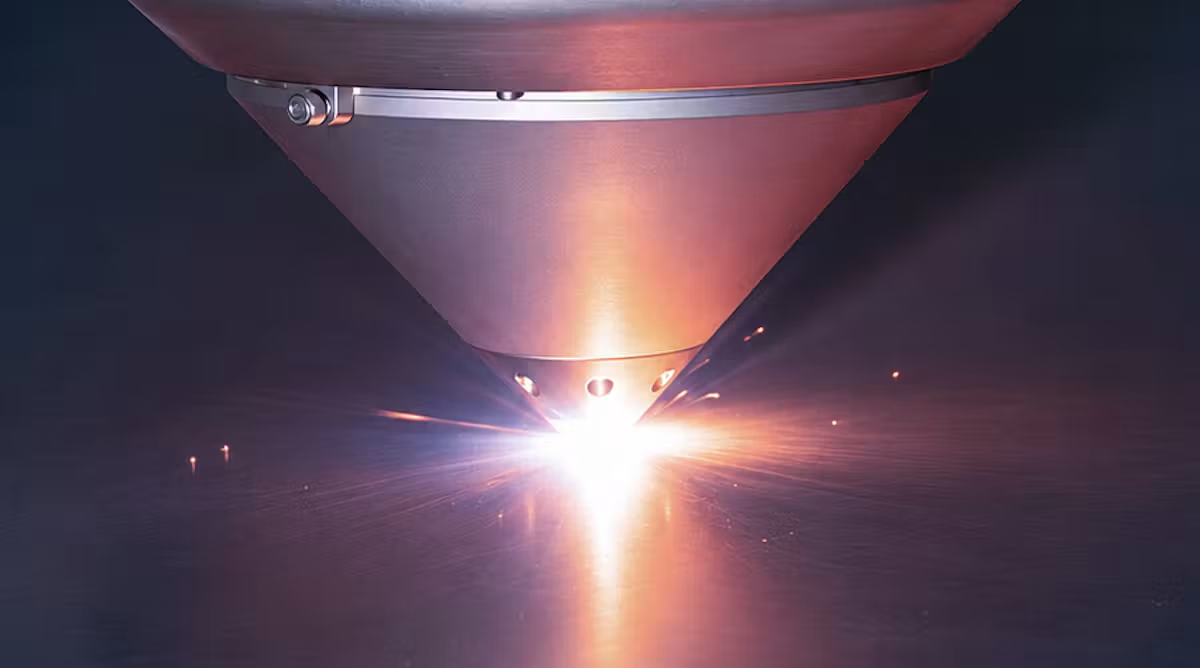
Wire-fed laser-directed energy deposition (DED) allows engineers to restore deteriorated steel precisely where it is needed, without replacing entire structural components. A thin metal wire is fed into a controlled laser beam, which melts the wire and a small region of the existing steel surface, allowing new metal to bond directly to the original material. Companies including German Siemens and US-based Fastech already offer this technology for onsite repairs of equipment such as steam turbine rotors.
Jason Hutt, director of UK and international business development at Fastech, says the process allows degraded steel to be restored "precisely where material has been lost, potentially extending the life of an asset without replacing the entire structural component".
Testing shows the approach arrests fatigue cracks. Wire-arc deposition arrested existing fatigue cracks beyond nine million cycles, compared with failure at 0.95 million cycles without repair. Laser cladding restored more than 90% of fatigue strength in artificially damaged modern steel.
However, most scientific evidence comes from tests on small specimens of modern steel that have been artificially damaged. Real bridges may contain century-old steel with different chemical compositions, accumulated fatigue damage and defects from decades of service. Engineers need to understand how old and new material interact to assess how much additional safe life the repair provides.
The UK has 16,000 metallic railway bridges. A 2004 survey found 80% were already over 50 years old and half were over 100. Focused renovation produces 84 to 93% lower emissions than replacement, even before accounting for indirect emissions from diverted traffic, while reducing intervention time.
A recent study found that interventions using UHPFRC, a high-strength construction material, could save 1.7 million tonnes of CO₂ equivalent across just 800 bridges, rising to 7.7 million tonnes across Switzerland's federal network of 3,903 bridges.