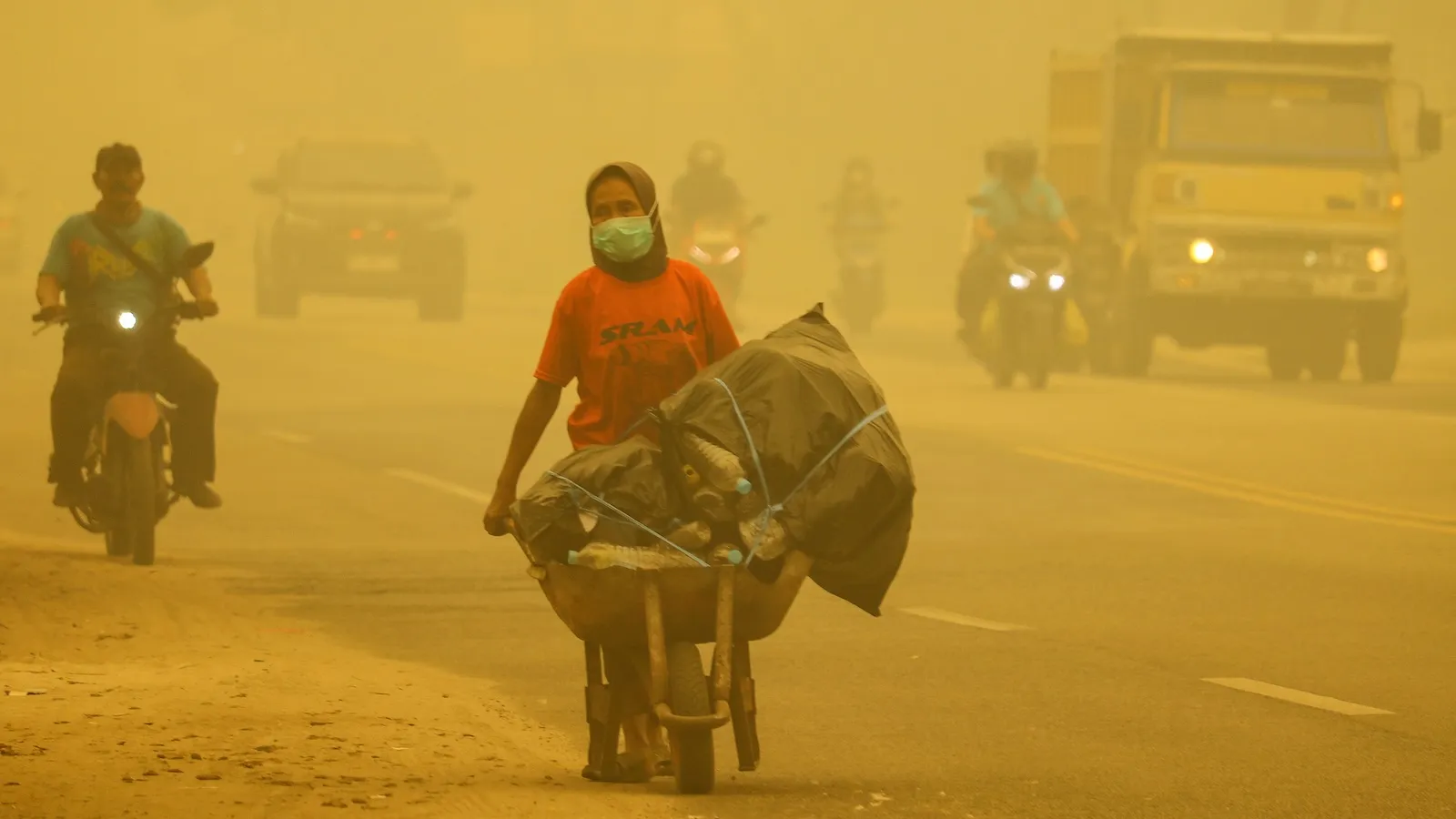
More than 4.6 million acres burned across Indonesia since August in the country's worst wildfire season in a decade. The smoke spread to neighboring countries and blanketed large island regions including Kalimantan and Sumatra. More than 300,000 Indonesians sought treatment for acute respiratory problems from the toxic haze. On some days, air quality conditions were more than thirteen times worse than the threshold considered unhealthy.
"This is a public health catastrophe," said Robert Field, a fire researcher at Columbia University.
A super-strong El Niño sent Indonesia into severe drought, drying out peatlands across the country. Peat is highly flammable when dried. When farmers or agriculture companies light fires to clear vegetation and debris, a common practice in Indonesia, peat fires can quickly get out of control and smolder underground for months.
Indonesia's President Prabowo Subianto called the fires "a crime against humanity" during a cabinet meeting last week and vowed to investigate who lit them. He labeled these actions a form of environmental terrorism.
Many fires appear to be on unmanaged lands next to working plantations, often growing oil palm, according to Field. The fires were likely being used to clear overgrowth to make room for more crops.
Indonesia began making strides to address peat fires in the last decade. In 2014, it banned drainage canals used to dry out peatlands. After a particularly bad wildfire season years later, the government sharply curbed deforestation and began restoring degraded land. The deforestation rate continued falling for five more years, though it began creeping back up in 2022.
Peat fires present unique challenges. Underground fires can burn for months and become difficult to detect by satellite even as they release large amounts of carbon and smoke, according to Israr Albar, Indonesia's former deputy director of forest fire management. Fires that seem extinguished often reignite. Finding large amounts of water to extinguish peat fires during the water-stressed dry season is not always possible. Even when the rainy season begins, fires may continue underground, Albar said.