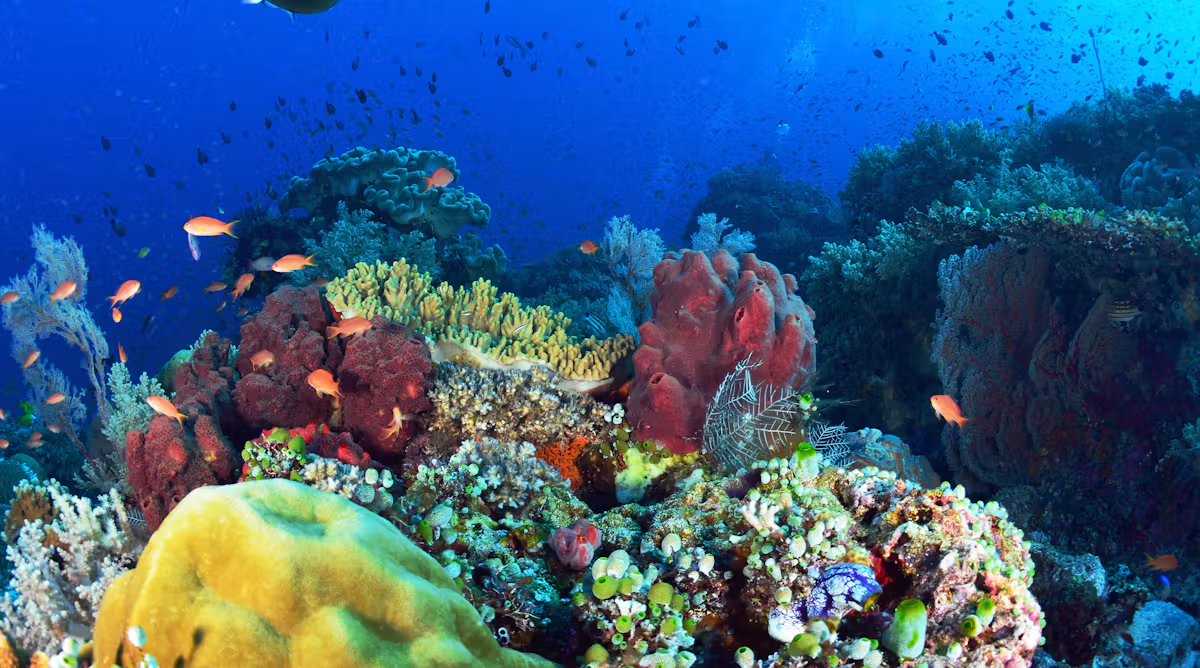
Marine climate refugia are ocean areas where relatively stable environmental conditions help species and ecosystems withstand climate change. Researchers identify these refugia through three approaches: low exposure to warming, ecological resilience, and predictive modeling of future habitat suitability.
A review of 798 scientific studies published between 2021 and 2026 selected 82 that identify or map marine climate refugia. The analysis found three main identification methods. Low-climate-exposure approaches locate areas where ocean warming occurs more slowly, spanning from surface waters to depths exceeding 1,000 metres. Ecological-resilience approaches measure the observed capacity of ecosystems to resist or recover, such as persistent kelp forests in the North-east Pacific. Predictive modeling identifies areas expected to maintain suitable conditions in the future, such as regions suitable for bamboo coral in the Mediterranean Sea.
The review revealed significant geographic gaps. Studies concentrate in the North Atlantic and North Pacific, while the high seas and deep ocean remain largely unexplored despite comprising the vast majority of ocean habitat. A taxonomic bias also exists. Corals dominate the research at 33% of studies, followed by fish at 18% and macroalgae at 14%. Seagrass meadows, mangroves, and salt marshes are highly underrepresented, and only 12% of studies analyze multiple species jointly.
Identifying and protecting marine climate refugia is essential for meeting the international goal of protecting 30% of the ocean by 2030, according to the authors. The challenge extends beyond locating refugia to understanding whether they can sustain functional ecosystems over the long term. This requires combining observations, advanced models, and adaptive management strategies. With the UN High Seas Treaty now in force, identifying marine climate refugia could guide the establishment of high-seas marine protected areas.