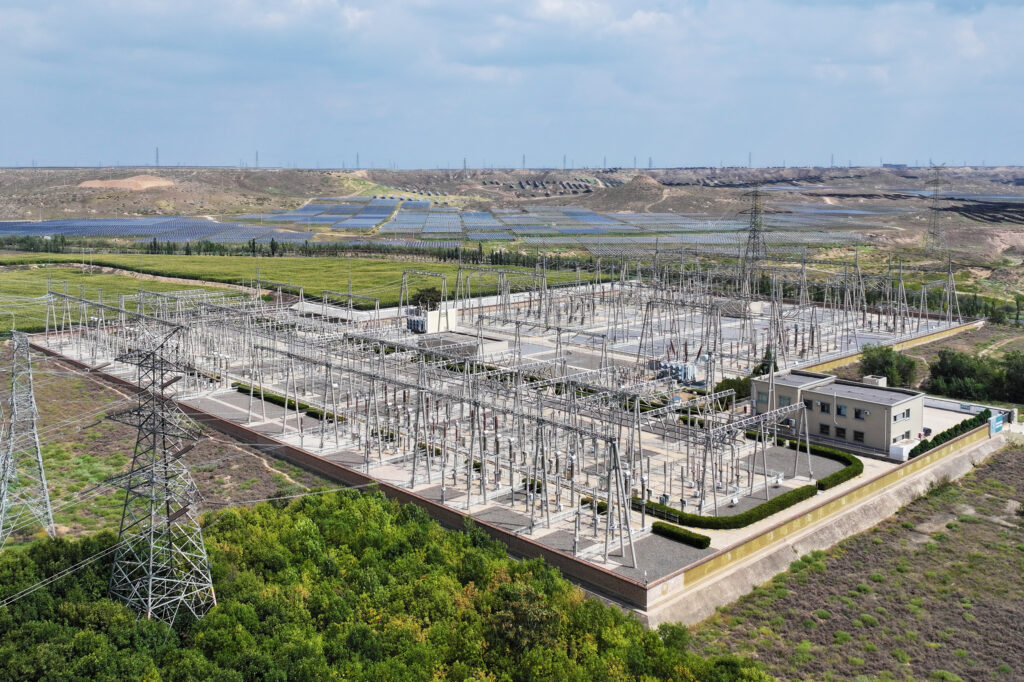
The German government launched the Global SF6 Pledge this week at a United Nations Environment Program meeting in Kigali, Rwanda, urging countries to monitor, report and reduce emissions of sulfur hexafluoride from the electric power sector.
Sulfur hexafluoride is a synthetic gas used as an insulator in high-voltage equipment. Pound for pound, SF6 is 24,300 times more effective at warming Earth's atmosphere than carbon dioxide and persists in the atmosphere for 1,000 years. The United Nations identified it as one of six key greenhouse gases in the 1990s, though it has received little attention from policymakers.
More than half of all sulfur hexafluoride emitted globally comes from China. The country's state-owned electric power companies recycle only about 30 percent of the gas they discard annually, with the remainder likely released into the atmosphere, according to an Inside Climate News analysis. China's central government released its National Climate Change Response Plan in July, which called for an SF6 management plan to reduce emissions.
The United States released 328 metric tons of sulfur hexafluoride in 2023, primarily from the electric power sector. This equals the annual climate pollution of 1.9 million automobiles, according to the U.S. Environmental Protection Agency's greenhouse gas equivalency calculator.
Countries signing the pledge commit to strengthening monitoring and reporting of SF6 emissions while supporting efforts to reduce releases. SF6 emissions can be cut through recycling rather than venting used gas, reducing leaks from high-voltage equipment and using alternative gases or technologies as insulators.
The European Union and the United Kingdom are the first to endorse the pledge, which officially launches this month at the UN's global climate conference in Antalya, Turkey. The U.S. State Department declined to comment. The European Union began phasing out SF6 in new electrical equipment in January.