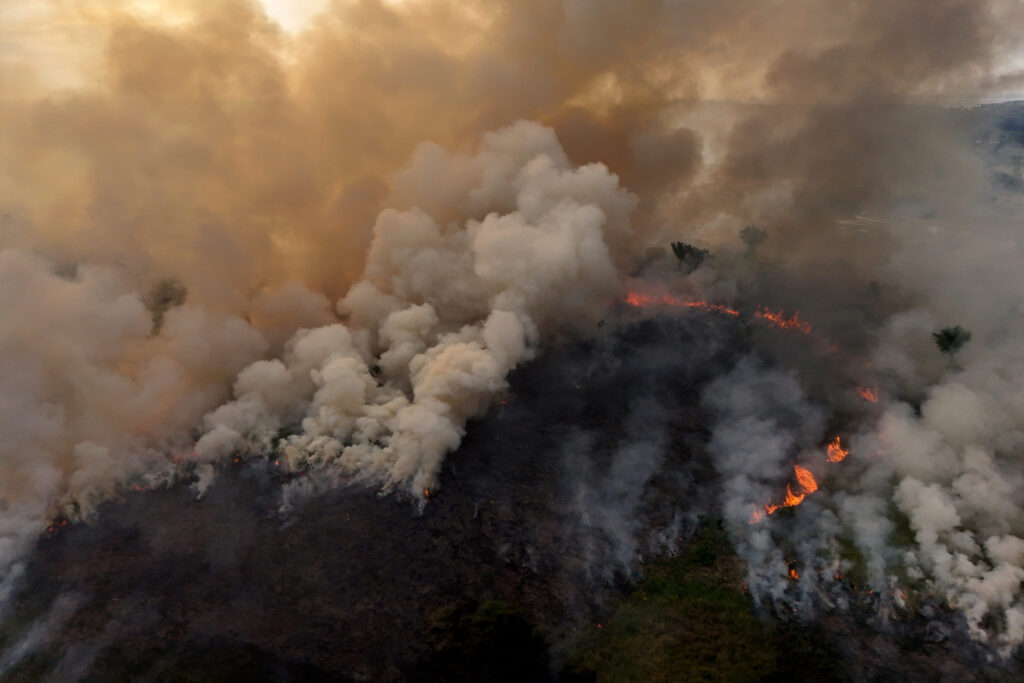
Ozone pollution generated by fires, combined with extreme heat and drought, is reducing the Amazon rainforest's capacity to absorb carbon dioxide, according to new research. Forests globally absorb more than a quarter of human-caused CO2 emissions annually, totaling more than 11 billion metric tons. However, increasingly larger forest areas have experienced declining carbon absorption in recent decades.
The research identifies ozone as a specific threat working alongside climate stressors. Ozone pollution damages plants' ability to photosynthesize and absorb carbon, undermining forests' role as carbon sinks. Fire-generated ozone compounds this damage when combined with heat waves and drought conditions that already stress tropical vegetation.
The Amazon's weakening capacity to absorb CO2 represents a critical feedback loop in climate systems. As the forest absorbs less carbon, more greenhouse gas remains in the atmosphere, intensifying warming and increasing drought severity. This cycle threatens the forest's long-term viability as a carbon sink.
The findings suggest multiple stressors converging on tropical forests create compounding impacts that single-factor studies may not capture. Researchers point to the interconnection between air quality degradation, temperature extremes, and water stress as central to understanding forest decline.
The research underscores how forests worldwide face simultaneous pressures from multiple climate and pollution sources. Fire activity generates ozone pollution that travels regionally, while climate change directly increases temperature and alters precipitation patterns. Together, these factors reduce photosynthetic efficiency and carbon uptake rates.
Understanding these compound effects matters for carbon cycle modeling and climate projections. If tropical forests continue losing carbon-absorption capacity, global efforts to stabilize atmospheric CO2 concentrations face additional headwinds independent of emissions reductions alone.