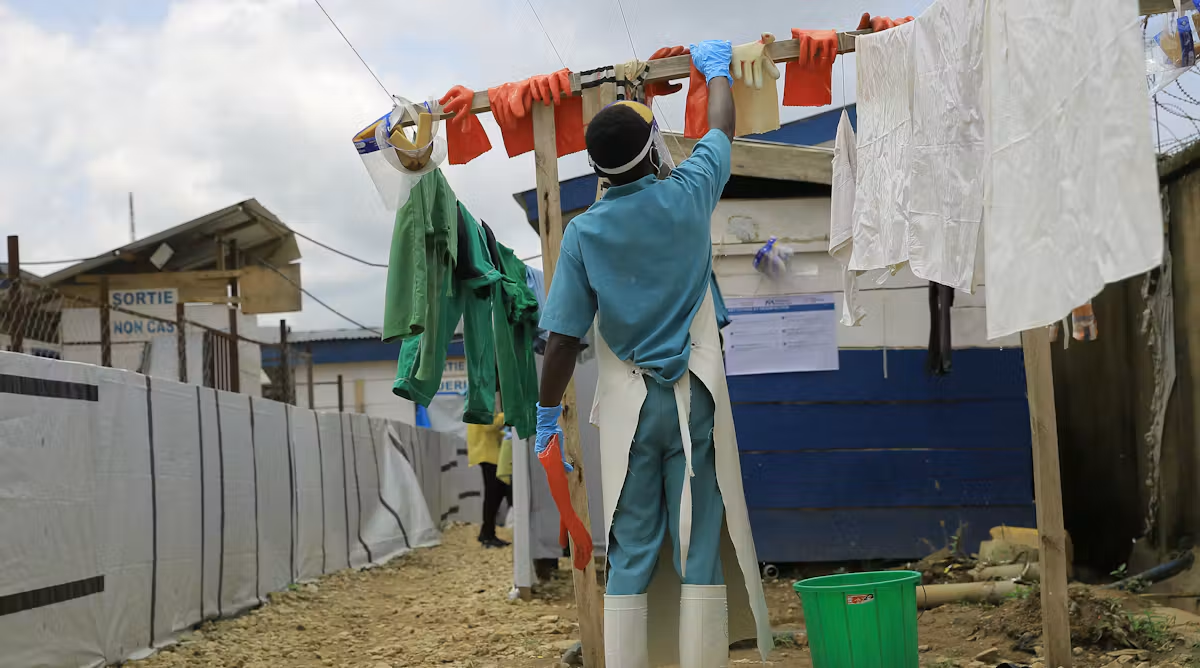
The World Health Organization declared the Bundibugyo Ebola outbreak on May 15, 2026. As of November 18, the outbreak had caused 11,712 cases and 5,720 deaths, nearly all in the Democratic Republic of Congo.
As of August 2026, 160 health workers had contracted Ebola, and 43 had died.
Health workers responding to the outbreak face threats beyond the virus itself. The World Health Organization's surveillance system recorded 81 attacks on health workers and facilities from May 18 through November 18, 2026, resulting in five deaths and 34 injuries. The U.N. Senior Ebola Coordinator Julien Harneis reported over 260 attacks as of August 2026, with eight health workers killed. These attacks include physical and sexual assault, psychological violence, threats, intimidation, abduction, arson, armed attacks, and theft.
Community members have targeted health workers due to mistrust and fear. Many locals do not believe care centers are safe. They are upset that they cannot bury friends and family members using normal burial rites, which may involve practices such as washing the body that could spread the virus.
The outbreak occurs in the context of prolonged violent conflict in eastern DRC. Some clinics and health workers have been caught in political violence rooted in Belgian colonization and extractive industries that have left poverty and political instability.
Most ethical guidance for health workers applies to licensed clinicians. Community health workers, volunteers, and cleaning staff who are often most exposed lack this protection. Many are paid through incentives rather than salaries and may work alone. Many are women who face gendered harassment and assault.
An epidemiologist and bioethicist argue that worker protection is not an ethical add-on to outbreak control but a prerequisite for it. They state that when health workers face unsafe conditions, disease surveillance and contact tracing stall, treatment capacity shrinks, and communities lose access to trusted sources of care.