The number of farmers in the U.S. has plummeted by nearly 90% since the late 1940s, falling from 5.9 million in 1948 to 715,000 by 2025. This collapse has hollowed out rural communities as farm consolidation accelerates.
Fewer than 6% of America's farms accounted for over three-quarters of all agricultural production as of 2022, according to the latest Census of Agriculture. Farms are growing larger and more specialized. Half of all cropland in 2017 sat on farms with 1,445 acres, more than double the 650 acres in 1987. Half of all dairy farms had more than 1,300 cows in 2017, compared to 80 in 1987. Half of all pig farms marketed over 50,000 pigs per year by 2017, up from 1,200 in 1987.
The agricultural workforce has shifted dramatically. In 1948, about 78% of the workforce consisted of farm owners with a few hired hands. Today, about 68% of the workforce is farm laborers. This means profits flow mainly to a small number of farm owners while laborers earn far less.
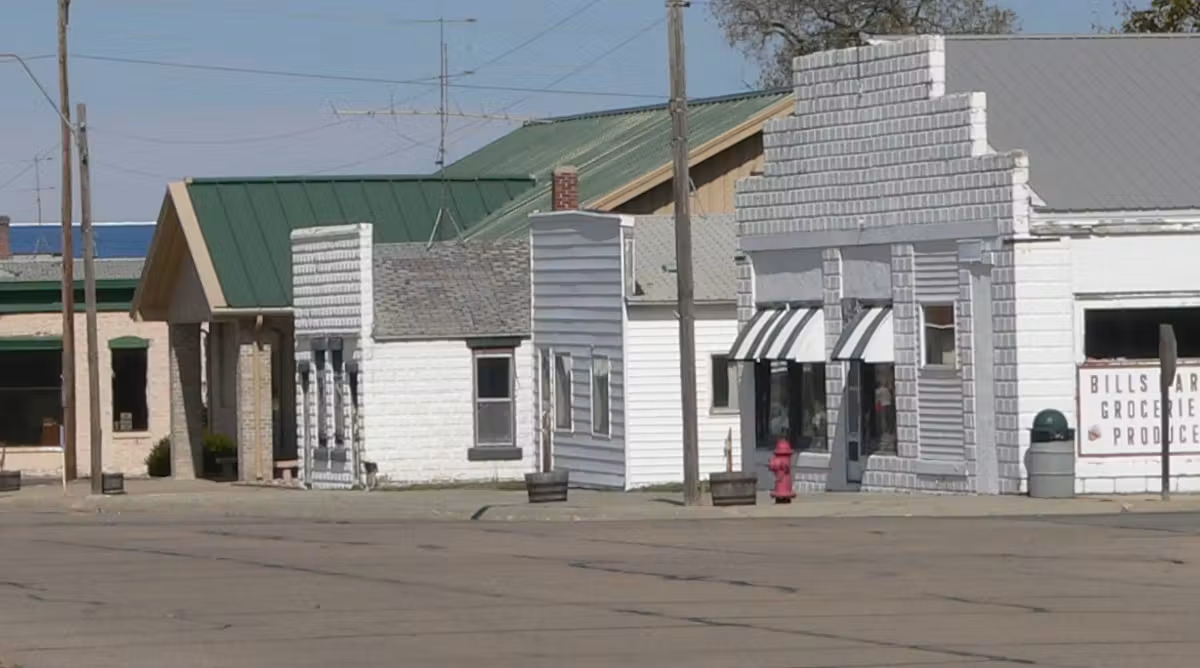
Once-thriving main streets in rural towns have lost businesses. Machine dealers and suppliers of seeds, fertilizer and pesticides have disappeared. Local grocery stores have been replaced by gas station convenience stores. Schools have shrunk or consolidated. Hospitals have closed.
An analysis of 11 counties in Iowa found that every $1 million of agricultural sales creates 2.4 total farm jobs and 1.6 spin-off jobs in other nonfarm businesses, for four new jobs total. Healthcare creates 10 new jobs per $1 million in sales, and construction creates seven, both paying better wages.
Just two companies controlled 71.6% of the U.S. corn seed market in 2018-2022 and 65.9% of the soybean seed market. Twenty years earlier, the top two companies held 47.2% of the corn seed market and 41.8% of the soybean market. When four or fewer firms control 40% or more of a market, farmers pay more for seeds, fertilizer and pest control and receive less for their commodities.