When the United Nations set Sustainable Development Goal 7, calling for 'universal access to affordable, reliable, and modern energy services' by 2030, it established an ambitious vision. But the indicators used to track this goal focus narrowly on whether people have access to electricity and whether they rely on clean fuels—measurements that mask a troubling reality. A health clinic with an electricity connection is not truly connected if frequent power cuts make its equipment unreliable. A farmer with an electric irrigation pump has not been lifted from poverty if he cannot afford the upfront cost of the technology or if crops cannot reach buyers. These gaps between connection and genuine benefit are not abstract policy concerns. They are barriers keeping millions trapped in underdevelopment.
Ethiopia's 2025 national energy-access survey exposes this problem starkly: 65% of households have access to at least one source of electricity, yet just 44% of the population receives at least basic electricity service—enough for lighting and charging a phone for at least four hours a day. This discrepancy reveals that counting connections tells us almost nothing about whether energy is actually improving lives. The World Bank's Multi-Tier Framework already offers a better approach, measuring whether electricity is available when needed, adequate for equipment people use, reliable, and affordable. As governments consider what should follow the SDGs after 2030, they must make multidimensional energy-access measures a regular part of national surveys and track progress globally.
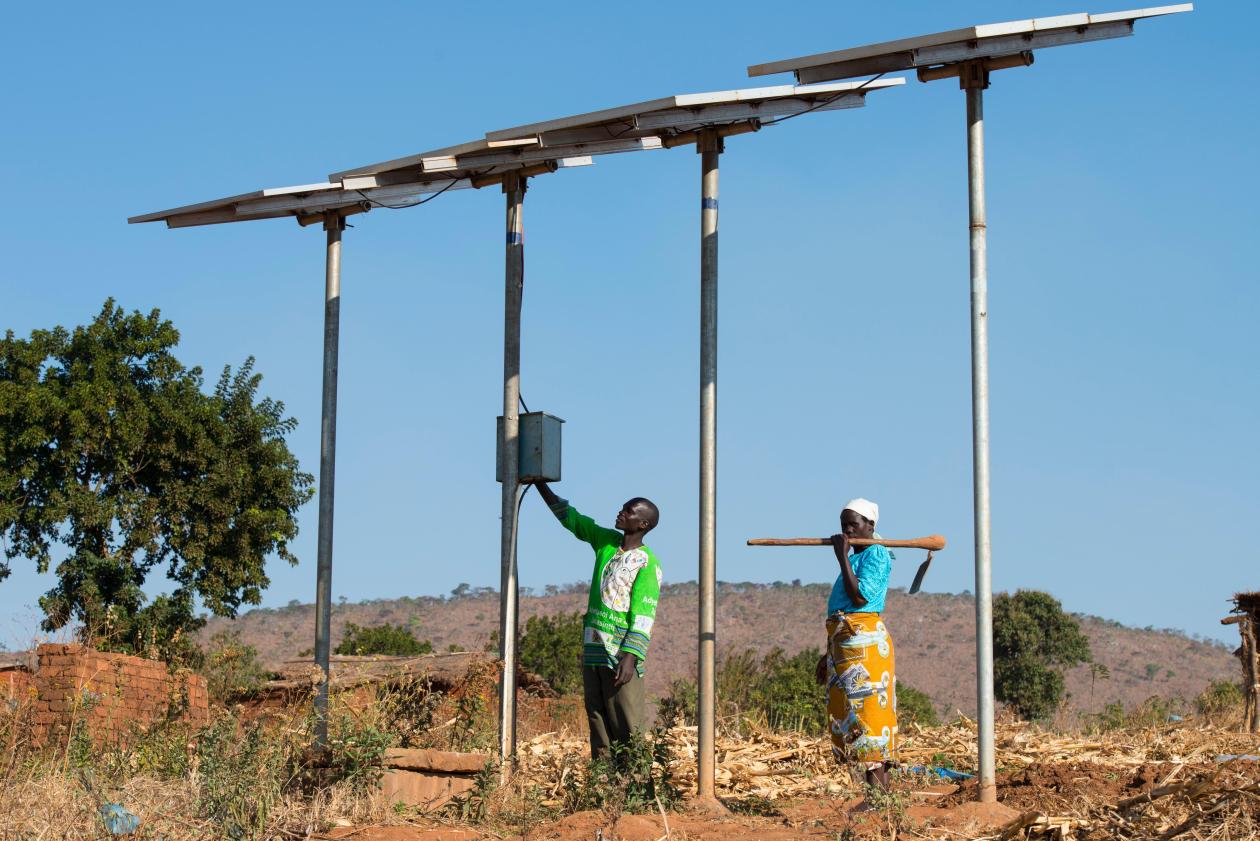
Real-world examples from Uganda and Ethiopia demonstrate what is at stake. In Uganda's Berbere district, WRI and DanChurchAid installed two solar-powered pumps serving 48 farming households, reducing maintenance costs from more than $1,300 annually for petrol pumps to less than $10 for solar systems. Yet the pumps' $19,200 upfront cost was beyond what most farmers could afford. Without financing mechanisms, the best energy infrastructure remains inaccessible. Similarly, in Jharkhand, India, villages with grid connections lacked sufficient power capacity for productive uses—until Mlinda Charitable Trust installed solar mini-grids supplying three-phase electricity for rice hullers, oil expellers, and flour mills. These are not failures of energy access; they are failures of measurement and planning.
Uganda's Masaka District Farmers Association received an IKI Small Grants award for an irrigation project equipping 150 hectares of coffee land with drip irrigation, benefiting 1,500 smallholder farmers. In Berbere, solar-powered irrigation enabled farmers to harvest three to four times annually and grow higher-value crops. These outcomes—improved yields, higher incomes, expanded livelihoods—should be what energy access is measured against, not merely connection rates.
Governments must shift from asking how many people have electricity toward asking what they need energy for and whether the system delivers it. This means assessing reliability through outage tracking, affordability through both ongoing and upfront costs, adequacy through capacity requirements, and actual development outcomes. Until then, SDG 7 remains a hollow promise.