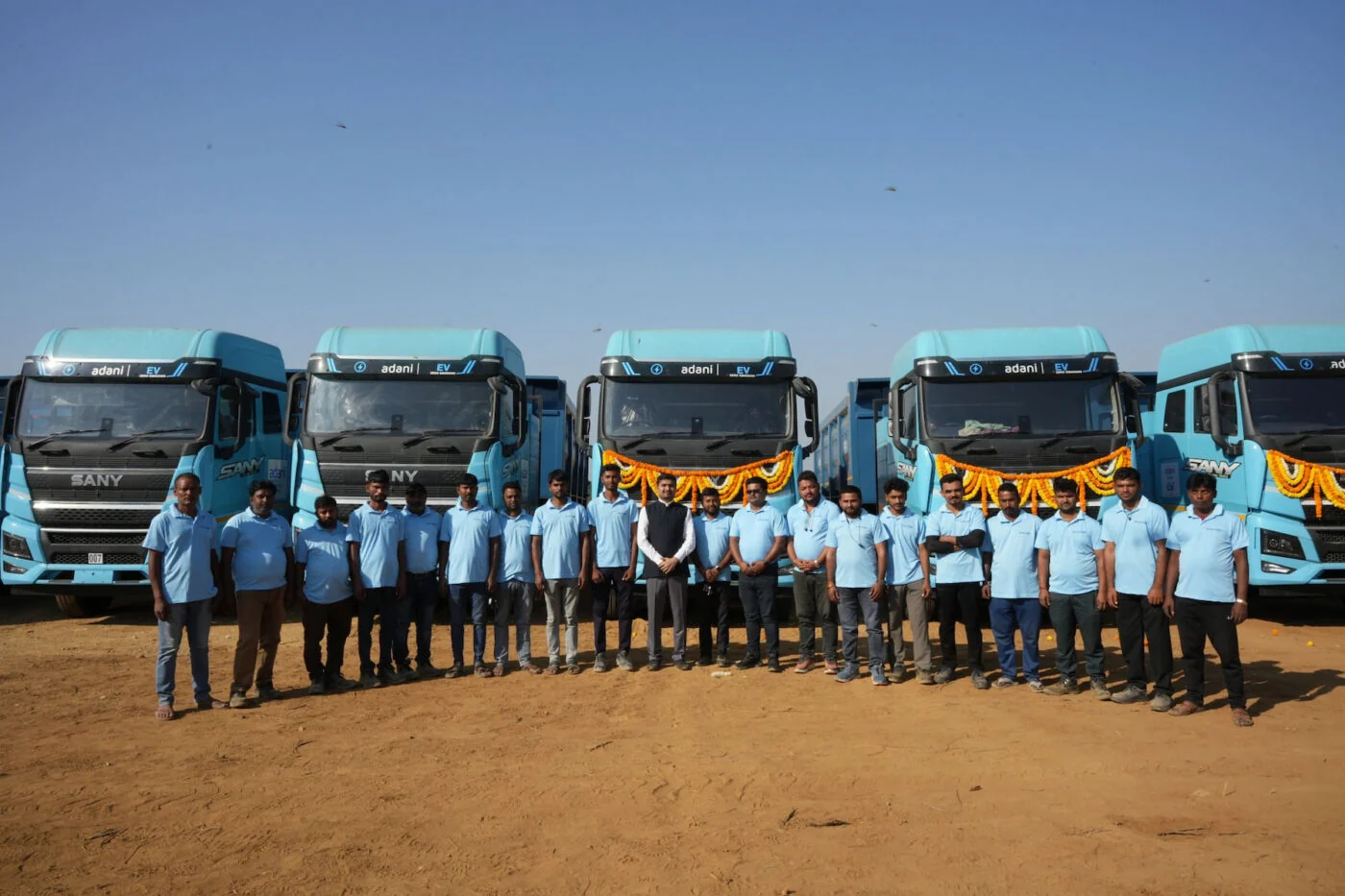
When a major cement producer flags off 410 electric trucks, it signals something important: the financial case for heavy-duty vehicle electrification has fundamentally shifted. Adani Cement's deployment at its Sanghi Plant in Gujarat represents more than a corporate sustainability gesture—it reflects genuine market conditions that make zero-emission logistics economically rational rather than aspirational.
The numbers tell the story. Over the past decade, diesel prices rose 60% while Li-ion battery pack costs fell approximately 70% and solar tariffs declined 47%. These aren't marginal improvements; they represent structural changes in the cost landscape. As CEO Vinod Bahety correctly observes, electrifying trucks "benefits the people, the planet, and the balance sheet." When environmental responsibility and profit align this clearly, there's no excuse for competitors to lag behind.
The climate impact is substantial. Diesel trucks emit approximately 0.7375 kg CO₂ per km, and when powered by renewable energy, EV trucks can eliminate up to 100% of these freight emissions. Adani Cement's 410-truck fleet is projected to reduce over 25,000 tonnes of CO₂ annually while displacing 11 million litres of diesel per year. For India—the world's second-largest cement producer—this matters enormously, given that moving limestone, clinker, and finished cement across vast supply chains is inherently carbon-intensive.
Yet this deployment, while commendable, also exposes a critical gap. Adani Cement has identified "multiple routes across India" for EV-based cement and clinker transport, but the report provides no timeline for expansion beyond this initial flagship project. If the economics are truly favorable, why the cautious rollout? The cement sector and India's logistics industry more broadly need accelerated, sector-wide adoption, not carefully managed pilot programs.
The real test comes next. Adani Cement should publish concrete timelines for deploying electric trucks across its full network. Industry peers and regulators should examine whether financial incentives or policy frameworks are needed to unlock faster adoption. The company has demonstrated the model works; now it must prove whether this remains a defining milestone or becomes the new standard. India's climate commitments and cement sector competitiveness depend on that answer.