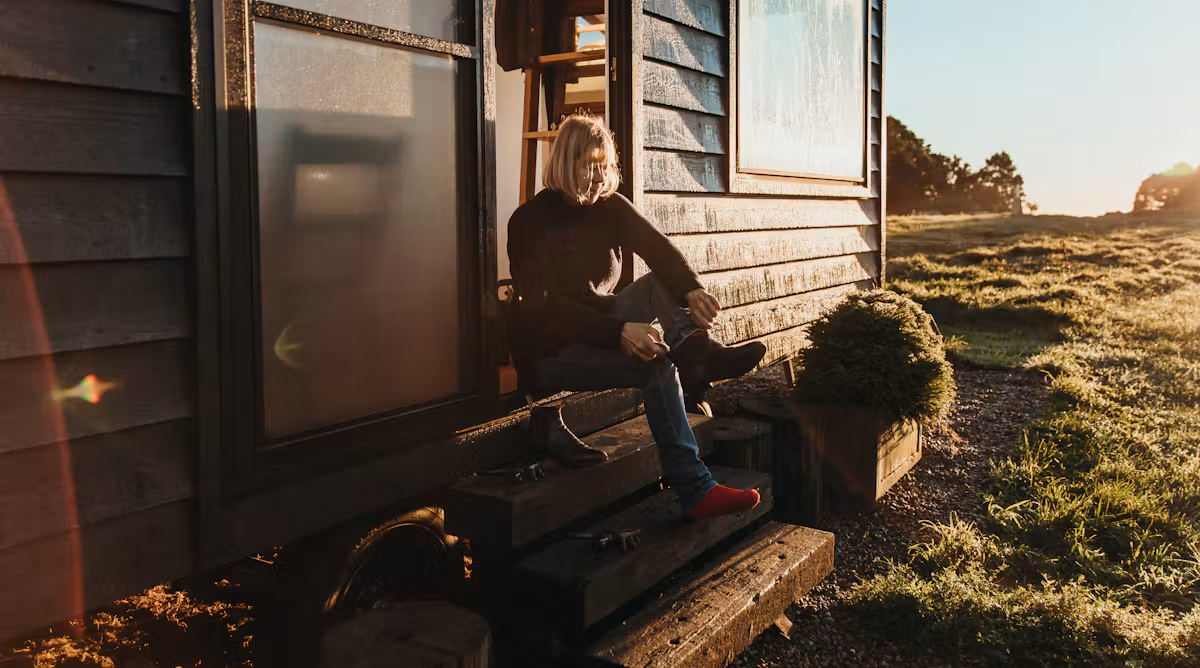
A survey of 40 off-grid households in Queensland found that most residents rely on solar panels and home batteries to generate and store their own power. Researchers from Griffith University interviewed ten householders in depth and spoke to four off-grid installers to understand motivations and outcomes.
Conventional houses averaged 6.6 kilowatts of solar panels and 40 kilowatt-hour batteries, mostly installed professionally. Tiny houses on wheels had smaller systems, averaging about 3.5 kilowatts of solar and two 4-kilowatt-hour batteries, with some owners installing these themselves.
About 55 percent of respondents cited financial reasons for going off-grid. For conventional homes, the primary driver was avoiding grid connection costs, which can range from $30,000 to $60,000. For tiny house residents, going off-grid aligned with choosing to live simply. One resident used second-hand solar panels at about $70 per panel.
Other motivations included environmental care (25 percent), no grid access (20 percent), independence and control (12.5 percent), and doubts about grid reliability (10 percent).
The most common complaint came from 33 percent of people who reported running short of power during long cloudy or rainy periods. Twenty percent reported no downsides.
A major concern involved battery replacement costs. Household batteries may need replacement every ten to 15 years. One respondent noted that "the return on investment is 20 years and that battery will probably be dead by then."
Regulatory uncertainty poses a significant barrier. Rules on disconnecting from electricity, water, and sewerage vary from council to council, and energy companies enforce their own requirements. Several tiny house residents reported keeping their homes out of sight because they were unsure about legal permissions.
The researchers recommended three changes: making rules consistent statewide with clear pathways for fixed houses and tiny houses on wheels, ensuring householders can access independent advice for properly sizing systems, and collecting better data on off-grid households.