Electric battery-powered ferries draw electricity from shore-based charging systems to power onboard motors, potentially making sea travel substantially cleaner when supplied by low-carbon electricity.
Finnish ferry operator Viking Line unveiled its Helios concept in June 2025, proposing a fully electric passenger-and-car ferry between Helsinki and Tallinn. The vessel would carry around 2,000 passengers and 650 cars, powered by batteries with 85–100 megawatt-hour capacity. The planned journey of just over two hours would require tens of megawatts of charging power at both ports. An April 2026 interview with Viking Line's chief executive described a revised design that could include generators for operational flexibility and electricity-price management. Work continued on Helios in October 2026.
A 2025 study by Anthony Katumwesigye and colleagues modelled a large passenger-and-car ferry making six daily crossings of about 89 kilometres between Helsinki and Tallinn. Compared over 30 years with marine gas oil, the electric ferry using Finnish-grid electricity produced about 86% lower greenhouse gas emissions. With an equal Finnish-Estonian electricity mix, the reduction was about 74%. The assessment included energy supply and propulsion equipment manufacture, including two battery replacements.
Under the EU Emissions Trading System, which requires shipping companies to obtain allowances for covered emissions, the study found that battery power became the least costly propulsion option over 30 years when emissions costs were included. In June 2026, Brittany Ferries reported an expected EU emissions trading bill of about €27 million for 2026.
From 2030, FuelEU Maritime will require large passenger and container ships to use shore power or other zero-emission technologies for onboard electricity needs while moored at specified EU ports. At COP31 in November 2026, a coalition launched the Maritime Electrification Breakthrough Goal, calling for electricity to supply at least 20% of international shipping's energy use by 2035.
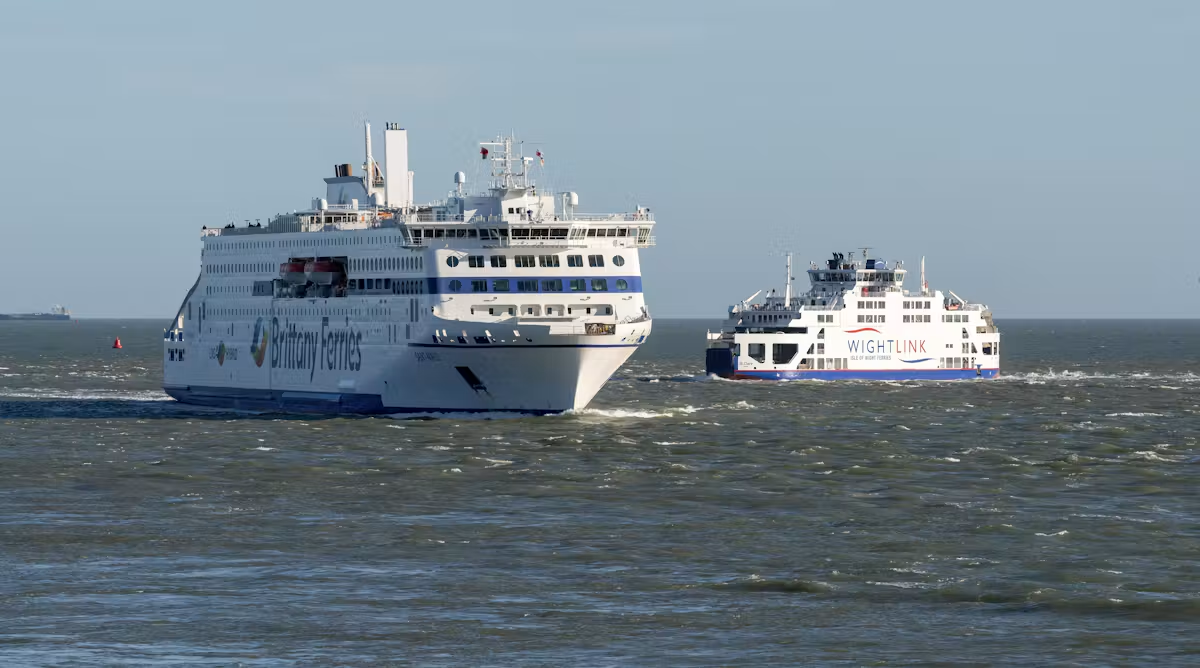
Hybrid ferries currently in service show the transition underway. Brittany Ferries' Saint-Malo and Guillaume de Normandie hybrid-LNG ships serve Portsmouth–St Malo and Portsmouth–Caen routes respectively, using batteries for harbour manoeuvres and combustion engines during crossings. Shorter routes such as Italy's approximately 20-minute Messina–Villa San Giovanni crossing and Greece's Saronic Ferries' proposed electric vessel linking Piraeus with Aegina and Agistri merit assessment for electric technology development.