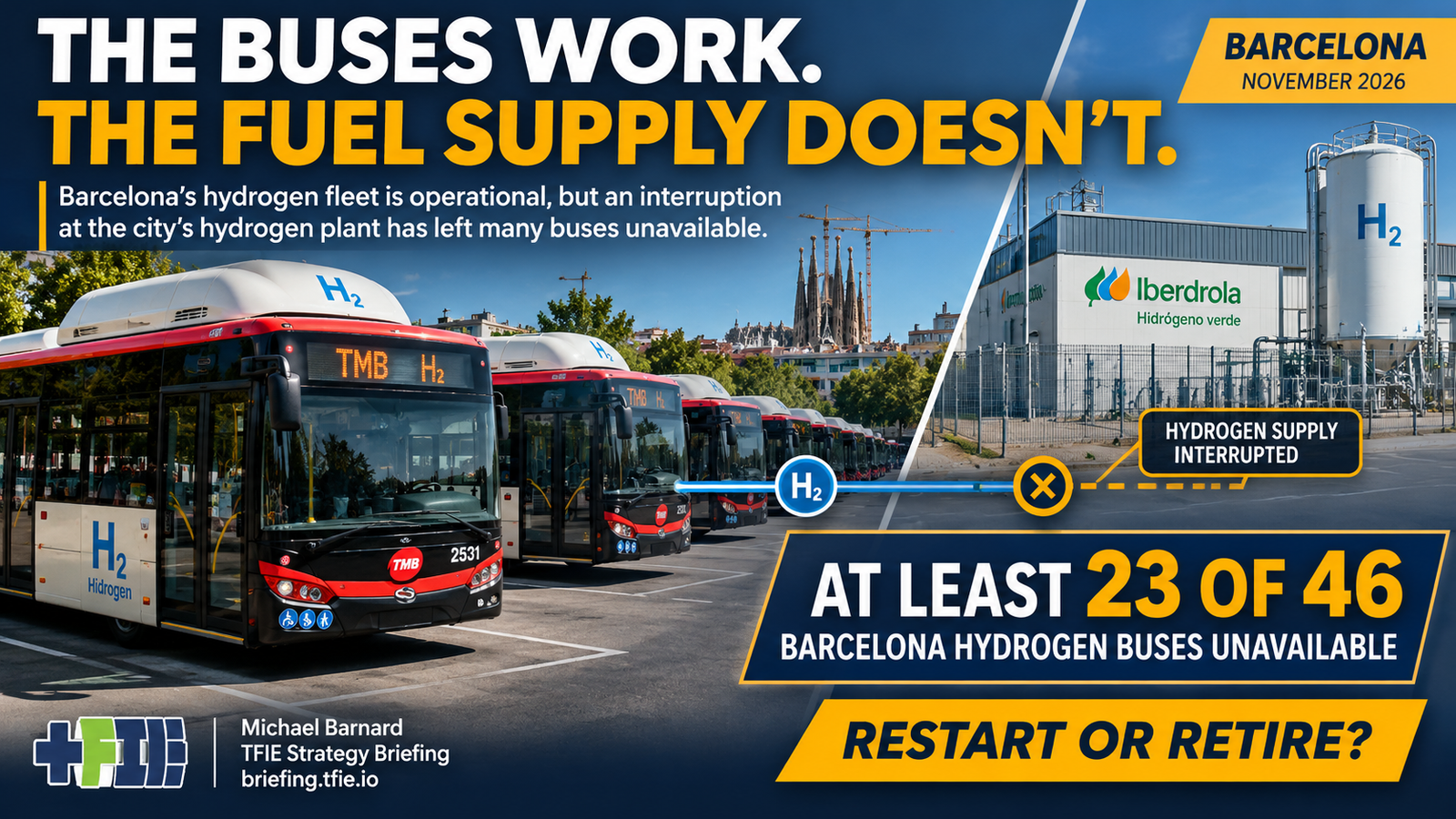
On November 21, Barcelona removed at least 23 of its 46 hydrogen buses from service after the plant supplying fuel stopped producing. Transports Metropolitans de Barcelona (TMB) reported a 2.5% to 3.8% reduction in scheduled bus service, with wait times on some routes rising from seven to nine minutes. The buses themselves remained operational. The hydrogen did not.
TMB operates under a ten-year, €14.5 million hydrogen contract with Iberdrola. The plant halted production following a valve-system problem. Alternative fuel deliveries from Tarragona have been disrupted by industrial action and restrictions on hydrogen transport. The contract includes compensation when fuel is not delivered, but it cannot cover missed service.
Cummins recommended in September that customers stop using affected electrolysers following a safety review. Cummins' November quarterly filing confirmed the HyLYZER stop-use recommendation but stated no formal recall had been initiated. Iberdrola cited the valve-system problem as the cause of the production halt.
TMB now faces whether to pay for safely restarting fuel production and whether the system remains reliable. The agency also must decide whether to commit public money to maintaining hydrogen bus service for the remainder of these vehicles' lives.
Other European cities confronted the same choice. Aberdeen paid approximately £13.9 million for 25 hydrogen double-deckers that entered service in 2021. Hydrogen supply problems stranded the fleet in July 2024. In February 2026, Aberdeen decided to dispose of the buses. A proposed sale would bring in £816,000 total, 5.9% of the original vehicle cost.
Liverpool chose a different path. Ten of its 20 hydrogen buses had never carried passengers; the other ten completed only 450 passenger-carrying journeys. In December 2025, the Liverpool City Region Combined Authority decided to convert all 20 to battery-electric operation, with the supplier covering conversion costs.
A hydrogen bus can become economically unviable before it wears out mechanically. Refuelling plants, fuel deliveries, maintenance specialists, software, fuel-cell modules and replacement parts must remain available. As hydrogen fleets retire and new orders decline, each remaining operator shares support costs with fewer customers. Rising costs then encourage other operators to exit, creating what the analysis calls a "hydrogen transport death spiral." Battery-electric buses draw on a much larger manufacturing, charging and maintenance market.
Cummins has stopped seeking new commercial electrolyser business. Quantron's insolvency disrupted confidence in specialist vehicle support. Publicly identified hydrogen-bus orders numbered 288 in 2023, 96 in 2024 and no more than 45 gross in 2025, with about 15 in stricter reconstruction.
TMB should compare the cost of safely restarting the hydrogen plant and running the buses with the cost of delivering the same passenger service through replacement vehicles. That comparison includes the repair bill, future fuel contracts, station maintenance, spare parts, service interruptions, replacement buses, depot charging and any temporary vehicles. TMB already operates battery-electric buses and has local operating data to test a replacement plan.