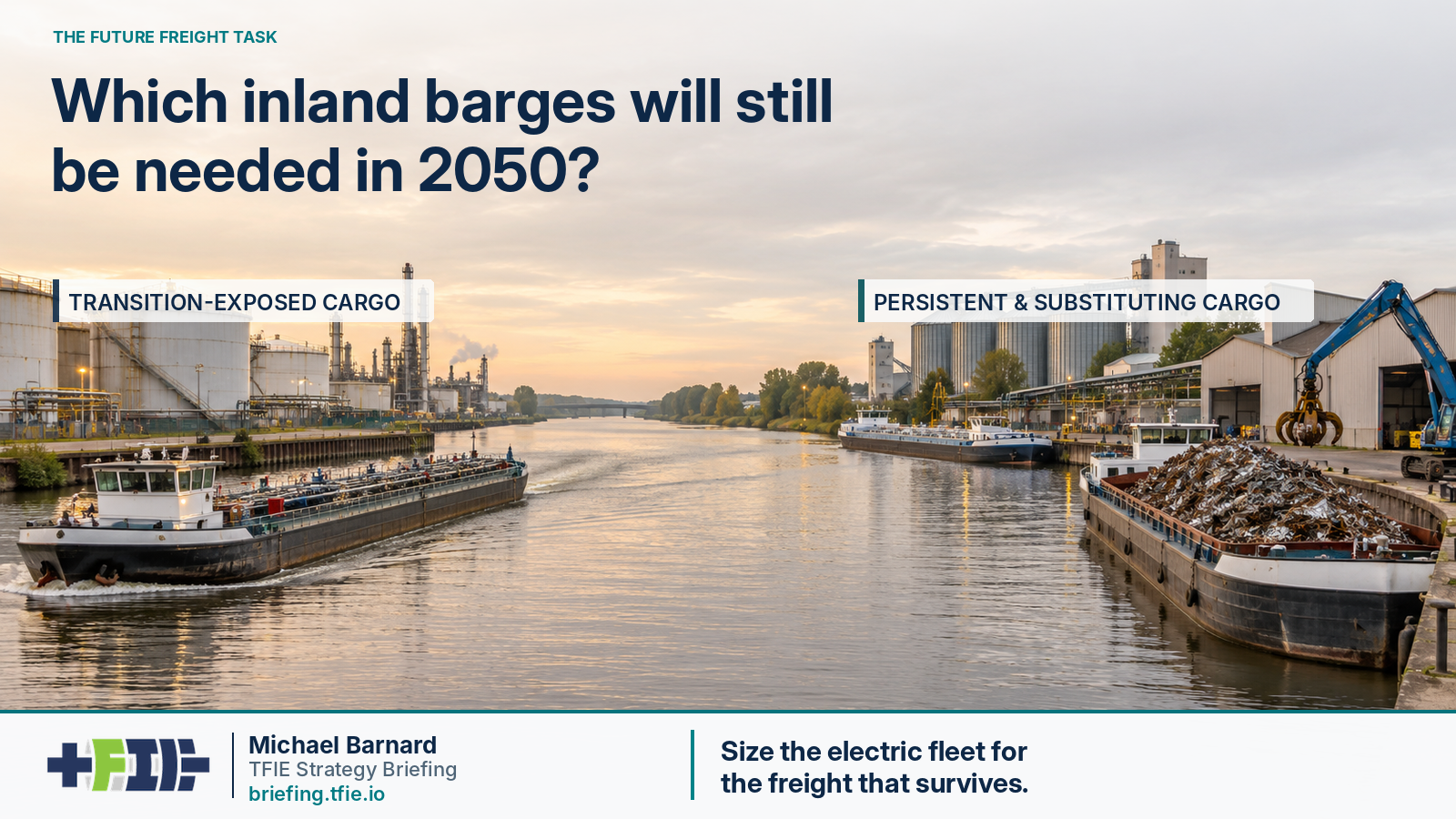
Coal throughput at Rotterdam increased 15.3% in the first nine months of 2026, driven by recovering coking coal movements and expensive natural gas. Crude oil and petroleum volumes also rose. Yet EU inland waterway freight fell 3% in 2025 to 118 billion tonne-kilometres, according to Eurostat, as agricultural freight contracted despite gains in coal and crude petroleum movement.
The Central Commission for the Navigation of the Rhine reported 6,224 dry-cargo vessels in Rhine countries in 2025, down from 6,410 in 2023. Tanker vessels increased from 1,400 in 2022 to 1,477 in 2025, reflecting a fleet already adapting to shifting cargo and economics.
A modeled scenario for a large European industrial port corridor projects bulk cargo falling from 57.8 million tonnes in 2025 to 34.4 million tonnes in 2050, a decline of about 40%. Fossil fuels and refinery streams would fall from 19.0 million tonnes to 1.5 million tonnes. Coal and solid fossil fuels would drop from 2.5 million tonnes to zero. Those reductions account for approximately 20 million tonnes of the scenario's total 23.4 million tonne net decline.
Steel illustrates cargo substitution. The model shows imported iron ore falling from 4.5 million tonnes to 3.0 million tonnes while scrap and circular feedstocks rise from 1.8 million to 3.5 million tonnes. Biofuel feedstock movements peak near 5 million tonnes in 2030 before falling to 1.5 million tonnes in 2050.
The model translates commodities into powered vessel equivalents using parcel sizes, routes and productivity. Starting capacity of around 1,150 powered vessel-equivalents would decline to 664, a reduction of 42%.
Ports should develop a living cargo and route register showing which freight declines, remains stable or changes material inputs. Vessel owners can connect that register to remaining hull life, annual utilization and cargo contracts. Utilities and terminal operators can then size grid connections and charging facilities against vessels operating on bankable routes. Electrifying established, high-utilization inland freight requires measuring the surviving freight task before expanding an electric fleet.