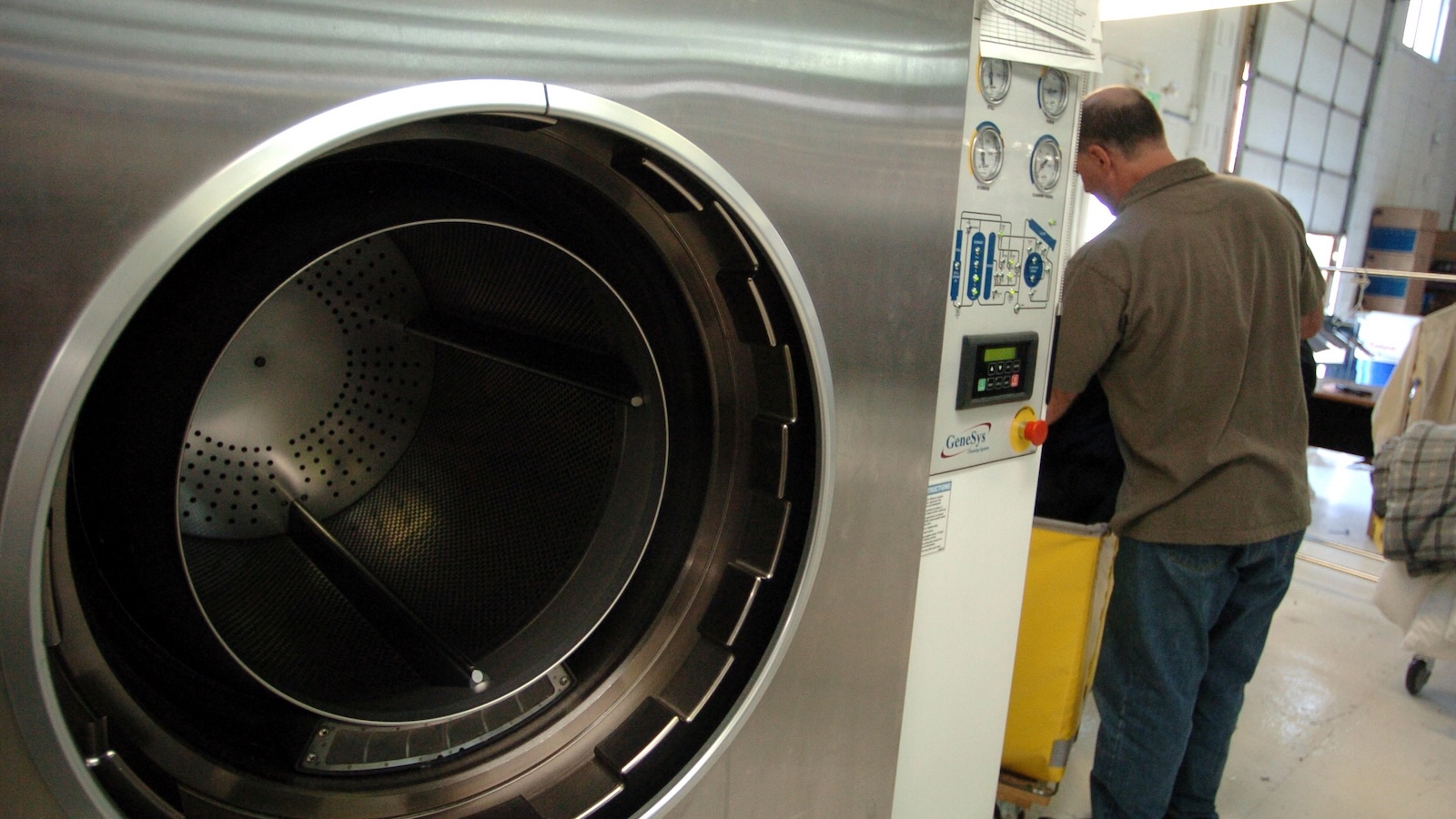
Carbon dioxide can clean clothes without water or heat, a process that aerospace manufacturers developed decades ago and that appliance makers LG and Samsung are now exploring for home use.
Under pressure, CO2 becomes a liquid that penetrates fabrics and carries away oils and grime. When pressure drops, it returns to gas and leaves clothes clean and dry. No wastewater emerges. No dryer runs.
The average American family washes roughly 300 loads annually, consuming thousands of gallons of water. Machine drying alone produces 27 million metric tons of CO2 emissions across U.S. households each year, according to one study.
Hughes Aircraft developed liquid-CO2 cleaning in 1990 to remove contaminants from electronic components. Electrolux later pursued it for dry cleaning, but cost and complexity prevented adoption. Colorado-based Tersus Solutions began refining the technology in 2009 and now cleans outdoor apparel, equipment, and firefighter gear.
Tersus's machines occupy a roughly 10-foot cube with a rotating drum inside a pressurized chamber. Carbon dioxide liquefies at 900 pounds per square inch of pressure. During a 45-minute cycle, CO2 circulates through the load, traps grime in filters, then evaporates when pressure drops. More than 90 percent of the CO2 is recaptured for reuse.
Tests show Tersus machines remove more than 95 percent of contaminants like PAHs from firefighter gear. Water-soluble stains sometimes require pretreatment. The larger machines save roughly 300 gallons of water per load compared with conventional washing and reduce microplastic shedding by trapping fibers for disposal.
A California Energy Commission demonstration with the U.S. Navy found the method used about 15 percent less energy than smaller commercial washers and dryers, yet about as much as larger industrial combinations. Removing impurities from CO2 for reuse requires significant power. Tersus sources CO2 from a nearby ethanol plant where it is a fermentation byproduct, though purifying and liquefying it consume additional energy.
Recent patents from LG and Samsung address distinct challenges. LG's design uses detergents and additives to remove water-soluble stains. Samsung proposes combining CO2 with other solvents to reduce operating pressure, though some mixtures include PFAS, raising environmental concerns.
Eckhard Groll, head of mechanical engineering at Purdue University, said a home version is technically feasible but could be very costly. Rainer Stamminger, a household appliance efficiency researcher at the University of Bonn, warned that households running just a few loads weekly could find pressurizing and recovering CO2 "very inefficient just for one wash" compared to industrial machines running continuously.
Groll noted that heat pump dryers, which use about half the energy of conventional electric models, comprise 75 percent of new dryer sales in Europe but lag in the U.S., where electricity costs less. CO2 washers could face similar barriers if efficiency comes with high upfront costs.
Tersus CEO Peter Whitcomb sees greater opportunity in commercial dry cleaning, apartment buildings, and institutions where higher volumes justify equipment costs. Tersus now works with more than 40 brands and retailers.