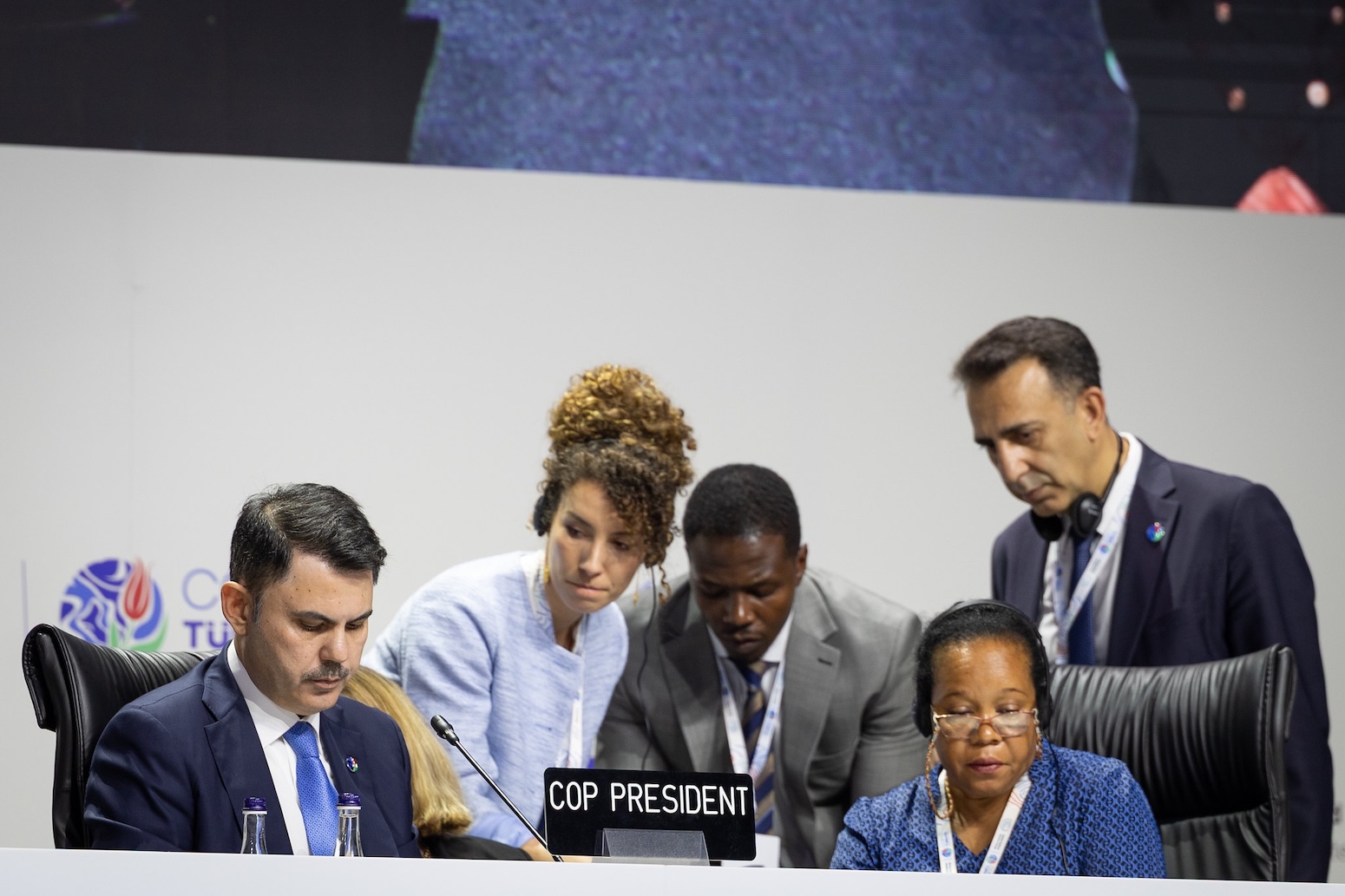
COP31 negotiations in Antalya, Turkey ended without consensus on a "presidency-led pact" after the EU, the UK, and several climate-vulnerable nations rejected the proposed "Antalya pact" in final hours. The pact lacked clear references to curbing fossil fuels or scaling up climate finance.
UNFCCC chief Simon Stiell stated he felt "deep disappointment" over the outcome. The talks became the longest COP in history.
Developing countries criticized the lack of progress on climate finance and indecision on a proposed $120bn target for funding climate adaptation.
Despite the rejection of the cover decision, several items were adopted in the closing plenary. These included limited procedural outcomes on a new mechanism for global just transitions and support for countries struck by climate disasters.
Around 80 nations signed up to a global target of securing 35% of final energy consumption from electricity by 2035, with electrification as a key theme promoted by the presidency. Growing coalitions of nations also championed roadmaps for transitioning away from fossil fuels outside formal negotiations.
The presidency of Turkey and Australia faced criticism over their fossil fuel expansion. Turkey announced the discovery of two new oil fields on the eve of the summit. Carbon Brief analysis found Australia is the third-largest CO2 exporter in history because of its fossil fuel production.