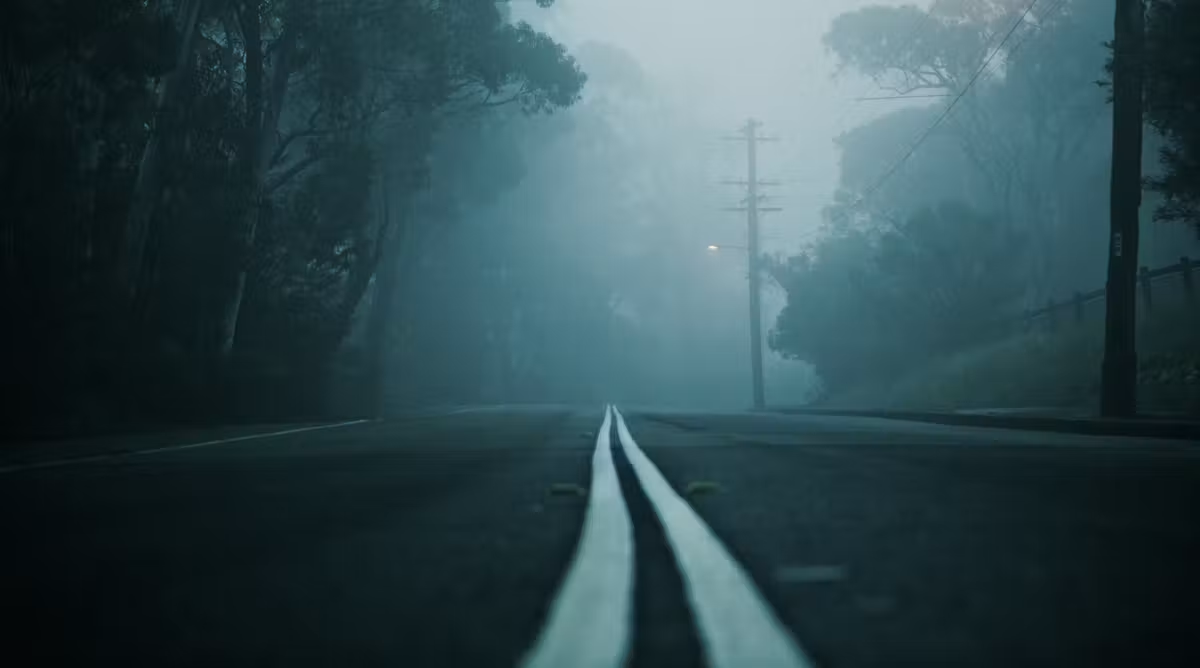
Australia's first nationwide fog study found that winter fog is becoming more common across southern Australia, contradicting global trends of declining fog.
Researchers from the University of Melbourne used the Bureau of Meteorology's high-resolution reanalysis tool to estimate fog presence hourly from 1980 to 2024. The model combined weather observations of temperature, pressure, humidity and winds with advanced weather models to cover areas without weather stations.
Between 1980 and 2024, parts of western Victoria, South Australia's Eyre Peninsula and southeast Western Australia recorded an extra 30 minutes to one hour of fog each winter year. These regions typically experience fewer than 50 hours of fog over an entire winter.
Fog occurs when water vapour cools enough to condense into liquid droplets suspended in air, reducing visibility below one kilometre. Radiation fog, the most common type in Australia, typically forms in early morning hours on calm winter days and disappears after sunrise.
The study showed fog is most common from autumn to spring, with winter being the foggiest season. Canberra recorded the most fog of any Australian city, likely due to its valley location. Coastal areas experience more fog due to greater moisture availability.
The researchers suspect southern Australia's increasing fog trend links to broader weather patterns, particularly scarcer rainfall and more frequent high pressure systems during winter. High-pressure systems produce clear nights that often lead to foggy mornings.
The findings contrast with the global trend of decreasing fog. Many places worldwide experience less fog due to global warming and reduced air pollution.
A December 2023 multi-car crash on Victoria's Western Freeway sent 20 people to hospital after thick fog contributed to the incident, illustrating transport risks from fog.