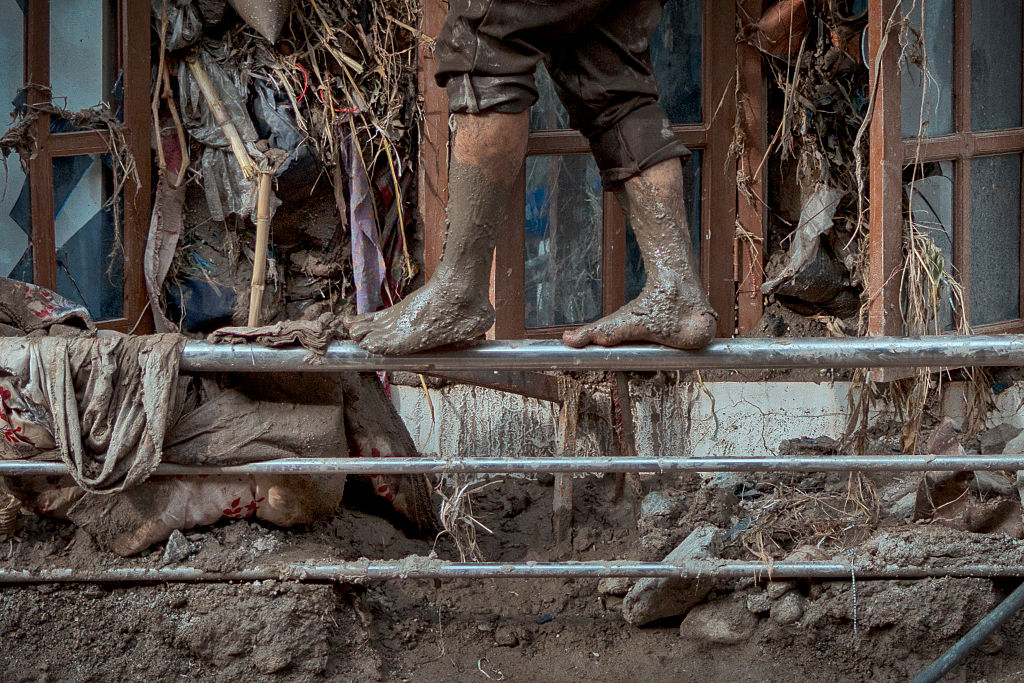
An ice-rock avalanche struck Nepal on August 26, originating at 5,200 meters above sea level in the Rasuwa-Bhotekoshi region. The event carried roughly 100 million cubic meters of debris-laden water at an average speed of 150 kilometers per hour, burying homes, farms, and schools within minutes. More than 1,400 people died and more than 5,200 remain missing, according to Gita Chaudhary, Nepal's Minister of Agriculture, Forests and Environment.
Scientists have classified 21 glacial lakes in Nepal as dangerous due to melting permafrost and ice in the Himalayas. Heavy rain in late September and again in October caused further deadly avalanches, landslides, and flooding.
Recovery will cost at least 10 percent of Nepal's GDP, Chaudhary stated. The government has proposed a new Himalayan Climate Resilience Mechanism and joined Bhutan and Kyrgyzstan in pushing for COP31 to formally recognize mountain issues with a standalone agenda item. Nepal seeks access to finance that is adequate, timely, accessible, predictable, and grant-based, along with support for research and early warning systems.
The International Court of Justice reinforced last year that all nation-states have strict legal obligations under international law to protect the climate system and curb greenhouse gas emissions. The world agreed over ten years ago to limit warming to 1.5 degrees Celsius, according to Chaudhary.