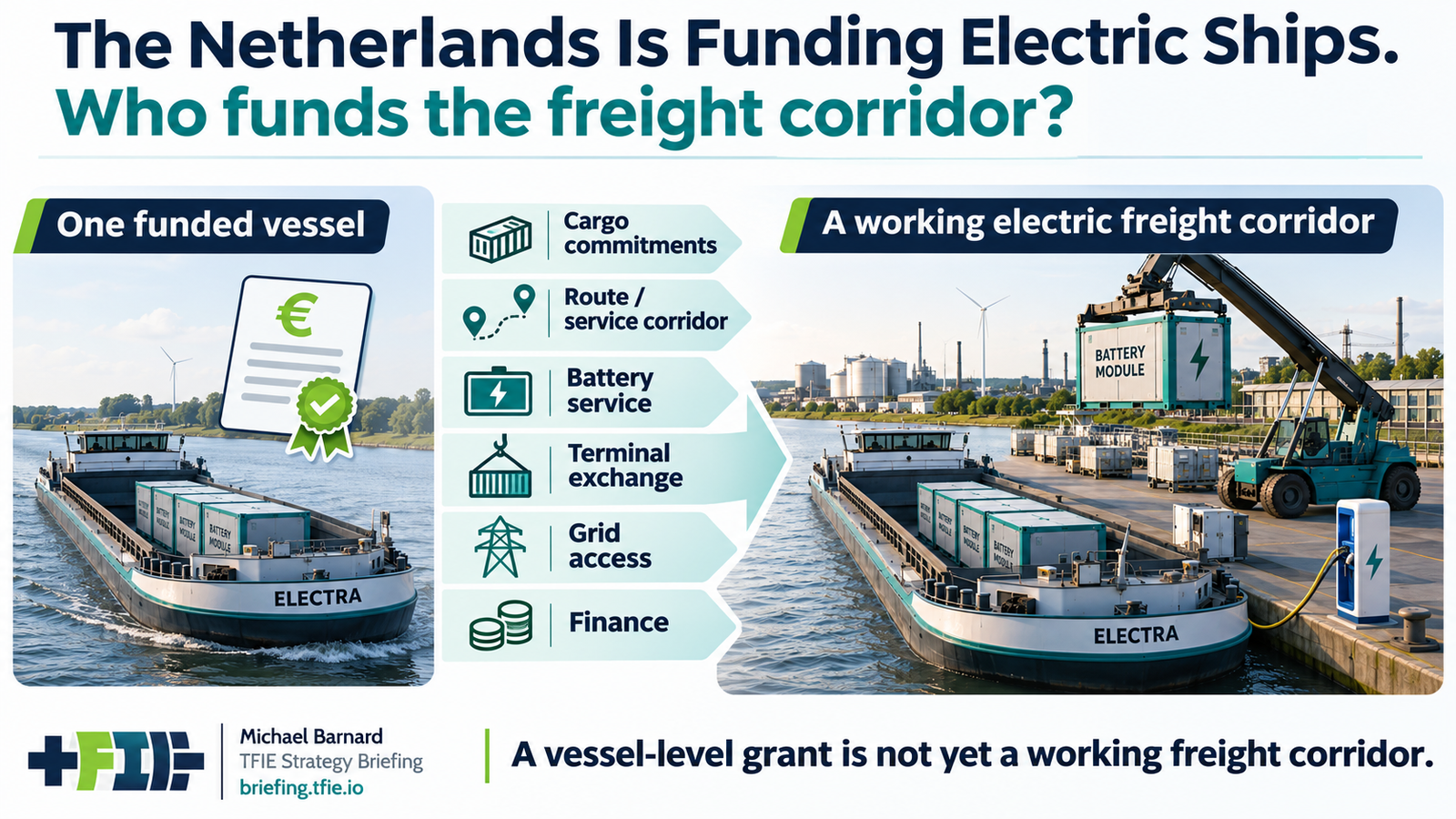
The Netherlands is allocating €231.2 million over four years to help inland ships transition from fossil fuels to electric propulsion. The first tender round of €36.93 million opens November 17, 2026, with battery-electric vessels eligible for support.
The programme, managed by RVO, can fund battery-electric systems, some hybrid arrangements and other low-emission propulsion technologies, along with charging and refueling infrastructure. Applications receive points for emissions reductions per euro of propulsion subsidy, commercial cooperation agreements, and quality of supporting infrastructure arrangements.
The subsidy structure prioritizes emissions avoided per euro spent on propulsion while treating shore infrastructure separately. This creates an accounting gap. A single barge may require battery exchange facilities at both ends of its route, reserve battery inventory, grid capacity, handling equipment and service agreements. Some of these assets serve multiple vessels, making their cost difficult to assign to any single propulsion grant.
Zero Emission Services operates a working model. Its swappable battery containers allow vessel operators to access charged energy without each owning every battery required by a route. At Moerdijk, a terminal combines battery exchange, handling equipment and electricity access. The network extends beyond isolated demonstrations, though the distinction matters between operating sites, planned stations and funded conversions.
The analysis states the Dutch programme should track a second measure alongside emissions per propulsion subsidy: what complete, repeatable electric freight service each funded project creates and which shared assets enable that service. Cargo demand will shift as fossil fuel use declines, affecting which routes justify shared charging equipment versus different architectures. Operating data from early corridors should be strong enough to finance subsequent routes without requiring perpetual subsidy reinvention.