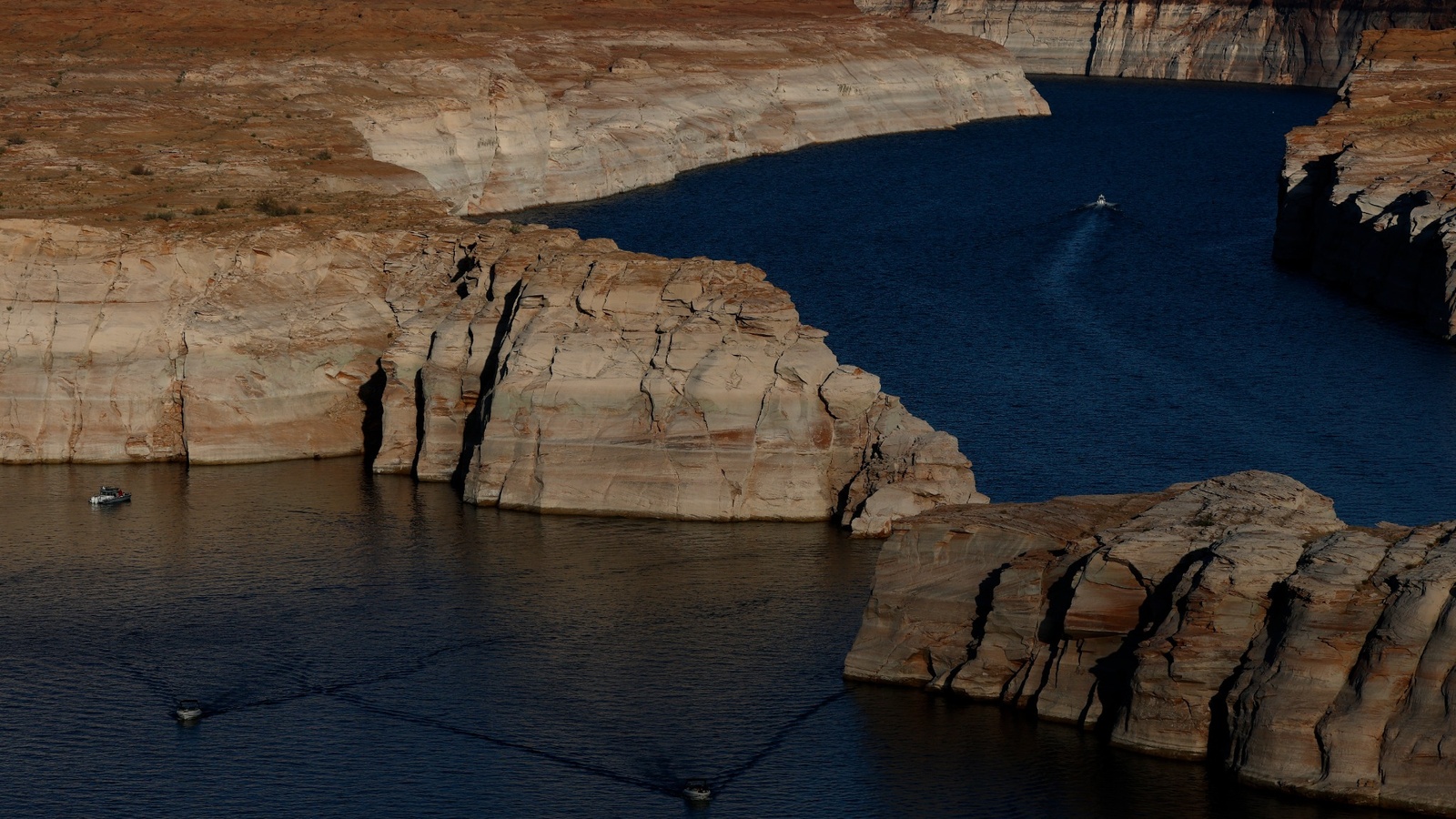
The 27-year-long drought in the Southwestern U.S.—the longest dry period in the last 1,200 years—has pushed Lake Powell to a record low, less than 150 feet above dead pool. At this critical juncture, we must finally reckon with an uncomfortable truth: the federal and state governments have been scrambling to manage competing demands that rely on the Colorado River's flow, from topping off Lake Powell with water diverted from upstream reservoirs to slashing downstream water deliveries by 40 percent. Yet amid all these desperate measures, the most rational solution—once deemed unthinkable—deserves serious consideration. It is time to drain Lake Powell entirely.
Climate change has made Lake Powell obsolete as a climate solution. Higher temperatures are melting the snowpack in Colorado's Rocky Mountains, which supplies roughly 80 percent of the river's annual flow, and melting it earlier in the year. This saps runoff in late summer and fall, precisely when stored water should be most valuable. Warmer weather is also increasing evaporation from the river's 40 reservoirs, including Powell itself. A massive reservoir in the desert is not a solution to climate change—it is a monument to our past miscalculations, hemorrhaging water that the Southwest can no longer afford to lose.
The dam's original promises have long since expired. When the Glen Canyon Dam was built in the 1960s, proponents hyped benefits including cheap hydropower and subsidized water for cotton and alfalfa growers. But the low water levels have already reduced hydropower generation from both Powell and Mead, and the subsidized agriculture model remains ecologically ruinous. Meanwhile, the environmental costs mount daily. The Bureau of Reclamation has curtailed its 'environmental flows'—releases of cold water from Powell—which is threatening protected fish and preventing the buildup of sandbars that provide habitat for wildlife in the Grand Canyon.
The current crisis demonstrates that no amount of water management can compensate for the reality that Lake Powell serves interests that no longer align with regional sustainability. Farmers are fallowing fields. Developers have paused housing construction for lack of guaranteed water supplies. Ecosystems both downstream and up will see significant changes, observers say, no matter how the river is managed going forward.
Draining Lake Powell would restore Glen Canyon—described by conservationists as even more beautiful than the Grand Canyon itself—and eliminate evaporation losses from a reservoir that can no longer reliably serve its intended purpose. Rather than continue patching a fundamentally broken system, we should acknowledge that this infrastructure belongs to a wetter past. The Southwest's future demands honest reckoning with how much water actually exists, not elaborate fictions about how to divide water that is no longer there.