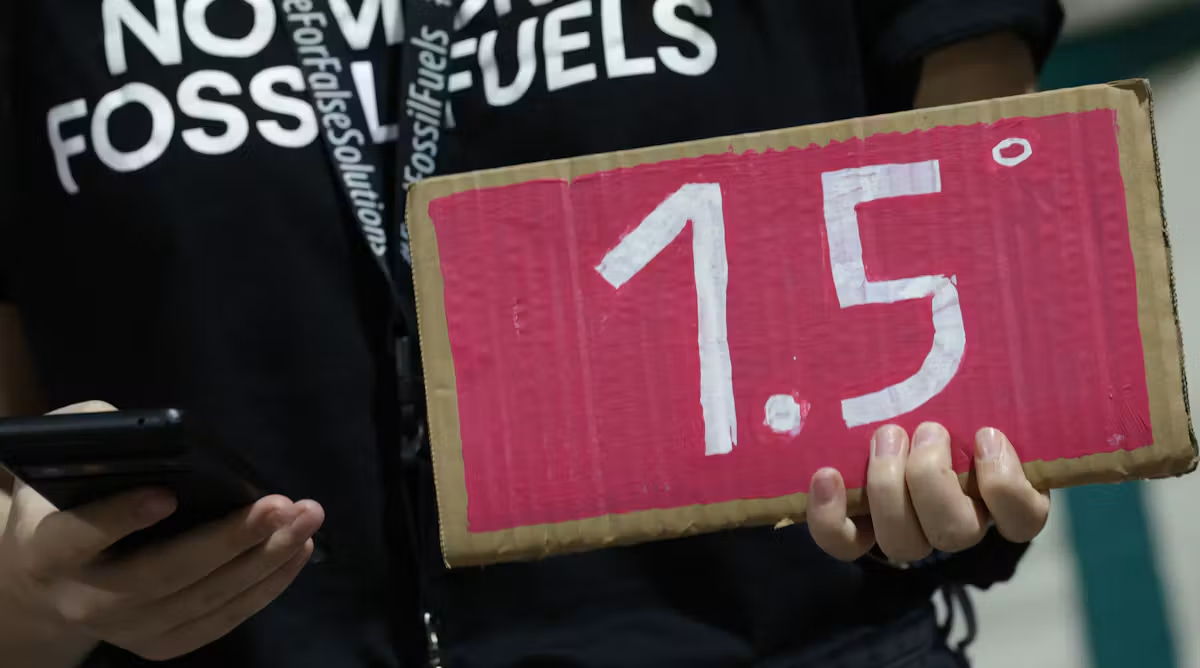
Global temperatures will unavoidably exceed 1.5°C above industrial levels within three to four years, according to a recent United Nations report. The same report projects that with current climate and energy policies, the world will heat 2.6°C by the end of this century, well beyond the Paris Agreement target.
The 1.5°C goal originated as a condition for small island nations to accept the Paris Agreement. Before 2015, the target received little attention in UN climate negotiations. An informal coalition of small island states, supported by the European Union and the United States, pushed for its inclusion. These nations argued that 1.5°C was the only target that could give their citizens a future.
Scientists and policymakers had previously aspired to limit warming to 2°C, but by the mid-2000s, concerns emerged that this was very challenging or unachievable. After the Paris Agreement, a UN special report found major differences in risks to natural and human systems between 1.5°C and 2°C warming.
UN assessment reports published after the Paris Agreement predicted temporary overshoot scenarios. In these scenarios, temperatures would initially exceed 1.5°C before large-scale carbon dioxide removal brought them back down by century's end.
Reversing temperature increases after overshooting 1.5°C requires deep emissions cuts and large-scale carbon removal. The UN's Intergovernmental Panel on Climate Change estimated that for every 1,000 gigatonnes of carbon dioxide emitted, global mean temperature increases by 0.45°C. To correct an overshoot of 0.3°C would require removing 660 gigatonnes of carbon dioxide.
Global reforestation and new forest establishment currently capture 2.2 gigatonnes of carbon dioxide annually, mainly in China, Europe and the US. This equals about 5% of current carbon dioxide emissions from fossil fuels. Technological solutions such as direct air capture remove only 0.002 billion tonnes annually. Every additional degree of warming brings the world closer to potential "tipping points" where complex systems like ocean currents and permafrost may abruptly shift. If temperatures overshoot beyond 1.8°C, the science suggests reversing the increase will be very difficult or impossible.
Governments, scientists and affected communities are meeting this week in Antalya, Turkey for COP31, the annual UN climate conference. Australia leads the negotiations as part of a compromise deal with Turkey.