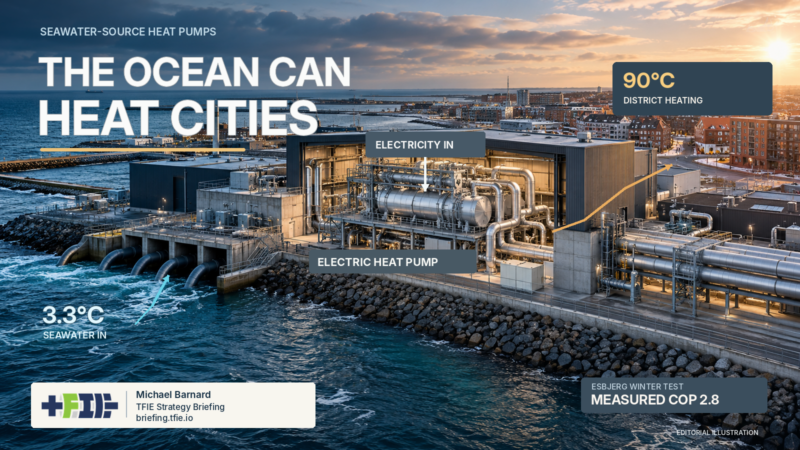
Esbjerg, Denmark, is extracting heat from the North Sea using electric heat pumps to supply its district-heating network. During a two-hour winter test in May 2025, two heat pumps consumed 19.9 MW of electricity and supplied 55.2 MW of heat at 90°C. The seawater, which entered at 3.3°C and left at 1.2°C, provided 35.3 MW of that heat. The system achieved a coefficient of performance of 2.8, meaning each unit of electricity delivered 2.8 units of heat.
The installation has a nominal heating capacity of 70 MW and began operating in late 2024 as part of Esbjerg's replacement of its retired coal-fired combined heat and power plant. The recorded COP of 2.8 was lower than original project expectations, and full guarantee testing had not been completed when results were published.
The heat pumps use carbon dioxide as refrigerant in a high-pressure cycle. A compressor raises the temperature of heat absorbed from seawater below the seawater's own temperature, allowing the heat to enter the district network. Protection systems control variable conditions and prevent freezing as water temperatures fall.
At an illustrative electricity price of €100/MWh, compressor power at COP 2.8 costs about €36 per MWh of useful heat. This excludes seawater pumping, maintenance, capital costs, financing and distribution. Electricity price and heating-network temperature directly affect overall cost. Networks operating at lower water temperatures require smaller temperature increases from the compressor, potentially improving performance.
Seawater heating has been used in other locations for decades. Monaco began using seawater heat pumps in 1963. Stockholm has operated large seawater-sourced district-heating equipment since the 1980s. Denmark's Aalborg project is developing 177 MW of seawater heat-pump capacity. Creative Energy's Horseshoe Bay development in West Vancouver uses submerged heat exchangers in a closed loop with no seawater intake or discharge.
Marine heat systems require addressing corrosion, biological fouling, intake and discharge effects, pumping requirements, maintenance access and freezing protection. Environmental assessment must consider effects on local marine ecosystems and the discharge of colder water. Distribution networks can present larger financial obstacles in areas without existing pipes or concentrated heat demand. Wastewater, industrial waste heat, ground-source systems or individual air-source heat pumps may provide lower-cost heat at some sites.