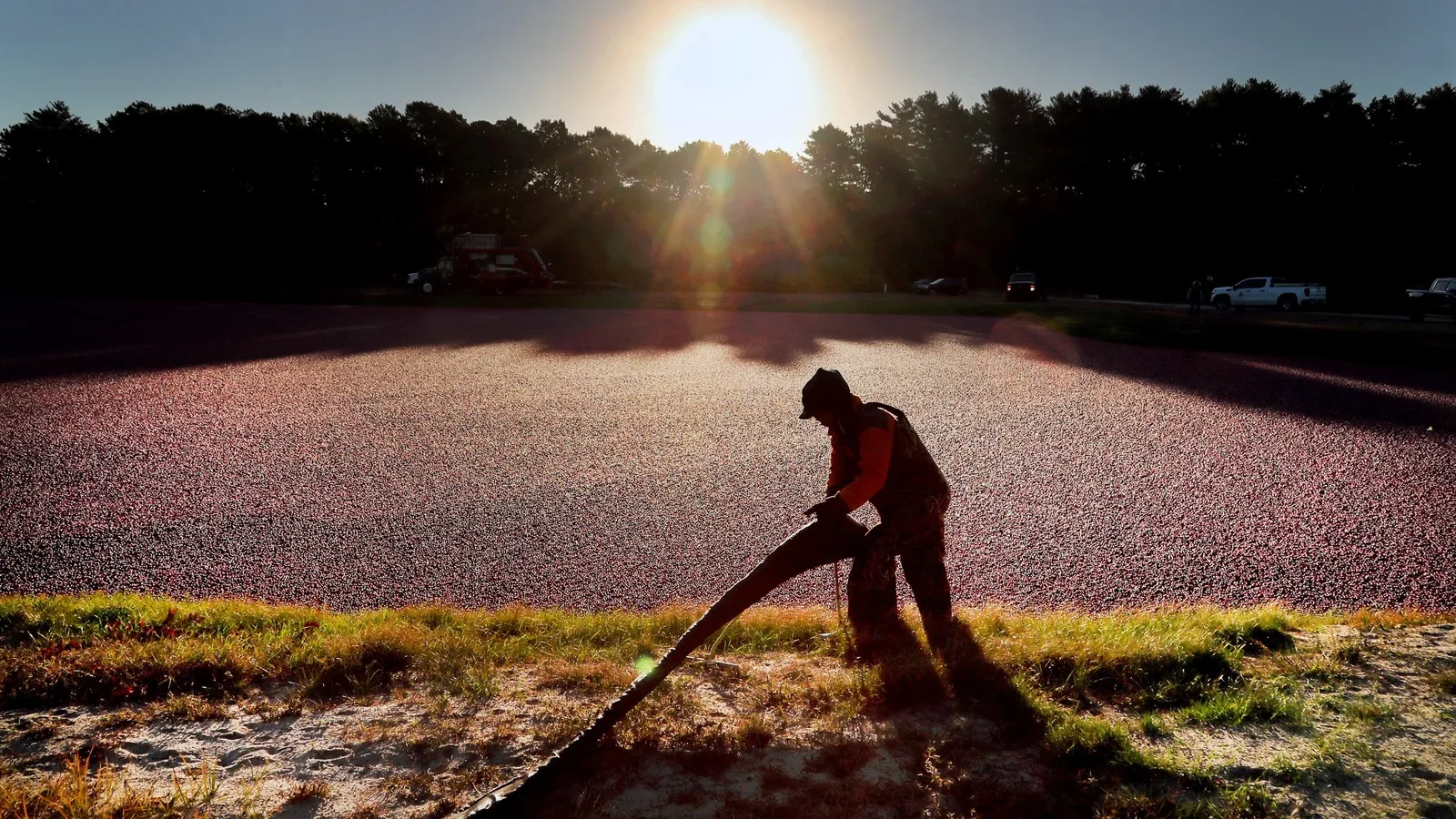
Cranberry growers in Kingston and Plymouth, Massachusetts are harvesting fruit beneath solar panels in what appears to be the first operating agrivoltaic cranberry operation in the country or world. This fall marks the second harvest season under the panels. Distributed Energy Infrastructure constructed a 4.4-megawatt array with a 13.5-megawatt-hour battery in Kingston and a 1-megawatt solar array in Plymouth.
The dual-use solar strategy allows farmland to generate electricity while agricultural operations continue. Massachusetts became the first state in 2018 to offer financial incentives for agrivoltaic projects. The state's solar incentive program pays 23.17 cents per kilowatt-hour for arrays between 1 and 5 megawatts, with an additional 9 cents per kilowatt-hour for agrivoltaic projects.
Building solar arrays over cranberry bogs presented unique engineering challenges. Photovoltaic panels are mounted 10 feet off the ground on an axis that tilts to follow the sun. Pilings had to be spaced farther apart than standard arrays to allow harvesting equipment to move through the bog. Wiring hangs overhead rather than being buried because of the bog's unstable ground.
Cranberry bogs are protected wetlands that cannot be developed for housing or commercial uses even if farming stops. For bogs with grid access, solar panels offer financial relief. "This is a farm viability opportunity," said Iain Ward, a solar consultant and longtime cranberry farmer managing the growing operations at both sites.
Distributed Energy Infrastructure is pursuing additional agrivoltaic projects in apple orchards, a cattle pasture, and a Christmas tree farm. A stalled cranberry project in Carver with two bogs had arrays built five years ago but the company behind it went bankrupt before operations began. The current bog owner has "every intention to finish them," Ward said.