China is targeting renewable energy sources to power data centers fueling artificial intelligence expansion, aiming to gain speed and cost advantages over the United States.
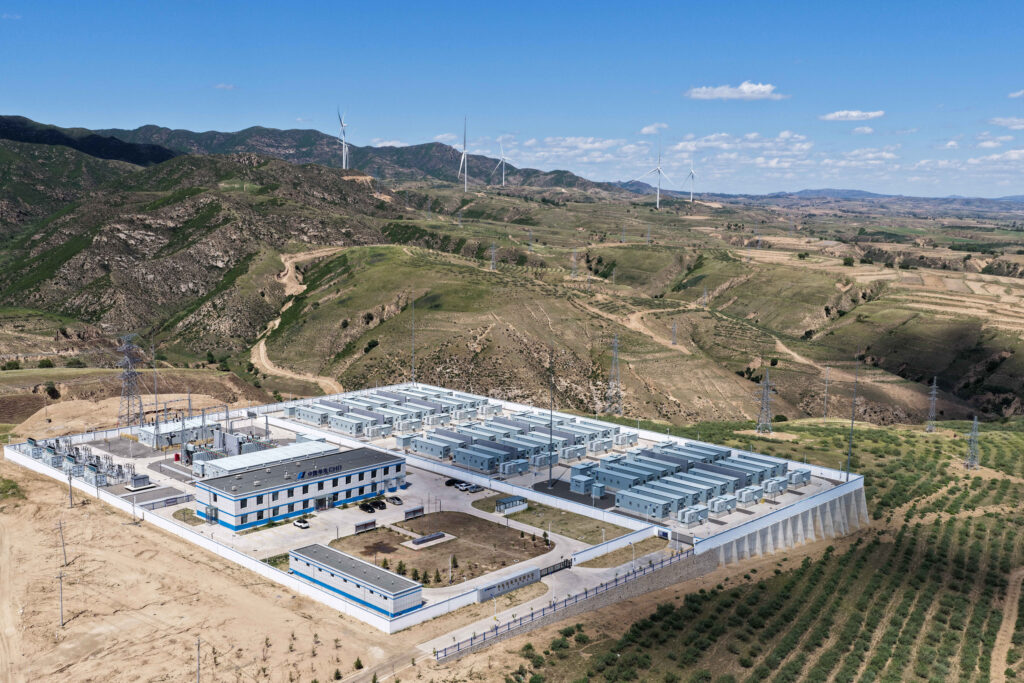
Envision Energy, the world's second-largest wind turbine supplier, began operating a data center campus in Ulanqab, Inner Mongolia in August, powered entirely by renewable electricity. The company projects the facility could become the world's largest standalone AI data center, with plans to expand beyond 2 gigawatts of capacity. Envision says customers can lock in electricity rates 20 percent below grid prices for a decade.
China's strategy differs sharply from the United States. The Trump administration scrapped a requirement that AI data centers built on federal land be paired with clean energy generation. China aims for renewable sources to power more than 80 percent of electricity used by new data centers in its major computing hubs.
China's computing centers consumed about 170 terawatt-hours in 2025, accounting for 1.6 percent of the country's total electricity use. Beijing estimates consumption will reach roughly 800 terawatt-hours, or about 6 percent of the national total, by 2030. By that year, China aims to expand its AI computing capacity more than sixfold.
China plans annual renewable electricity generation to rise from 4,000 to about 6,000 terawatt-hours, a roughly 50 percent increase. Between 2021 and 2025, annual renewable electricity generation was roughly 20 percent higher than targeted.
In 2025, China added an estimated 540 gigawatts of power generation capacity, more than 80 percent from renewable sources. During the same period, the United States added 54 gigawatts, 60 percent from renewable sources.
Lawrence Berkeley National Laboratory estimated that U.S. data centers consumed 176 terawatt-hours in 2023, accounting for about 4.4 percent of the country's total electricity use. Its 2024 report projected annual consumption could reach between 325 and 580 terawatt-hours by 2028.
Wood Mackenzie projects annual additions of 13.2 to 16.4 gigawatts of gas-fired capacity from 2026 through 2035. A Sierra Club analysis, reported by Bloomberg, projects emissions from new off-grid data centers alone could reach levels comparable to Mexico's total annual emissions by 2030.
Kyle Chan, a fellow at the Brookings Institution's John L. Thornton China Center, said China's rapid capacity growth reflects its ability to build power plants quickly. China's "East Data, West Computing" initiative, launched in 2022, steers computing infrastructure toward less densely populated western regions with abundant renewable resources. Inner Mongolia accounted for 57 percent of China's wind power resources and 21 percent of its solar resources, according to regional Vice Chairman Zhiqiang Huang speaking at an economic forum in June.
A Washington Post-ABC News-Ipsos poll found that 72 percent of Americans opposed building data centers in their communities. Data center construction in China has not sparked comparable public backlash.