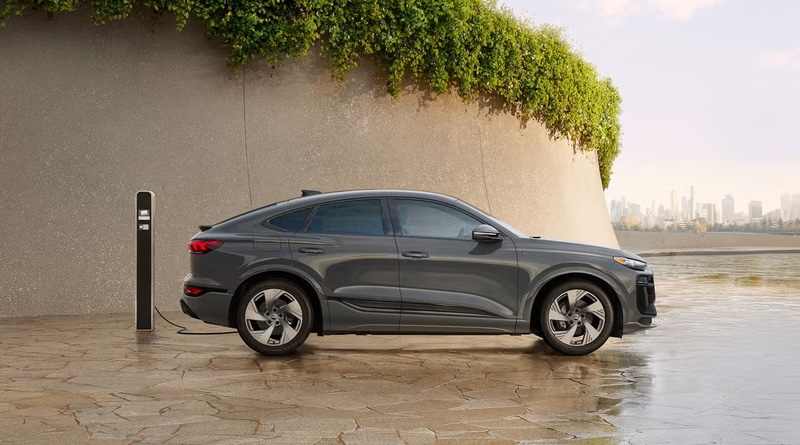
Audi is scaling back its initial commitment to an all-electric vehicle strategy in the United States, instead pivoting toward a mixed portfolio that includes plug-in hybrids alongside battery electric vehicles. The German automaker plans to establish manufacturing operations in Georgia, marking a significant shift in how the company approaches the American market amid changing consumer preferences and political pressures.
The move reflects broader tensions within the automotive industry. Audi initially announced aggressive timelines for phasing out internal combustion engines in favor of full electrification. That strategy faced headwinds from multiple directions: consumer resistance to EV adoption rates slower than manufacturers projected, charging infrastructure gaps across rural America, and policy uncertainty following political transitions at the federal level. By incorporating plug-in hybrid electric vehicles, or PHEVs, Audi hedges its bets on consumer acceptance while maintaining revenue streams from hybrid powertrains that bridge conventional and electric technologies.
The Georgia factory announcement carries specific weight for US manufacturing employment and supply chain localization. Establishing domestic production reduces Audi's exposure to import tariffs, particularly given ongoing trade tensions and the Trump administration's stated preference for onshore manufacturing. This strategy aligns with incentives embedded in the Inflation Reduction Act, which offers tax credits and manufacturing grants tied to domestic production requirements. The facility positions Audi to capture credits under these programs while reducing logistics costs compared to importing vehicles from European plants.
Plug-in hybrids function as a transitional technology. They carry both battery packs and gasoline engines, allowing drivers to run electric motors for daily commutes while retaining combustion engines for longer trips. This addresses range anxiety, a persistent barrier to EV adoption in markets with underdeveloped charging networks. However, environmental advocates note that PHEVs deliver lower emissions benefits than full electric vehicles. Studies from the International Council on Transportation and Clean Transportation found that plug-in hybrids often operate in gas-mode more frequently than manufacturers claim, reducing real-world environmental gains.
Audi's recalibration reflects industry-wide adjustments. General Motors delayed its EV production targets in 2023. Ford recalculated its EV launch schedule. These retreats signal that market forces and consumer behavior are not tracking with early forecasts made in 2020 and 2021. Battery costs remain elevated despite recent reductions. Charging density outside urban corridors remains thin. Consumer acceptance of EVs, particularly in price-sensitive segments, lags predictions.
The Georgia plant decision also signals competitive positioning against Tesla and other EV-native manufacturers. By securing US manufacturing capacity before tariff walls tighten further, Audi locks in production economics and avoids potential penalty duties on imported vehicles. This defensive move protects market share in a market where Audi competes across premium segments.
Audi's revised strategy reflects pragmatism over ideology. The company remains committed to electrification but acknowledges that the pathway differs from initial plans. Plug-in hybrids generate near-term revenue while electric infrastructure matures and battery economics improve. Domestic manufacturing in Georgia provides tariff shelter and labor cost advantages relative to European production.
The company operates within constraints: consumer demand patterns, infrastructure readiness, and regulatory frameworks that shift with administrations. By combining PHEVs with EVs and establishing US manufacturing, Audi positions itself for multiple scenarios across the coming decade.