# BYD to Double Brazilian Production as Chinese EV Maker Expands Global Manufacturing
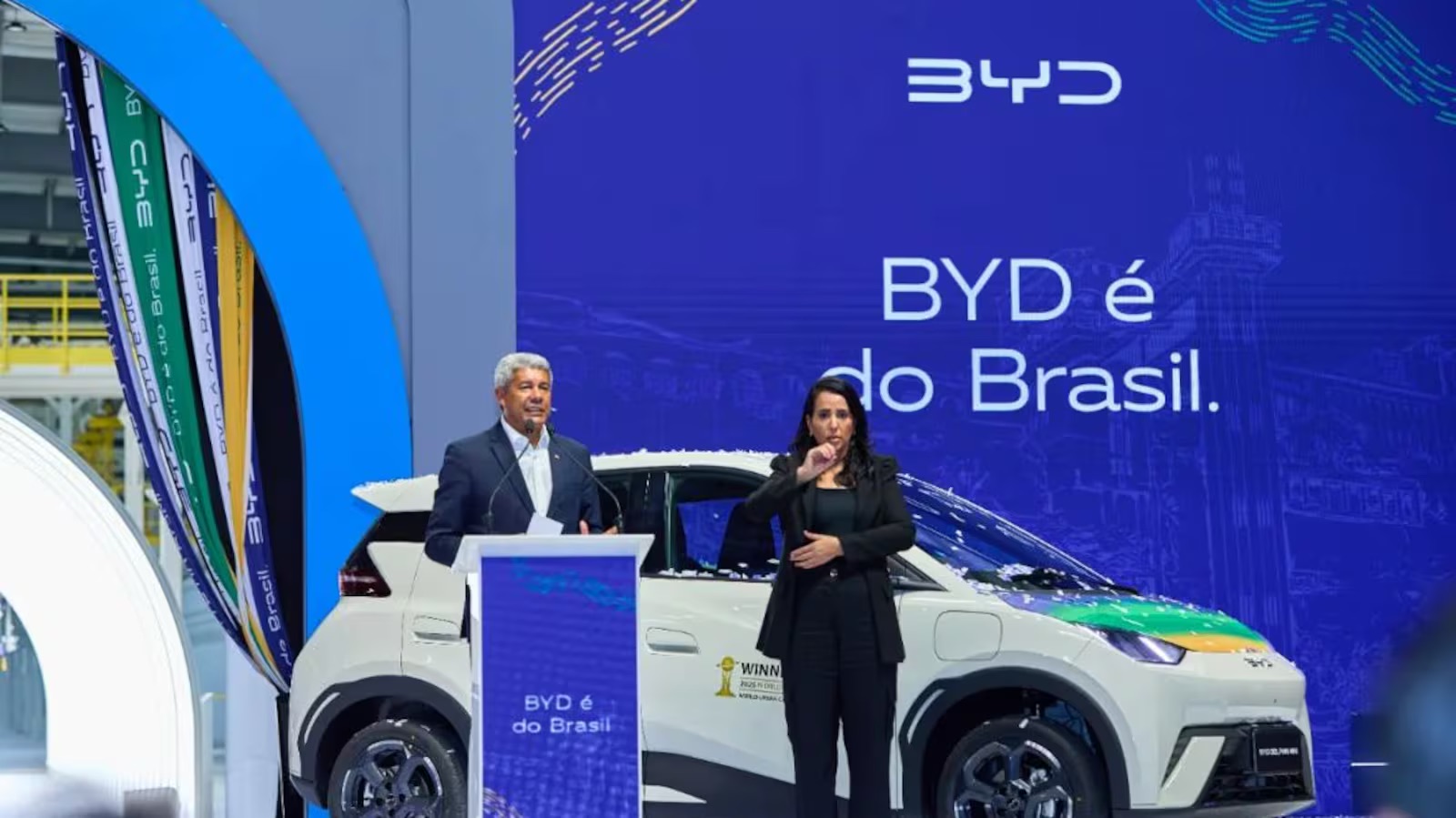
BYD, the world's largest EV manufacturer by volume, announced plans to double its production capacity in Brazil. The move reflects the Chinese automaker's aggressive strategy to establish manufacturing footprints outside China and reduce exposure to tariffs that threaten its international sales.
BYD has experienced explosive growth in overseas markets over the past 18 months. The company now ships vehicles to Europe, South America, Asia, Australia, and Africa. This geographic diversification marks a fundamental shift in global automotive manufacturing. Chinese EV makers have moved beyond exporting finished vehicles to building factories in target markets.
Brazil represents a strategic hub for BYD's South American operations. The country offers access to the broader Latin American market while providing a manufacturing base to circumvent tariffs. The United States and European Union have imposed steep duties on Chinese EV imports, with tariff rates exceeding 25 percent in some cases. Local production enables BYD to compete on price without absorbing tariff costs.
The capacity expansion signals confidence in Brazil's EV adoption trajectory. Brazil's auto market remains dominated by combustion engines, but EV sales have climbed. Local EV market share reached approximately 8-10 percent in 2024, with growth accelerating. Rising fuel costs and improving charging infrastructure make electric vehicles increasingly viable for Brazilian consumers.
BYD's Brazil operation currently operates a manufacturing facility in the country, but specific production figures remain limited in public disclosures. Doubling capacity would position BYD to serve both domestic Brazilian demand and export to neighboring markets across South America. The expansion likely involves hiring and investment in local supply chains.
This manufacturing strategy aligns with actions by other Chinese EV makers. NIO, Li Auto, and XPeng have explored or announced Brazilian operations. The move also parallels Tesla's approach of manufacturing in key markets rather than relying solely on exports from the United States or China.
BYD's global EV sales reached 1.76 million units in 2024, according to company reports. The firm commands roughly 20 percent of the worldwide EV market. Its ability to undercut competitors on price, driven by vertically integrated battery production, has fueled this dominance. Expanding production in Brazil extends that cost advantage into new markets.
Tariff pressures accelerated this shift. The Biden administration implemented 25 percent tariffs on Chinese EVs in 2024. The EU imposed provisional tariffs reaching 38 percent on BYD imports. These trade barriers made imported vehicles uncompetitive for price-sensitive markets. Local manufacturing bypasses tariffs entirely.
Brazil's automotive sector has capacity to absorb new investment. The country hosts assembly plants operated by Volkswagen, General Motors, and others. Labor costs run lower than developed economies. Access to lithium resources in neighboring Argentina and Bolivia also benefits regional battery production.
The expansion raises questions about employment and supply chain development in Brazil. Local content requirements may apply to vehicles produced there, compelling BYD to source components domestically or regionally. This creates opportunities for Brazilian parts suppliers and manufacturing workers.
The broader pattern reveals how trade protectionism reshapes global manufacturing. Rather than accepting tariff barriers, Chinese automakers are building factories within protected markets. This strategy provides long-term competitive advantages while creating local jobs and tax revenue. BYD's Brazil expansion exemplifies this shift in automotive production geography.