# Tidal Energy Technology Emerges as Submerged Alternative to Visible Renewables
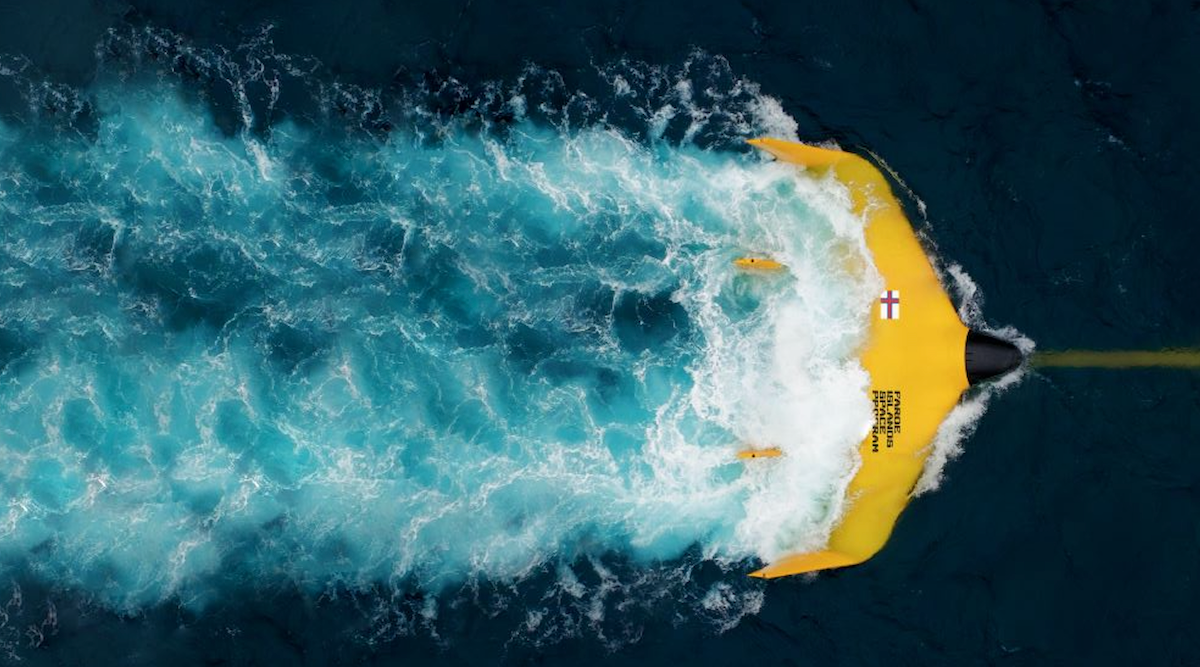
A new underwater renewable energy system has entered development, designed to harness tidal currents beneath the ocean surface. The technology operates completely submerged, remaining invisible from shore and the surface.
The system functions as an underwater kite that extracts power from tidal flows. Unlike wind turbines or solar farms, which occupy visible terrestrial or nearshore space, this technology generates electricity while remaining concealed below the waterline. Tidal energy systems capture the kinetic force of ocean currents driven by gravitational interactions between the Earth, moon, and sun.
Tidal stream generators represent one of the most predictable renewable energy sources available. Ocean tides follow precise mathematical patterns based on astronomical positions, making their output highly forecastable. Unlike solar and wind resources, which depend on weather patterns, tidal generation operates with near-certainty, typically achieving capacity factors between 40 and 50 percent.
The underwater kite concept leverages principles similar to kite surfing. The device moves horizontally through tidal currents, attached to a seabed foundation by a cable or tether. This bidirectional motion drives turbines that convert kinetic energy into electricity. The submerged design eliminates visual impacts that have challenged terrestrial wind development, which faces persistent opposition from coastal communities and conservation groups concerned about landscape aesthetics.
Several nations have pursued tidal energy infrastructure. The United Kingdom operates the MeyGen array in the Pentland Firth, currently generating power through multiple subsea turbines. South Korea, Norway, and Canada have launched pilot projects in coastal regions with strong tidal currents. The technology remains in early commercial stages compared to mature wind and solar industries.
Environmental considerations shape tidal energy development. Marine organisms, particularly fish and marine mammals, require monitoring to assess collision risks and behavioral disruption. Cable installations and seabed foundations alter local habitats. However, tidal devices produce no atmospheric emissions, generate no thermal pollution, and occupy smaller spatial footprints than equivalent offshore wind installations.
The economic case for tidal energy depends on site selection. Optimal locations occur where bathymetry and coastal geography funnel tidal currents into narrow channels with velocities exceeding 1 meter per second. Installation costs remain elevated because subsea infrastructure requires specialized vessels and deep-water construction expertise. Operating costs are low once deployed, as tidal resources require minimal maintenance compared to wind turbines exposed to harsh atmospheric conditions.
Cost reductions require scaling. Early-stage tidal projects report levelized costs between $150 and $250 per megawatt-hour. Mature offshore wind technologies currently operate at $30 to $70 per megawatt-hour. However, tidal systems have not benefited from the decades of engineering optimization and manufacturing scale that have transformed wind economics.
The submerged characteristic addresses a genuine barrier to renewable energy adoption. Visible renewable infrastructure sparks opposition despite zero operational emissions. Offshore wind farms in Massachusetts, New York, and other coastal states have encountered sustained resistance from residents concerned about visual impacts, though scientific evidence shows these concerns outweigh actual ecological risks.
An invisible tidal energy system removes this political obstacle. Electricity generation proceeds underground without triggering the aesthetic objections that delay terrestrial renewables. This addresses a genuine infrastructure deployment challenge that has slowed decarbonization in developed nations where public opposition to visible development remains formidable.
Scaling tidal energy requires identifying additional high-velocity coastal sites and reducing manufacturing costs through standardization and volume production. Technology developers continue iterating on efficiency and durability metrics, with next-generation systems expected to reduce costs to competitive ranges within five to ten years.