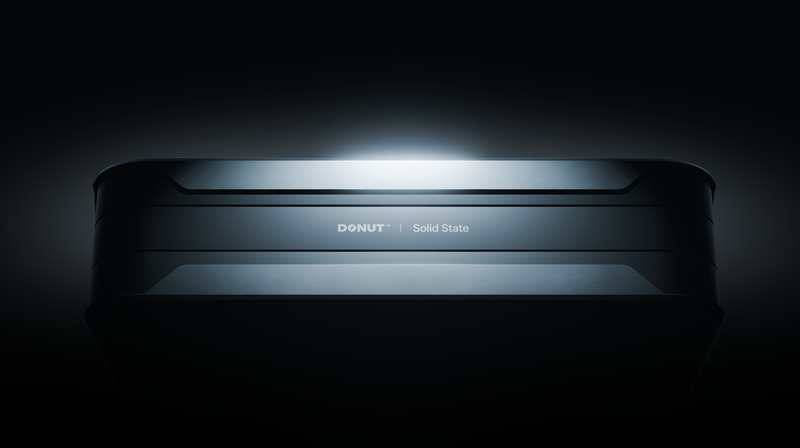
Finnish startup Donut Lab has developed an electric vehicle battery that operates effectively in extreme cold conditions, outperforming conventional internal combustion engines in freezing climates. The company recently completed testing that validates the battery's cold-weather performance, marking a potential breakthrough in EV reliability across northern regions.
The battery addresses a persistent challenge for electric vehicles. Lithium-ion batteries lose capacity significantly in cold temperatures because chemical reactions slow at lower temperatures, reducing ion mobility and increasing internal resistance. Traditional gasoline vehicles also suffer efficiency losses in winter, but their relative performance advantage over EVs narrows in extreme cold. This has limited EV adoption in Nordic countries, Canada, and Russia despite environmental benefits.
Donut Lab's technical approach remains partially undisclosed, creating industry intrigue about the battery's chemistry and engineering. The startup has disclosed that the battery maintains functional capacity in conditions where typical EV batteries experience severe degradation. The exact chemistry composition, cell architecture, and thermal management system used in the design have not been released to the public.
Cold-weather EV performance matters strategically. Norway leads global EV adoption at over 90 percent of new vehicle sales, yet still experiences winter-related range losses of 20 to 40 percent. Sweden, Finland, and other Nordic nations represent a critical test market for battery innovations. If Donut Lab's technology proves cost-effective at scale, it could unlock entire geographic markets currently resistant to electrification.
The battery's emergence reflects competitive pressure in the energy storage sector. Tesla, Volkswagen, CATL, and other major players actively develop cold-weather battery solutions. Tesla's Model 3 includes a heat pump system that redirects waste heat to the battery pack in winter. CATL has developed sodium-ion batteries with improved low-temperature performance, though with lower overall energy density than lithium variants.
Donut Lab's test results suggest the battery may operate in temperatures below negative 20 degrees Celsius, though specific data points remain unclear. Winter testing protocols typically measure capacity retention, charge acceptance rates, and discharge efficiency at multiple temperature thresholds. Third-party validation of the results would strengthen industry confidence.
Cost remains the open question. Advanced battery chemistry and thermal systems increase manufacturing complexity and material expenses. If Donut Lab's solution commands a premium price, adoption may remain limited to luxury vehicles or specialized applications like commercial fleet vehicles operating in arctic regions.
The startup has not announced production timelines or commercial partnerships. Bringing a novel battery chemistry to market requires regulatory approval, manufacturing partnerships, and supply chain development. Typical development cycles from lab validation to mass production span three to five years.
Donut Lab's work targets a real market need. Electric vehicles cannot achieve global penetration without solving cold-climate performance. Countries experiencing harsh winters represent about 30 percent of global vehicle markets. Battery performance in these regions determines whether automakers can meet decarbonization targets in northern Europe, North America, and Asia.
The company's next steps likely include seeking investment, negotiating cell manufacturing partnerships, and conducting independent third-party testing. Transparency about chemistry and performance data would accelerate industry assessment of the technology's viability. If the battery performs as claimed at competitive cost, it reshapes the EV market's geographic boundaries and accelerates the phase-out of gasoline vehicles in currently resistant markets.